Nvidia stock has lagged the semiconductor sector in 2026 despite surging AI demand and record earnings, as investors weigh whether the chipmaker can maintain its dominant position amid rising competition and shifting customer strategies
Nvidia shares have struggled to keep up with the broader semiconductor rally this year, raising questions about whether the company's explosive growth can continue as the AI boom matures. While Nvidia remains a central supplier for artificial intelligence infrastructure, its stock performance has lagged key industry benchmarks, even as major customers ramp up spending on next-generation data centers.
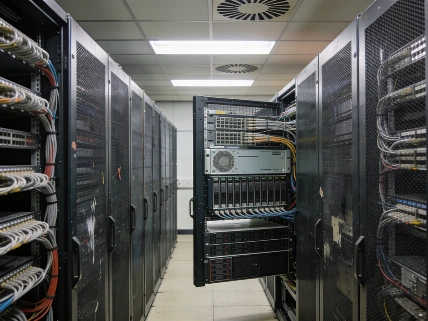
As of July 13, Nvidia stock was up 9.1% year to date, trailing the Philadelphia Semiconductor Index's 72.2% gain over the same period. The company's shares fell 3.5% on Monday, reflecting investor caution about the sustainability of its rapid expansion. This comes despite announcements from top clients like Meta Platforms, which recently committed over $50 billion to expand its Louisiana AI data center, and continued heavy investment from Microsoft, Amazon, and Alphabet-all among Nvidia's largest buyers of AI chips.
AI Demand and Market Leadership
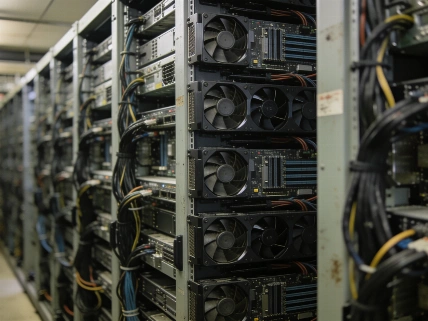
Nvidia has dominated the AI accelerator market since the generative AI surge began in 2023, with its GPUs powering the training and deployment of large language models. This leadership helped Nvidia briefly become the world's most valuable publicly traded company. Yet, as hyperscale cloud providers develop custom AI chips and Wall Street analysts debate the long-term returns on massive AI infrastructure spending, some investors are reassessing the company's growth prospects.
Despite these concerns, Wall Street sentiment remains broadly positive. According to TipRanks, 37 analysts covering Nvidia have set an average 12-month price target of $309.33, suggesting a potential 52% upside from recent trading levels. The company's latest earnings report reinforced the strength of AI demand: for the fiscal first quarter ended April 26, Nvidia reported non-GAAP earnings of $1.87 per share, beating consensus estimates, and revenue of $81.6 billion, up 85% from a year earlier. Data Center revenue reached a record $75.2 billion, a 92% year-over-year increase.
Broader Growth Drivers
Morgan Stanley, after recent meetings with Nvidia management, reiterated its overweight rating and $288 price target, calling Nvidia its top semiconductor pick. The bank highlighted that Nvidia's growth is no longer driven solely by hyperscale cloud providers. Instead, demand is expanding across three major customer groups: AI research labs, hyperscalers, and a growing base of enterprise, industrial, and sovereign AI customers. AI labs now account for about 20% of Nvidia's demand, and the company's hardware is increasingly used in leading frontier AI models.
Morgan Stanley also downplayed the risk that custom AI chips will significantly erode Nvidia's market share. The firm's industry contacts suggest that Nvidia often delivers the lowest cost per token-a key metric for AI model efficiency-despite the rise of custom silicon alternatives. Both Nvidia and Broadcom are expected to see their AI businesses grow more than 80% next year, though supply constraints remain a limiting factor.
Risks and Uncertainties
While Nvidia's management has pushed back on reports of delays for its next-generation Rubin Ultra chip, telling investors that shipments are still expected next year, the company acknowledged changes to rack design but characterized them as improvements. Morgan Stanley noted that Nvidia's sheer size could limit further valuation multiple expansion, but argued that the stock now offers the best value among major semiconductor names.
Demand from sovereign AI projects, enterprise clients, and so-called neocloud providers is accelerating, driven by power constraints, reshoring efforts, and geopolitical factors. Nvidia's management sees this opportunity as fragmented today but potentially substantial in the future. For the upcoming fiscal second quarter, Nvidia expects revenue of $91 billion, plus or minus 2%, with an adjusted gross margin of 75% and operating expenses around $8.3 billion.
For investors tracking the broader AI infrastructure trend, it's worth noting that other companies in the sector have also experienced volatility as expectations shift. For example, Bloom Energy's recent pullback has drawn attention from analysts looking for buy-the-dip opportunities amid ongoing AI data center demand.
According to reporting by TheStreet, the debate over whether AI infrastructure spending will deliver attractive long-term returns remains unresolved. While Nvidia's leadership in AI hardware is clear, the competitive landscape is evolving, and the company's ability to maintain its edge will depend on continued innovation, supply chain management, and the willingness of customers to invest at current levels.
For the fiscal first quarter ended April 26, 2026, Nvidia reported revenue of $81.6 billion, an 85% increase from the prior year, and record Data Center revenue of $75.2 billion, up 92% year over year. The company's non-GAAP earnings per share reached $1.87, exceeding Wall Street expectations. Nvidia's upcoming Q2 FY2027 earnings report is scheduled for August, with guidance for $91 billion in revenue, plus or minus 2%.
As the AI chip market matures, investors should consider both the opportunities and risks associated with rapid infrastructure buildouts, shifting customer strategies, and the potential for new competitors to emerge. While Nvidia's position remains strong, the pace of growth and the durability of its competitive advantages will be closely watched in the quarters ahead.
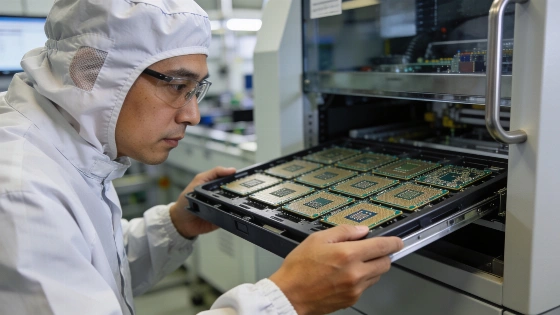
AI chips, such as those produced by Nvidia, are specialized processors designed to accelerate machine learning and deep learning tasks. Unlike traditional CPUs, these chips are optimized for parallel processing, making them essential for training and running large-scale AI models. The economics of AI infrastructure depend not only on raw performance but also on energy efficiency, cost per computation, and the ability to scale across data centers. As more companies and governments invest in AI capabilities, the demand for high-performance chips is likely to remain robust, but competition and technological change could reshape the market landscape over time.