Nvidia's CEO declared AGI had arrived and previewed 400000 new GPUs but only one of those numbers can move the stock when markets open
Wall Street is set to scrutinize Nvidia's latest announcement. As U.S. markets reopen after the holiday, investors must determine whether Jensen Huang's weekend post about artificial general intelligence (AGI) and a new wave of 400,000 GPUs signals genuine revenue potential or simply adds to the ongoing AI arms race narrative.
OpenAI's GPT-6 Astra is the first model to reach the Critical level in the company's Preparedness Framework for cyber risks, according to OpenAI's official safety overview.
Hardware or Hype
Over the past three years, Nvidia's stock performance has been driven by tangible capital spending from a small group of hyperscale customers, rather than by broad statements about AI's future. Investors have learned to distinguish between claims that translate into product orders and those that generate only headlines. Huang's post blurred this distinction, combining a sweeping AGI declaration with a specific hardware forecast-leaving the market to determine which aspect, if any, is actionable.
OpenAI's GPT-6 Astra, released on September 3, is described as the company's most advanced and aligned model to date. According to an official OpenAI safety overview, Astra is the most powerful model the company has widely deployed and the first to achieve the Critical level in OpenAI's Preparedness Framework for cyber risks. While OpenAI's president welcomed the "AGI era," the company itself did not label Astra as true AGI. Only Huang, whose company supplies the underlying hardware, made the unqualified claim that the milestone had been reached. This distinction is significant: the market cannot price philosophical debates, but it can price hardware orders.
Numbers That Matter
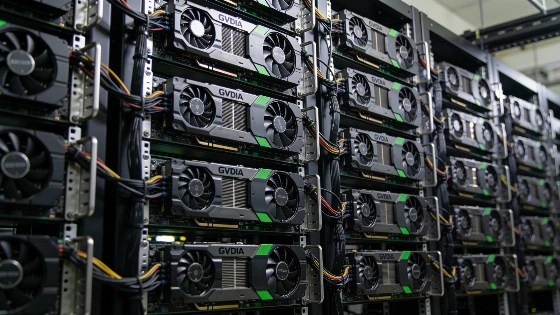
Huang's post attributed Astra's training run to more than 100,000 Nvidia Grace Blackwell NVLink72 systems-a substantial deployment by any measure. The NVLink72 architecture, featuring 72 processors per enclosure, represents a significant commitment based on the expectation that customers would require this scale of coordinated compute power. Astra's launch provides the first public indication that such demand exists.
OpenAI initially made GPT-6 Astra available to participants in its Daybreak program, with a broader rollout to paid users and API access proceeding in phases. This staged deployment limits the immediate commercial impact and highlights that the launch is not instantly mass-market.
There is an additional complication. According to BeInCrypto, Huang initially posted a higher figure-300,000 systems-then deleted and reposted with the revised 400,000 unit count. Nvidia has not provided an explanation for this change. The fact that such a large number can shift by 200,000 units in a single morning highlights that this is not a formal disclosure, but a social media post. Investors must decide whether to interpret it as a preview of incremental demand or as a restatement of orders already included in Nvidia's August guidance.
Market Mechanism
U.S. equity markets were closed for Labor Day when Huang's post appeared. The first opportunity for investors to respond is Tuesday, September 8. Nvidia last traded at $229.49, approximately 3% below its 52-week high. The key question for shareholders-whether directly or through an S&P 500 index fund-is whether the 400,000 GPUs represent new business or simply confirm existing pipeline orders.
If the figure indicates incremental demand, it could extend the AI capital spending cycle beyond what most 2027 models currently project. If it is merely a restatement, the stock may relinquish any gains driven by the AGI announcement. The definitive answer will come not from Nvidia, but from whichever hyperscaler records the expenditure in a regulatory filing. Until then, the market is left to assess a number that changed by hundreds of thousands within hours on a Sunday.
Signals and Spin
This is not Huang's first AGI pronouncement. He previously told the Lex Fridman podcast that the milestone had already been achieved, and the stock showed little reaction. What is different now is the medium: after years of avoiding social media, Huang has begun using his account for both policy advocacy and investor communications-without the constraints of a formal filing or the rigor of an earnings call.
This approach reflects a broader trend among technology executives, who increasingly use public platforms to shape narratives and gauge market reactions. As previously reported, companies such as Meta have also sought to influence policy and investor sentiment through direct communication, sometimes bypassing traditional regulatory channels.
For now, the market's filter remains clear: only claims tied to purchase orders affect stock prices. While the AGI milestone may capture headlines, the only number that matters to Wall Street is the one reflected in a customer's capital spending disclosure. Until that occurs, Nvidia's future revenue remains speculative.
Nvidia's most recent quarterly report shows its data center segment generated $89 billion in revenue, comprising the majority of its $96.2 billion total. The company's market capitalization has risen alongside AI infrastructure investment, but future growth depends on whether new orders materialize beyond current guidance.
When a CEO revises a hardware figure by 200,000 units within an hour, it underscores that social media posts are not equivalent to SEC filings. Investors should treat these numbers as signals rather than guarantees. Nvidia's true test will come when the next round of customer disclosures either confirms or challenges the narrative presented online. Until then, the market will continue to price what is verifiable and discount what remains uncertain.
Large-scale AI infrastructure investment now defines the current technology cycle. Hyperscale data centers require significant capital for specialized hardware, power, and cooling. While Nvidia's GPUs are central to this expansion, the pace and scale of future orders will depend on both the technical requirements of new AI models and the financial strategies of deploying companies. Investors should focus not only on headlines, but also on the filings and earnings calls that convert speculation into recognized revenue.