NVIDIA will provide five years of UK-based AI computing capacity valued at $250 million. The annual average is modest beside its quarterly revenue, while data-center demand and the next earnings outlook loom larger for investors.
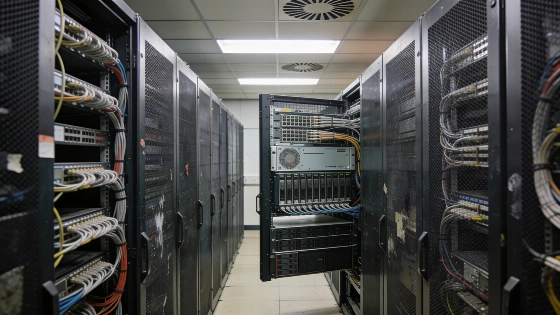
On October 13, 2026, NVIDIA put a five-year UK computing pledge on the table, valued at $250 million. That works out to about $50 million a year. It is computing access, not a $250 million cash donation or direct university funding. The company says the capacity will support research into AI-agent safety and security, with infrastructure in the United Kingdom delivered through local NVIDIA cloud partners. The wider UK AI-safety research community is the main intended beneficiary. Oxford-led BOLD and UCL-led SOFAIR are due to receive a share. Imperial College London is also included. NVIDIA described the commitment as a five-year compute donation in its announcement of the pledge.
For investors, the pledge is visible but financially modest. NVIDIA reported $96.2 billion in revenue for the second quarter of fiscal 2027, up 106% from a year earlier. Against that base, $50 million a year is a small commitment. Demand for data-center products and the company's next results carry more weight for the stock.
The research focuses on agentic AI: systems that plan actions and adapt as they interact with the real world. The program names secure AI agents and open-model safety as research areas. It also targets risks that arise when these systems are deployed. Researchers are expected to use NVIDIA's OpenShell runtime and Sentry reference architecture to operate and test AI systems safely.
Most of the computing access is intended for broader UK research into AI safety. BOLD, a lab led by the University of Oxford, studies how AI systems learn and act alongside people. SOFAIR is led by University College London. Imperial College London is included as well, with research related to robotics safety. The capacity will be hosted in Britain through NVIDIA cloud partners. As of October 14, the company had not identified those providers or finalized the technical architecture and commercial arrangements.
NVIDIA CEO Jensen Huang has said AI capability and safety must advance together. UK AI Minister Kanishka Narayan said the contribution would help future AI serve people's best interests while remaining safe and secure. This is a corporate computing commitment involving the UK research sector, not a new law or separate regulatory body. NVIDIA has also tied it to existing support for UK research institutions. That includes work around the University of Bristol's Isambard-AI supercomputer.
The UK agreement is NVIDIA's second major research commitment announced within a week. On October 8, the company announced $1 billion in commitments over five years for U.S. science. The broader package covers university computing and quantum research. It also includes work related to health and energy security. The UK pledge is one-quarter of the U.S. package's stated value, with a narrower focus on agentic AI safety. NVIDIA said the U.S. program would build the country's capacity for advanced intelligence research and development in its five-year U.S. science announcement.
Data centers remain the core business. The segment produced $89 billion in the second quarter of fiscal 2027, more than 92% of NVIDIA's total revenue. The UK commitment's annual value of $50 million is tiny beside current sales, even as the program gives researchers access to NVIDIA systems and raises the company's profile in AI safety.
NVIDIA shares closed Tuesday up just under 1% at $228.52. At points on Wednesday, they traded down 2.14% to $223.63. The stock was up more than 22% year to date in the figures provided, but those moves do not establish that the research pledge caused either session's trading. TipRanks' summary covered 33 analysts and showed a consensus rating of Strong Buy, with an average price target of $324.20. BNP Paribas Exane raised its target from $285 to $345 on October 5 and reiterated Outperform. UBS reiterated Buy with a $300 target on October 9. Analyst targets are opinions, not assured future prices.
The next major test is NVIDIA's third-quarter fiscal 2027 report. The company forecast revenue of $108 billion, plus or minus 2%, but had not officially confirmed a release date. November 25 was the expected date in the figures provided. That outlook matters more to the stock's operating story than the UK pledge. Investors also face the company's reliance on large AI customers' spending budgets. Competition from cloud providers' in-house chips adds another risk. BNP Paribas Exane expects gross margins to remain above 70% despite that competition, but this is an analyst forecast, not a company result.
Investors comparing NVIDIA with other assets face different sources of return and risk. A company's share price depends on future business performance, while a Treasury's stated payments follow its terms. A Treasury yield analysis examined the distinction through fixed payments and potentially growing fund distributions. For NVIDIA, the pledge leaves revenue concentration and customer investment cycles on the table. Competition and valuation also remain key considerations. The company's stated third-quarter revenue outlook is $108 billion, with a 2% margin either side, and the reporting date remains unconfirmed.