Nvidia is pushing Wall Street to treat its AI chips like infrastructure, attracting $500 billion in financing commitments from major asset managers. The move could reshape how data center growth is funded-and who bears the risk if demand shifts.
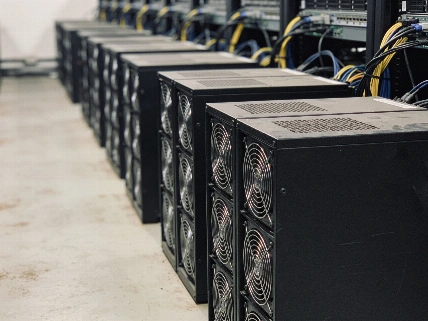
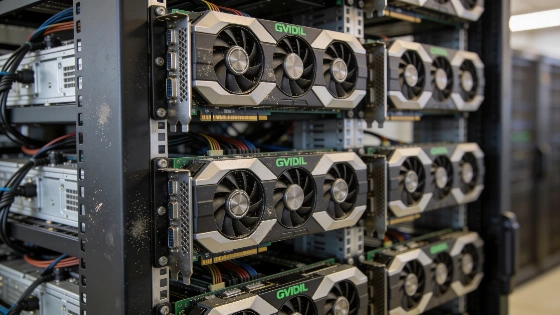
Nvidia is making a bold play to transform how investors view its AI chips, persuading some of the world's largest asset managers to treat them as long-term, revenue-generating assets rather than just high-tech components. On August 10, Nvidia announced agreements with Apollo Global Management, Blackstone, BlackRock, Brookfield Asset Management, Goldman Sachs, and KKR to create financing platforms that could mobilize more than $500 billion in outside capital for companies building AI data centers, according to CNBC. The goal: enable hyperscalers, AI labs, and enterprises to access Nvidia's hardware without tying up massive amounts of their own capital.
Under the new model, a customer seeking Nvidia chips can avoid putting billions on its balance sheet. Instead, a financing platform acquires the chips, leases them back to the customer, and collects payments based on the compute revenue those chips generate. In some cases, Nvidia guarantees a portion of the hardware's residual value, allowing lenders to offer lower rates. This approach positions Nvidia's chips as financeable assets, similar to real estate or infrastructure, and could fundamentally change how AI infrastructure is funded.
Wall Street's Embrace and Market Reaction
The rapid buy-in from major financial players signals a shift in how Wall Street values AI hardware. Goldman Sachs CEO David Solomon described the initiative as a pivotal moment in the AI investment cycle, while Blackstone's Jon Gray compared the opportunity to mortgage-backed lending, noting that demand for AI compute is outpacing supply at many portfolio companies. BlackRock CEO Larry Fink went further, likening the project to the creation of mortgage-backed securities in the 1970s and revealing that BlackRock has already begun raising funds for the effort.
Despite the scale of the announcement, Nvidia's stock closed down 2.86% at $217.55 on the day, while shares of Blackstone, Apollo, and KKR all rose, according to CNBC. The market's reaction suggests investors see the financing consortium as a sign that balance-sheet constraints are becoming a real limit on organic demand growth for AI chips, rather than a straightforward bullish signal for Nvidia itself.
Debt Risks and Circular Financing Concerns
The financing model is arriving as global AI-linked bond issuance accelerates. Morgan Stanley projects nearly $570 billion in such bonds will be issued in 2026, more than double the previous year. Nvidia itself raised $25 billion in a June bond sale, attracting $85 billion in investor orders, based on Bloomberg reporting. Yet some analysts warn that Nvidia's arrangements risk becoming circular-where Nvidia helps finance customers who then use those funds to buy more Nvidia chips-making it harder to distinguish genuine market demand from demand that is effectively subsidized by the company.
The Bank for International Settlements has flagged similarities between these circular financing patterns and the pre-2008 credit structures that contributed to the financial crisis. Its June 2026 report warned that if sentiment shifts, these arrangements could unwind rapidly. Not all investors see this as a red flag; some argue Nvidia is simply leveraging its market dominance and pricing power. Still, the scrutiny extends to other deals, such as Nvidia's reported $250 billion backstop for OpenAI's planned Ohio data center, which has drawn similar questions about the true source and sustainability of demand.
Nvidia's New Role and Investor Implications
Nvidia is increasingly acting as a financier as well as a chipmaker. In July, the company invested $5 billion in AI lab Safe Superintelligence, securing priority access to its Vera Rubin compute platform in exchange for research insights. The demand side remains robust: Goldman Sachs Research has repeatedly raised its forecasts for hyperscaler capital spending this year, a trend Nvidia CEO Jensen Huang has cited to defend the company's growth trajectory.
Whether Nvidia's chips will ultimately behave like durable, bankable assets or simply extend the current AI investment boom remains to be seen. For now, Wall Street's willingness to underwrite these deals is shaping the pace and structure of AI infrastructure expansion. The risks-especially around debt, asset values, and the potential for circular financing-are drawing close attention from regulators and investors alike.
As the financial sector experiments with new ways to fund technology infrastructure, some observers are drawing parallels to other recent shifts in institutional investing. For example, Berkshire Hathaway's evolving approach to stock buying has also raised questions about risk and long-term strategy, as discussed in this analysis of Berkshire Hathaway's changing investment posture.
According to Nvidia's most recent quarterly filing, the company reported $26 billion in revenue for the three months ending July 2026, up sharply from $13.5 billion a year earlier. Its data center segment accounted for more than 80% of total revenue, reflecting the central role of AI infrastructure in Nvidia's business model. The company's market capitalization remains above $1 trillion, making it one of the most valuable U.S. public companies.
Asset-backed financing is a longstanding tool in sectors like real estate, aviation, and energy, where physical assets generate predictable cash flows over many years. Applying this model to AI chips is a novel experiment, with both promise and risk. Unlike buildings or aircraft, technology hardware can become obsolete quickly, and its value depends on sustained demand for AI compute. Investors considering exposure to these new financing vehicles should weigh the potential for high returns against the risk that rapid shifts in technology or market sentiment could erode asset values faster than in traditional infrastructure sectors.