Nvidia shares have fallen 16% since their May peak, erasing about $1 trillion in market value. Citi analysts maintain a bullish outlook, citing a strong product roadmap and buyback plans despite investor concerns
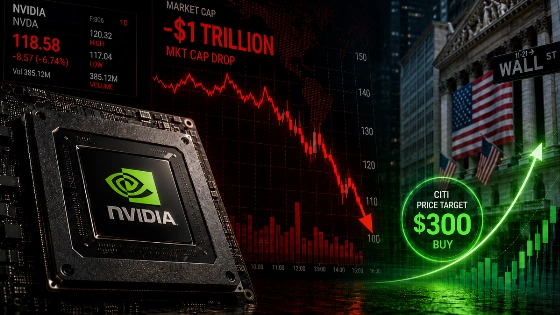
Nvidia stock has endured a sharp reversal since reaching an all-time high on May 14, 2026, shedding roughly $1 trillion in market capitalization and falling about 16% to trade near $204. This decline stands out as the broader market has generally moved higher, leaving investors who bought during the spring rally facing significant short-term losses. The selloff has unfolded without a clear single catalyst, fueling speculation about the company’s outlook and the durability of the artificial intelligence (AI) investment cycle.
Citi’s Take: Roadmap Intact, Valuation at Multi-Year Lows
Following a direct discussion with Nvidia’s investor relations team, Citi analyst Atif Malik reaffirmed his Buy rating and $300 price target, according to Seeking Alpha. Malik, who is among the top-ranked analysts tracked by TipRanks, emphasized that while investor concerns are real, Nvidia’s product development remains on schedule. The company’s next-generation Kyber chip line is progressing without major delays, and supply chain disruptions or timeline setbacks have not been confirmed by management.
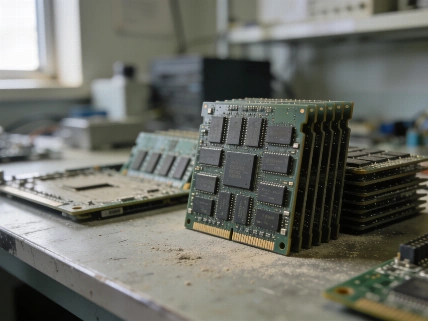
Malik also highlighted that Nvidia’s long-term memory supply agreements are expected to help protect gross margins, which the company continues to target in the mid-70% range. Maintaining this level of profitability is notable for a company of Nvidia’s scale and growth rate. Additionally, Nvidia’s NVLink networking and optics initiatives—areas that have drawn investor scrutiny—are reportedly proceeding as planned.
Valuation Reset and Market Rotation
The recent correction has pushed Nvidia’s valuation to its lowest forward earnings multiple since early 2019, now trading at roughly 18 to 19 times projected earnings. This marks a significant shift from the premium multiples seen during the height of the AI-driven rally. The selloff began in mid-May as investors rotated into memory chip makers like Micron and Sandisk, pulling capital away from Nvidia even as its business fundamentals remained largely unchanged.
Other major banks have echoed Citi’s view. Bank of America, for example, recently set a $350 price target, arguing that Nvidia’s current valuation does not reflect the company’s ongoing leadership in AI hardware and data center markets. Both banks suggest that the stock is being priced as if the AI growth story is over, despite evidence to the contrary in Nvidia’s product pipeline and revenue trends.
Buybacks and Capital Return Strategy
Nvidia’s management reiterated its commitment to returning 50% of annual cash flow to shareholders this year. The company recently increased its quarterly dividend to $0.25 per share and announced a new $80 billion stock buyback program, supplementing an existing $39 billion authorization. With shares down from their peak, aggressive buybacks could help stabilize the stock price and reduce the share count, potentially enhancing returns for long-term investors if sentiment improves.
Historically, companies that repurchase shares at depressed valuations have delivered outsized gains to remaining shareholders when market conditions recover. Nvidia’s willingness to accelerate buybacks at current levels signals confidence in its long-term prospects and may provide a floor for the stock in the near term.
Key Risks: AI Spending, Margins, and Competition
Despite Citi’s constructive stance, several risks continue to weigh on Nvidia’s stock. The main concerns include the possibility that hyperscale cloud providers such as Microsoft, Google, and Amazon could slow their AI infrastructure spending, rising memory costs that could pressure margins, and increased competition from custom AI chips developed by companies like Broadcom.
Malik’s analysis suggests that AI capital expenditures by major cloud players are still growing, as reflected in Nvidia’s most recent quarterly data center revenue, which rose approximately 75% year-over-year. While custom silicon is gaining traction in certain inference workloads, Nvidia remains the dominant provider for AI model training, a segment where GPUs are still the preferred technology. The company is also expanding its capabilities in inference to address competitive threats.
There is also a potential upside scenario involving China. Recent reports indicate that Nvidia’s H200 chips could re-enter the Chinese market under strict export controls, though Malik’s current estimates do not include any revenue from China. If export restrictions are eased, this could provide additional, unmodeled growth for the company.
Investor Outlook Ahead of Earnings
Nvidia’s next earnings report is scheduled for August 26, 2026. Until then, the stock is likely to be driven by sentiment, news flow, and broader market trends in AI-related equities. Citi’s note frames the recent selloff as a potential entry point for investors willing to look beyond short-term volatility and focus on fundamentals such as product execution, margin stability, and capital return policies.
As of July 9, some technical indicators suggest Nvidia may be attempting to break out of its multi-week correction, according to Yahoo Finance. Whether this move holds will depend on whether investor concerns about AI spending, competition, and margins subside or intensify ahead of the next earnings release. For those watching from the sidelines, Citi’s analysis implies that the current window for buying at historically low valuations may not last indefinitely.
For the fiscal year ended January 2026, Nvidia reported total revenue of $80.6 billion, up from $60.9 billion the previous year, according to its official filings. Data center revenue, which includes AI hardware, accounted for more than 70% of total sales and grew at a faster pace than the company’s overall top line. Gross margin for the year was 74.2%, reflecting the company’s ability to maintain profitability despite rising input costs and competitive pressures.
Stock buybacks are a common tool for companies seeking to return capital to shareholders, especially when management believes the shares are undervalued. While buybacks can support share prices and improve per-share metrics, they do not address underlying business risks or guarantee future returns. Investors should consider the sustainability of buyback programs, the company’s cash flow generation, and the broader market environment when evaluating the impact of repurchase activity. In Nvidia’s case, the scale of its buyback authorization is notable, but long-term performance will ultimately depend on continued innovation, competitive positioning, and demand for AI infrastructure.