Peter Thiel's hedge fund has re-entered the stock market with a $418.7 million portfolio, making Amazon its largest holding. The move comes as Amazon's AI and cloud investments reshape investor expectations and sector dynamics
Peter Thiel's Thiel Macro hedge fund has returned to public equities in dramatic fashion, building a $418.7 million portfolio after sitting out the market for several quarters. The fund's latest 13F filing for the second quarter of 2026 reveals a concentrated bet on Amazon, with nearly $118 million invested in the tech giant-accounting for 28% of the fund's total disclosed holdings. This marks a sharp shift from Thiel Macro's previous filings, which showed no stock positions at the end of 2025 and through the first quarter of 2026.
Amazon's recent earnings report has been a catalyst for renewed investor enthusiasm. The company's shares jumped roughly 14% on July 31, 2026, after Amazon reported that its aggressive spending on artificial intelligence and cloud infrastructure was translating into tangible revenue growth. By August 10, Amazon's stock closed at $278.09, up about 19% year-to-date. The company also raised its 2026 capital expenditure guidance to $220 billion, a figure that would have once triggered concern but is now seen as a sign of confidence in future demand for cloud and AI services.
AI and Cloud Drive Amazon's Growth
The main driver behind Amazon's surge is Amazon Web Services (AWS), which posted a 37% year-over-year increase in sales to $42.2 billion for the quarter-its fastest growth in more than four years. AWS operating income reached $16.6 billion, making up 60% of Amazon's total operating profit. Notably, AWS's backlog-a measure of contracted but not yet delivered services-jumped to $496 billion from $364 billion in the previous quarter, a 36% increase. Amazon has indicated that much of its 2027 cloud capacity is already reserved, with some 2028 capacity also spoken for, underscoring the scale of demand from enterprise and AI customers.
Investors have largely accepted Amazon's elevated capital spending because it is tied to contracted demand rather than speculative expansion. While the company reported a $7.6 billion outflow in trailing free cash flow, the spending is viewed as necessary to secure long-term growth in cloud and AI infrastructure. Thiel's investment aligns with this thesis, reflecting his longstanding admiration for Amazon's strategy of dominating core markets before expanding into adjacent sectors.
Concentration and Contrarianism
Thiel Macro's Q2 portfolio is notable not just for its size but for its focus. Every position disclosed in the filing is new, and nearly three-quarters of the fund's capital is allocated to energy and power-related stocks. This includes $75.9 million in Vista Energy, $59.1 million in Vistra, $42.2 million in American Electric Power, $40.3 million in DTE Energy, $39.9 million in FirstEnergy, $39.6 million in CMS Energy, and $3.7 million in X-Energy. The fund's approach reflects Thiel's broader investment philosophy: concentrate capital in a few high-conviction ideas rather than spreading it thinly across the market.
Thiel's strategy is rooted in patience and a willingness to take contrarian positions. Rather than chasing the most popular AI software or semiconductor stocks, Thiel Macro is targeting the infrastructure bottlenecks that could limit the AI boom-specifically, the power and energy required to run massive data centers. This approach echoes the contrarian mindset that Thiel and his partners have championed at Founders Fund, where they argue that consensus trades often offer limited upside because expectations are already priced in.
Energy Bets Linked to AI Expansion
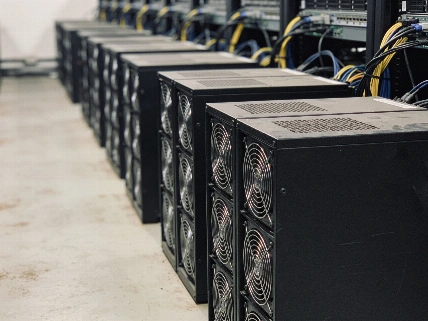
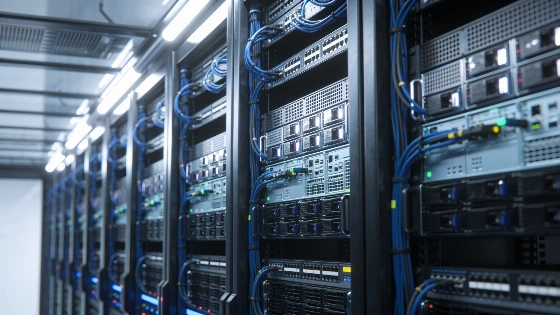
The fund's energy holdings are closely tied to the growth of AI and cloud computing. For example, Vistra has a 20-year agreement to supply Amazon Web Services with 1,200 megawatts of nuclear power from its Comanche Peak facility, and similar deals with Meta Platforms. American Electric Power has reported agreements representing 56 gigawatts of data center load, double its level from the previous fall, with even more requests in the pipeline. DTE Energy is supporting Alphabet's planned Michigan data center with a 1-gigawatt agreement, and X-Energy is working with Amazon to develop more than 5 gigawatts of new nuclear capacity by 2039 to meet rising data center power needs.
By investing in these companies, Thiel Macro is positioning itself to benefit from the surge in electricity demand driven by AI and cloud infrastructure. The fund's focus on energy and utilities suggests a belief that the real constraint on AI growth may not be software or chips, but the availability of reliable, large-scale power. This thesis stands in contrast to the more crowded trades in AI software and hardware, and it highlights the importance of infrastructure in supporting the next phase of technology expansion.
For investors weighing concentrated bets on technology or infrastructure, Thiel's approach offers a reminder that market leadership can shift as new bottlenecks emerge. While some investors prefer broad diversification, others-like Warren Buffett, whose index fund strategy is discussed in this analysis of his ETF approach-favor a more passive, long-term allocation. Thiel's latest moves show that even seasoned investors can dramatically change course when market conditions and opportunities evolve.
According to Forbes, Peter Thiel's net worth stood at $32 billion as of August 15, 2026, reflecting decades of successful investing and entrepreneurship. His track record includes co-founding PayPal, leading Palantir Technologies, and making early investments in Facebook, SpaceX, and Airbnb. Thiel Macro's latest portfolio reshuffle underscores his willingness to act decisively when he sees a major shift in market dynamics.
Amazon's Q2 2026 results highlight the scale of its cloud and AI ambitions. AWS's $42.2 billion in quarterly sales and $16.6 billion in operating income underscore its central role in Amazon's profitability. The company's $220 billion capital spending plan for 2026 is among the largest in the sector, and its backlog of $496 billion in AWS contracts points to sustained demand for cloud infrastructure. These figures illustrate why investors like Thiel are willing to tolerate near-term cash outflows in exchange for long-term growth potential.
As the AI boom accelerates, the intersection of technology and energy infrastructure is becoming a focal point for investors. Thiel Macro's portfolio suggests that the next phase of growth may depend as much on power generation and grid reliability as on advances in software or hardware. For U.S. investors, the lesson is that the most important opportunities-and risks-may lie in the less obvious corners of the market.
When evaluating investments in technology and infrastructure, it's essential to understand the underlying drivers of demand and the potential constraints on growth. In the case of AI and cloud computing, the availability of affordable, reliable electricity is emerging as a critical factor. Companies that can secure long-term power agreements or develop new sources of energy may be better positioned to capitalize on the expansion of data centers and AI workloads. For investors, this means looking beyond headline growth stories to the foundational elements that enable technological progress.