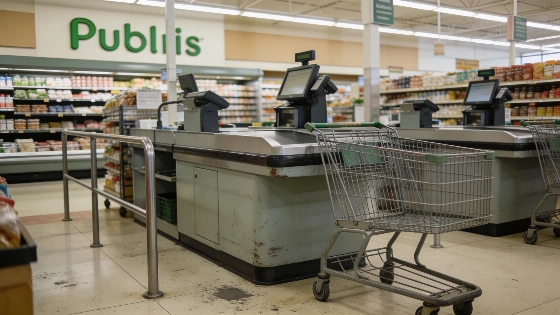
Publix is seeing a rare decline in comparable store sales as economic pressures, policy changes, and rising grocery prices drive customers to spend less and seek out lower-cost competitors
Publix, one of the largest grocery chains in the Southeast, is contending with a shift in consumer behavior that is weighing on its sales and market position. The company reported a 0.5% year-over-year drop in comparable store sales for the second quarter of 2026, a notable reversal after years of steady growth. This decline comes as shoppers, squeezed by higher grocery prices and broader economic uncertainty, are rethinking where and how they spend their food dollars.
Changing Consumer Habits
Several factors have contributed to Publix's recent challenges. Earlier this year, the company discontinued Publix Pay, its in-app contactless payment system, which frustrated some loyal customers. In May, Publix quietly updated its open-carry firearm policy in Florida stores, prompting backlash and boycott threats from some shoppers. While these policy changes sparked controversy, the company attributes its sales decline primarily to economic headwinds and regulatory shifts affecting prescription drug pricing.
Since January, a new Medicare drug pricing rule has capped the maximum fair price (MFP) that pharmacies can be reimbursed for certain prescription drugs. Publix has cited this change as a key reason for both flat sales in the first quarter and the recent decline, as it impacts pharmacy revenue and customer traffic. The company's CEO, Kevin Murphy, acknowledged the difficult environment, emphasizing the commitment of Publix employees during what he described as a challenging economic period.
Inflation and Price Sensitivity
Grocery inflation remains a major concern for U.S. households. According to the Consumer Price Index, grocery prices rose 2.7% year over year in June. As a result, many consumers are adjusting their shopping habits. A recent survey from Relex Solutions found that 61% of U.S. shoppers have changed the amount of food they buy due to rising prices, while 40% are visiting discount retailers more often. More than half of respondents said that lower prices are the most important step retailers can take to help them manage higher costs.
Retailers are feeling the pressure to adapt. Thirty percent of grocery retailers surveyed said that responding to changing consumer demand is a significant challenge. Laurence Brenig-Jones, vice president at Relex Solutions, noted that consumers are making highly individualized decisions based on price, health, and household priorities. Publix has faced criticism on social media for its pricing, with some customers accusing the chain of price gouging as competitors ramp up promotions.
Competitive Landscape Intensifies
The fight for grocery market share is intensifying. According to Numerator data, Walmart remains the top grocery retailer in the U.S., holding a 20.3% market share for the 12 months ended June 30, 2026, up 0.3 percentage points from the prior year. Costco and Kroger follow, each with 8.3% share, while Albertsons holds 4.5%. Publix ranks fifth with 4.1%, unchanged from the previous year, but faces mounting pressure as rivals aggressively cut prices to attract budget-conscious shoppers.
Walmart rolled out 7,200 price rollbacks in the first quarter and announced further summer reductions across its stores and Sam's Club locations. Kroger has also slashed prices on thousands of items, with its CEO stating that the overall grocery basket needs to become more affordable for customers. Retail analysts argue that while temporary promotions can help, shoppers are increasingly seeking retailers that offer consistently low prices across their entire cart.
For context, another major company recently faced investor pressure after a shift in consumer demand affected its growth outlook, highlighting how quickly market dynamics can change for even the most established brands.
Data and Consumer Impact
Publix's second quarter 2026 earnings report shows the company is not immune to the broader pressures facing the grocery sector. The company's comparable store sales decline stands out in an industry where even modest growth is often expected. Meanwhile, the Consumer Price Index's 2.7% annual increase in grocery prices for June underscores the persistent inflationary environment. With 61% of consumers reporting changes in their grocery purchasing and 40% shifting to discount retailers, the competitive landscape is likely to remain challenging for traditional grocers like Publix.
As retailers compete on price and promotions, the risk is that temporary discounts may not be enough to retain customers who are increasingly focused on value. The ability to offer everyday low prices, rather than sporadic deals, may prove more effective in building long-term loyalty as household budgets remain under strain.
Grocery retail is highly sensitive to shifts in consumer confidence, inflation, and regulatory changes. When prescription drug reimbursement rules change, as with the Medicare MFP policy, the impact can ripple through pharmacy sales and overall store traffic. Similarly, even small changes in inflation or consumer sentiment can alter shopping patterns, forcing retailers to adjust pricing, promotions, and product offerings. For investors and consumers alike, understanding these mechanisms is key to interpreting both short-term sales swings and longer-term trends in the sector.