
With home values far below the national average and state tax breaks on retirement income, Knoxville Iowa is drawing attention from retirees seeking to stretch their savings without sacrificing access to healthcare or community life
Retirees seeking to maximize their savings are increasingly considering Knoxville, Iowa-a town where the average home value is $211,086, significantly below the U.S. average of $368,697. The financial advantages are notable: lower property prices, modest rents, and a cost of living approximately 20% under the national average position Knoxville as an attractive option for those aiming to preserve retirement funds.
Iowa's cost of living index in 2026 is 87.76, with an average real income of about $74,574, making it one of the more affordable states for retirees.
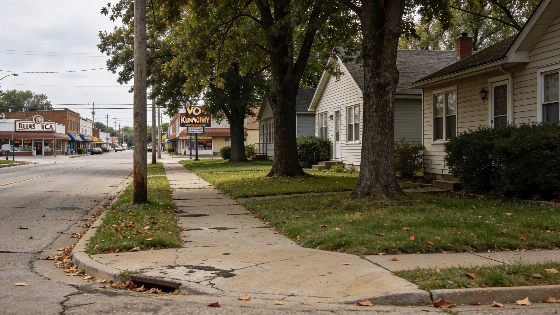
Daily life in Knoxville is shaped by routine and familiarity. The town square and Main Street serve as the social and commercial center, with local diners, small shops, and a weekly farmers market anchoring community life. For many, the slower pace is a benefit-morning coffee at a local spot, errands that rarely require more than a short drive, and quiet evenings in neighborhoods where residents know each other.
Knoxville remains a prominent hub for sprint-car racing, with the Knoxville Raceway and National Sprint Car Hall of Fame & Museum continuing to serve as key landmarks for local identity and tourism in 2026.
Knoxville's identity is closely linked to the Knoxville Raceway, which hosts regular sprint car races from April through September. The track and the National Sprint Car Hall of Fame & Museum are sources of local pride and gathering, attracting both residents and visitors. Outside racing season, local establishments such as Manny's Diner and Rib Shack remain central to social life.
Navigating Knoxville is straightforward. Most essentials are located near the town square, and even outlying services are only a short drive away. While a car is necessary for most errands, traffic is light and parking is rarely a concern. The town's layout favors established residential streets over sprawling developments, with older homes near the center and newer construction on the outskirts.
Seasonal changes are distinct. Summers bring outdoor events and activity around the raceway, while winters are quieter, with more time spent indoors. Temperatures typically range from 18°F in winter to 87°F in summer, so retirees considering Knoxville should be prepared for the full range of Midwest weather.
According to Zillow data from early 2026, Knoxville's average home value of $211,086 is not only well below the national average but also significantly lower than Des Moines' average of $258,000. Average monthly rent in Knoxville is $895, compared to $1,058 in Des Moines and $2,000 nationally. The cost of groceries and utilities in Knoxville also trends below national benchmarks, supporting retirees in managing fixed incomes more predictably.
For retirees, the trade-off is clear: Knoxville offers affordability, a sense of community, and practical access to healthcare and daily needs, but it does not provide the variety or stimulation of a larger city. Social life is concentrated in a few locations and events, making it easier for newcomers to integrate but potentially limiting for those seeking a broader range of activities. The financial benefits are tangible, but the lifestyle is best suited to those who value routine, tradition, and a slower pace over constant novelty.
When evaluating retirement destinations, it is important to consider how state tax policy can affect long-term finances. States like Iowa that exempt Social Security and certain retirement income from taxation can offer meaningful relief for retirees, especially when combined with lower housing costs. However, property tax rates, healthcare access, and the availability of community amenities should also be considered. No single location is ideal for everyone, but for those prioritizing affordability and community, towns like Knoxville can offer a compelling balance.