
Apple faces a new challenge as surging hardware costs, driven partly by AI-fueled demand for memory and storage, threaten to squeeze iPhone margins and force tough decisions on pricing and product strategy
Apple's next iPhone launch may be shaped less by consumer demand and more by the rising cost of making each device. According to a report from MacRumors, citing the Weibo account Fixed Focus Digital, Apple has sharply reduced its internal demand forecast for the standard iPhone 17, with some production lines reportedly planning to suspend up to a third of their capacity. While the report has not been independently verified and Apple has not issued official guidance, the underlying issue is clear: the cost of building iPhones is climbing, and the company must decide how much of that burden to pass on to buyers.
Component Costs and the AI Effect
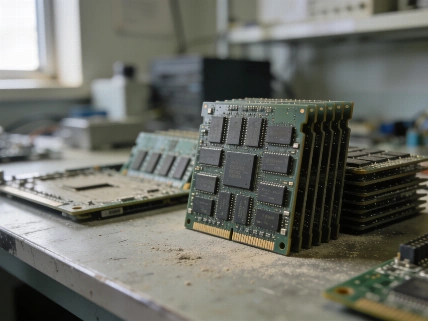
The surge in artificial intelligence investment is not just benefiting chipmakers and cloud providers-it's also driving up prices for memory, storage, and other key components used in consumer electronics. As data centers compete for high-value parts, global shortages have pushed up the average cost of DRAM and NAND memory, according to reporting by Reuters. For Apple, which relies on these components for iPhones, Macs, and iPads, the result is a squeeze on hardware margins.
Apple can either absorb these higher costs, which would compress profits, or raise iPhone prices and risk testing the limits of consumer willingness to pay. The company's most recent quarterly results showed strong momentum: Apple reported $111.2 billion in revenue for its fiscal second quarter, up 17% year-over-year, and diluted earnings per share of $2.01, up 22%. iPhone revenue set a new March-quarter record, and services revenue reached an all-time high. But as the next iPhone cycle approaches, investors are watching closely to see whether Apple can maintain its profitability in the face of rising input costs.
Pricing Power and Consumer Sensitivity
The rumored production cuts for the standard iPhone 17 highlight a key risk: price sensitivity may be more pronounced among buyers of the base model than among those who opt for the Pro series. Consumers who purchase the most expensive iPhones may be more willing to accept price increases, while those considering the standard model could delay upgrades, choose older devices, or wait for discounts if prices rise too quickly. This dynamic makes the regular iPhone a critical test of Apple's pricing power and the elasticity of demand.
Apple has already raised prices across several product categories in recent years, but has so far held the line on iPhone pricing. According to MacRumors, industry expectations are that Apple may use the launch of the iPhone 18 Pro as an opportunity to increase prices across its smartphone lineup. If so, the company will need to balance the need to protect margins with the risk of alienating price-sensitive customers.
Strategic Shifts and Investor Implications
One way Apple has historically managed cost pressures is by encouraging customers to move up the product line. By making higher-end models appear to offer better value, Apple can steer buyers toward devices with higher margins and more advanced features. This strategy also supports the company's broader ecosystem, as users who invest in premium devices are more likely to subscribe to services, purchase accessories, and remain loyal to the brand.
For investors, the next iPhone cycle is shaping up as a test of Apple's ability to defend its margins in a changing market. The company recently announced a $100 billion stock buyback program, signaling confidence in its financial strength. But the real question is whether Apple can continue to command premium prices for its flagship product as AI-driven demand for components pushes up costs across the consumer electronics industry.
Apple's brand remains one of its greatest assets, but even the strongest brands face limits. If consumers balk at higher prices not justified by clear product improvements, Apple may need to rely more heavily on services growth, product mix shifts, and financial engineering to sustain its profitability narrative. The outcome will depend on how successfully the company can make increased costs seem worthwhile to buyers.
Market Data and Financial Context
In its fiscal second quarter ended March 2026, Apple reported $111.2 billion in revenue, a 17% increase from the prior year, and diluted earnings per share of $2.01, up 22%. iPhone revenue reached a record for the March quarter, while services revenue hit an all-time high. The company also announced a new $100 billion share repurchase program, underscoring its strong cash position and ongoing commitment to returning capital to shareholders.
As Apple prepares for its next iPhone launch, the company's ability to manage rising hardware costs without eroding demand will be closely watched by investors and industry analysts alike. The broader tech sector is also grappling with higher component prices, as AI infrastructure spending continues to reshape supply chains and pricing dynamics for consumer devices.
For U.S. consumers, the impact of these trends may soon be felt in the price tags of new smartphones and other electronics. Whether Apple can maintain its reputation for value and innovation while navigating these cost pressures will help determine the trajectory of its most important product line in the years ahead.
Component inflation is a persistent challenge in the technology sector, especially when global supply chains are strained by surging demand from new industries like artificial intelligence. For companies like Apple, which operate at massive scale and depend on complex supplier networks, even small increases in the cost of memory or storage can have significant effects on margins and pricing strategies. The ability to pass on these costs to consumers depends not only on brand strength, but also on the perceived value of each product generation. As hardware becomes more expensive to produce, companies must weigh the risks of raising prices against the potential for lost sales and diminished customer loyalty.