Rocket Lab landed a $266 million deal for 12 suborbital launches with the U.S. government, boosting its backlog as its next-generation Neutron rocket faces further delays
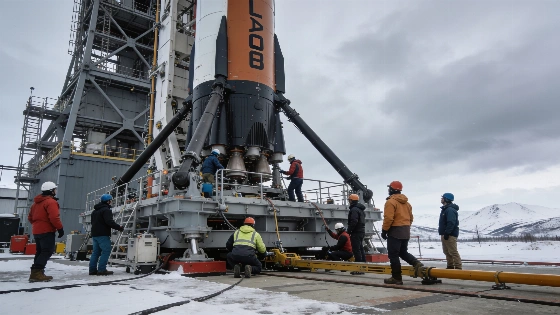
Rocket Lab, a company known for launching small rockets from New Zealand, has won a $266 million contract to provide 12 suborbital launches for the U.S. government. The deal, awarded by Space Systems Command, marks a significant win for the company as it continues to expand its presence in the U.S. defense and national security sector. The launches will take place from the Pacific Spaceport Complex in Alaska, with the government retaining an option for six additional missions through the end of 2028.
The contract comes at a pivotal time for Rocket Lab. While the company has built its reputation on frequent small satellite launches, its much-anticipated Neutron rocket-a medium-lift vehicle designed to compete with SpaceX-has yet to fly. The Neutron's debut has been pushed back to late 2026 after a tank failure earlier this year, according to NASASpaceFlight.com. This delay has weighed on Rocket Lab's stock, which closed at $69.12 on Tuesday, down more than 50% from its all-time high in May. Despite these setbacks, the new government contract sent shares up as much as 6% in after-hours trading, according to Seeking Alpha.
Government Contracts Drive Growth
Rocket Lab's recent success with government contracts highlights a shift in its revenue mix. The company's backlog of launch and space systems orders reached $2.2 billion as of the first quarter, based on data from Spaceflight Now. In March, Rocket Lab secured a $190 million contract for 20 flights of its HASTE test vehicle, which was its largest launch agreement at the time. The new Alaska contract, while involving fewer launches, carries a higher price per mission and further cements Rocket Lab's role as a key provider for U.S. defense testing and hypersonic research.
According to the Department of Defense contract listing, $112 million in fiscal year 2025 research and development funds were obligated at the time of the award, covering less than half the contract's total value. The remainder will be paid as the government issues task orders over the next two years. The award followed a competitive process, with three companies submitting offers. Space Systems Command's contracting office is based at Kirtland Air Force Base in New Mexico, though the launches themselves will occur nearly 3,000 miles away in Alaska.
Strategic Positioning Amid SpaceX Dominance
While SpaceX continues to dominate the global launch market-handling about half of all launches worldwide in 2025, according to SatelliteToday-Rocket Lab has focused on specialized niches. Its business model emphasizes suborbital test flights and rapid-turnaround launches for national security customers, rather than competing on sheer volume or lowest cost per kilogram. The Alaska contract fits this strategy, positioning Rocket Lab as a go-to provider for the Pentagon when speed and dedicated capacity are more important than scale.
Rocket Lab has also moved to diversify beyond launch services. In June, the company agreed to acquire satellite operator Iridium Communications for approximately $8 billion in cash and stock, signaling a push to become a broader space infrastructure provider. This expansion comes as the company waits for Neutron to prove itself in the medium-lift market, a milestone that could determine whether Rocket Lab can truly rival SpaceX in the years ahead.
Financial and Market Context
Rocket Lab's latest contract underscores the growing demand for suborbital launch services as the U.S. military accelerates hypersonic and missile defense testing. The Pentagon's need for rapid, flexible launch options has created new opportunities for providers like Rocket Lab, which has positioned itself as an early beneficiary of this shift. For investors, the company's expanding government backlog offers some reassurance as commercial launch timelines remain uncertain.
According to reporting by TheStreet, Rocket Lab's shares have experienced significant volatility in 2026, reflecting both the promise of its government pipeline and the risks tied to delays in its next-generation rocket program. The company's ability to secure large, multi-year contracts may help stabilize revenue and investor sentiment as it navigates technical and competitive challenges in the evolving space sector.
For the fiscal year ended December 31, 2025, Rocket Lab reported total revenue of $581 million, up from $463 million in 2024, according to its annual filing. Government contracts accounted for more than 60% of its launch revenue in 2025, reflecting the company's growing reliance on defense and national security work as commercial satellite launches remain lumpy. The company's backlog at the end of Q1 2026 stood at $2.2 billion, with the majority tied to multi-year government agreements.
Suborbital launch contracts like Rocket Lab's latest deal illustrate how the U.S. government is reshaping the commercial space industry. As defense priorities shift toward hypersonic weapons and missile defense, demand for rapid, flexible launch services has surged. For companies in this sector, success increasingly depends on the ability to deliver specialized capabilities on tight timelines, rather than simply offering the lowest price or highest payload capacity. Investors should weigh the stability of government-backed revenue against the technical and execution risks that come with ambitious new rocket programs.