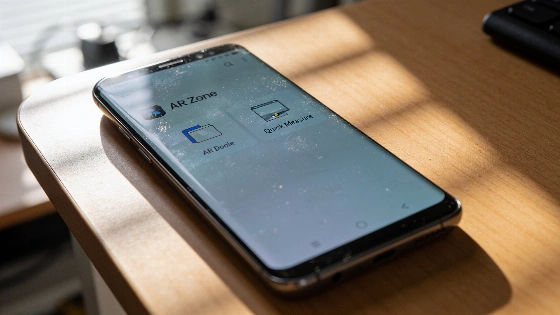
Samsung will discontinue AR Doodle and Quick Measure on December 31 2026 leaving Galaxy users with fewer proprietary AR tools and a clear signal about the company's shifting priorities
Samsung has set a firm end date for two of its most prominently marketed augmented reality apps. AR Doodle and Quick Measure, previously featured in Galaxy advertising and pre-installed on flagship devices, will be discontinued and removed from the Galaxy Store after December 31, 2026. For users who depend on these tools, the countdown has begun.
Samsung confirmed that after December 31, 2026, AR Doodle and Quick Measure will be removed from the Galaxy Store and will no longer receive official support, with future One UI versions dropping compatibility entirely.
Shifting Priorities
However, the practical impact of these apps never matched their marketing. According to Android Authority, Samsung's decision follows years of declining usage and a broader industry move away from augmented reality. The company had already relegated AR Doodle and Quick Measure to optional downloads in One UI 7, signaling their reduced significance. With generative AI now at the forefront of the tech agenda, Samsung is redirecting resources toward features that drive user engagement and revenue.
For consumers, the consequences are immediate. After the cutoff date, neither app will be available for download or supported on new versions of Samsung's One UI operating system. Existing installations may continue to function temporarily, but future software updates will eventually end compatibility. Some newer Galaxy models, such as the Z Fold 8, already block access to these apps, reflecting early incompatibility with upcoming One UI releases, as noted by Android Authority.
What Users Lose
AR Doodle was always positioned as a playful feature, allowing users to sketch in midair and anchor doodles to faces or surfaces for social media or messaging. Quick Measure, by contrast, provided a practical tool for measuring furniture, walls, or packages without a tape measure. Despite this utility, the feature remained too niche to justify continued investment. Most users tried these apps once and did not return.
Samsung's decision to discontinue these AR features is part of a broader shift away from its earlier AR strategy. The company had previously moved AR Doodle and Quick Measure to optional downloads in One UI 7, indicating a decline in priority for these tools.
Samsung's withdrawal from AR is not isolated. The early 2020s saw a surge of AR enthusiasm, with Apple, Google, Meta, and Samsung all investing in a future where digital overlays would become routine. Instead, consumer interest plateaued, and the industry's focus shifted to AI-powered features that deliver more measurable value. Samsung now emphasizes AI enhancements in its camera, messaging, and productivity apps-areas with clear user adoption and monetization potential.
What Happens Next
For Galaxy owners who still use AR Doodle or Quick Measure, options are limited. Users should download the apps now if not already installed and avoid major software updates to maintain functionality as long as possible. Once support ends, any update to One UI could render the apps unusable. For most, the practical alternative is to seek third-party AR measurement tools in the Google Play Store, which are not tied to Samsung's ecosystem.
Samsung has stated, according to Android Central, that it is "committed" to bringing back improved versions of these services in the future, but has provided no timeline or details. This mirrors the company's earlier move to retire its own Messages app in favor of Google Messages, reflecting a broader pattern of phasing out proprietary software that does not achieve widespread adoption.
Financial Context
Samsung Electronics reported $200.7 billion in revenue for 2023, with its mobile division contributing a significant portion. The company's pivot toward AI-driven features aligns with a wider industry trend, as global smartphone shipments declined by 3.2% in 2023 according to IDC, prompting manufacturers to seek new ways to differentiate devices and retain users. Proprietary software that does not deliver daily value is increasingly viewed as a cost center rather than a competitive advantage.
Samsung's decision to sunset AR Doodle and Quick Measure sends a clear message: features that do not generate regular engagement or revenue will not persist in a tightening market. For users who built routines around these tools, the lesson is clear-proprietary features last only as long as the company chooses to support them. As Samsung shifts focus to AI and streamlines its software offerings, Galaxy owners should anticipate more such quiet discontinuations. The broader risk is not just the loss of a unique app, but the reminder that in consumer technology, brand loyalty does not guarantee long-term support for favored features.
Augmented reality in smartphones was once promoted as the next major advance, but practical limitations have kept it peripheral for most users. AR apps require precise hardware, consistent software updates, and compelling use cases to remain relevant. Without sustained consumer demand, even innovative features can quickly become obsolete. For those considering building routines around proprietary tools, Samsung's example underscores the importance of weighing the risks of lock-in against the convenience of a tightly integrated ecosystem.