SanDisk shares soared over 2,000% in a year before tumbling 45% from their peak. With new long-term contracts and AI-driven demand, is the stock now undervalued or are risks mounting for investors
SanDisk has delivered one of the most dramatic stock market stories of the past year. After a staggering 2,240% surge that transformed the company from a quiet chipmaker into a Wall Street sensation, SanDisk shares have since dropped 45% from their all-time high. This sharp reversal has left investors debating whether the stock's pullback signals a rare buying opportunity or a warning that the rally went too far, too fast.
AI Demand Fuels a New Chapter
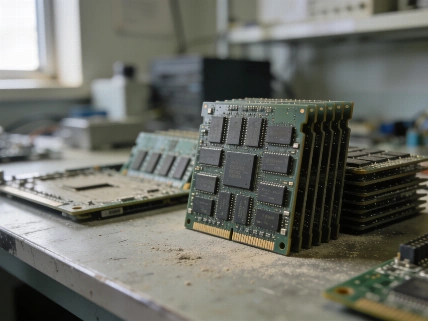
The company's transformation began after its 2025 split from Western Digital, which allowed SanDisk to operate as an independent public company focused on NAND flash memory. NAND is a key component in smartphones, laptops, and, increasingly, the data centers powering artificial intelligence. As AI models shift from training to real-world use, they require vast amounts of fast, scalable storage-an area where NAND excels. SanDisk's leadership has emphasized that data center demand is now the primary growth engine for the business, with customer spending forecasts for AI infrastructure repeatedly revised higher.
SanDisk's CEO has highlighted that as AI applications expand globally, the need for temporary data storage-especially for inference tasks-has made NAND flash memory more critical than ever. Unlike more specialized memory types, NAND can be produced at scale, positioning SanDisk to benefit as AI adoption accelerates.
Shifting to Long-Term Contracts
One of the most significant changes in SanDisk's business model is its move away from volatile, quarter-to-quarter pricing. Instead, the company has begun signing long-term supply agreements with major customers. By the third fiscal quarter, SanDisk had secured five such deals, including three in the most recent quarter that together carry a minimum purchase commitment of $42 billion and $11 billion in financial guarantees. These contracts often include price floors and ceilings, aiming to protect both SanDisk and its customers from extreme price swings in the memory market.
SanDisk's CFO has explained that these guarantees are designed to balance risk: if prices rise, SanDisk may miss out on upside, but if prices fall, customers are shielded from becoming uncompetitive. The company's goal is to have more than half of its bit shipments covered by these agreements, up from about a third currently.
Financially, SanDisk has reported a gross margin of 78.4% in the latest quarter, paid off its remaining term loan debt, and built a sizable net cash position. The board has also authorized a $6 billion stock buyback program. According to analyst estimates from Goldman Sachs, earnings per share could rise from $168.66 this fiscal year to $249.53 in 2027, reflecting optimism about the company's long-term prospects.
Risks and Skepticism Remain
Despite these strengths, the stock's meteoric rise has priced in a great deal of optimism. Any sign that AI-driven demand for flash memory is overestimated could trigger further declines. SanDisk's reliance on a small number of large customers for its biggest contracts also introduces concentration risk. Historically, NAND pricing has been highly cyclical, with sharp declines once supply catches up to demand. Investors are watching closely to see if the company can maintain its momentum as more competitors ramp up production.
Recent market volatility in the semiconductor sector has also raised questions about the sustainability of AI-related growth. For example, some investors have increased short positions against other chipmakers as doubts emerge about the pace of AI infrastructure spending. For a deeper look at how skepticism is affecting the sector, see this analysis of short bets on Micron Technology: why some investors are betting against AI chip stocks.
Analyst Outlook and What to Watch
According to reporting by TheStreet, 14 out of 17 analysts currently rate SanDisk as a "Buy," with the average price target at $2,053-about 60% above current levels. Goldman Sachs has set a 12-month target of $2,200. Yet these targets depend on SanDisk's ability to keep signing new long-term contracts and to sustain high margins as the NAND market evolves. The next major catalyst for the stock will be the company's upcoming earnings call on August 5, which could provide fresh insight into demand trends and contract activity.
For investors, the key questions are whether SanDisk can consistently exceed revenue and earnings expectations and whether the company's new business model can withstand the inevitable ups and downs of the memory market. The stock may be undervalued if these conditions hold, but the risks of a reversal remain significant.
In the most recent quarter, SanDisk reported revenue of $14.2 billion, up 38% year over year, and net income of $4.1 billion. Trading volume spiked during the stock's sharp decline, reflecting heightened investor uncertainty. The company's market capitalization, even after the pullback, remains among the largest in the semiconductor sector.
NAND flash memory is a type of non-volatile storage that retains data even when power is removed, making it essential for everything from smartphones to large-scale data centers. Unlike DRAM, which is faster but more expensive and volatile, NAND offers a balance of speed, capacity, and cost that suits the needs of AI inference workloads. The cyclical nature of the memory market means that prices can swing sharply based on supply-demand dynamics, so companies like SanDisk must carefully manage production, contracts, and customer relationships to avoid the boom-and-bust cycles that have plagued the industry in the past.