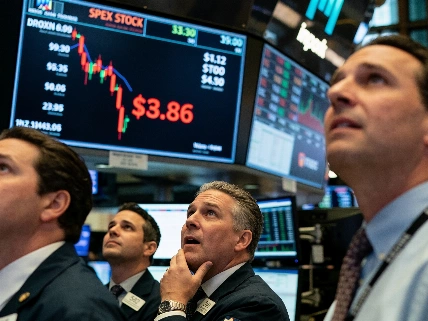

SpaceX's completed IPO and staggered lockups have put event-driven trading in focus. Retail investors may have fewer tools than professionals, so the stock's business fundamentals matter more than the market noise.
SpaceX completed its public debut on Nasdaq under ticker SPCX on June 12, 2026. The offering raised about $75 billion, the largest U.S. IPO on record by proceeds. It priced at $135 a share and valued the company at about $1.77 trillion, according to a Reuters IPO report.
A high-profile offering can draw investors into short-term trades. Professional traders may have better tools for these event-driven moments. For individual investors, the bigger question is whether the business is worth owning after the first wave of volatility fades.
SpaceX's IPO raised about $75 billion, making it the largest U.S. IPO on record by proceeds.
What lockup headlines mean
A lockup bars certain shareholders from selling for a set period. When it expires, some shares may become eligible for sale. Eligibility does not mean holders have sold, and an expiration does not show that a company's prospects have changed. That distinction matters.
SpaceX's lockup schedule is staggered, not a single 180-day cliff. Shares become eligible in several tranches tied to calendar and earnings dates. About 328.4 million shares became potentially eligible around Sept. 24, 2026. That tranche represented roughly 7% of locked-up shares. More unlocks were scheduled for Oct. 9, Oct. 24, and later after third-quarter results, according to market coverage of the schedule. Elon Musk's stake reportedly remains locked until mid-2027. These dates mark potential eligibility to sell, not confirmed sales.
The retail trading gap
Professional traders have better tools for handling IPO events such as lockup expirations. Speed is only part of the gap. These trades can demand close attention and disciplined execution. The information available to an individual investor may not show whether a price move reflects temporary trading pressure or a lasting shift in the company's outlook.
President Donald Trump's public financial disclosure reported that he bought as much as $50,000 of SpaceX shares and sold as much as $15,000 in July. The disclosure was signed on Sept. 8, 2026.
A displayed SPCX figure showed a 0.44% gain. It offers no trading-date context beyond the video's publication on Aug. 29, 2026, and does not say whether the change was intraday or at the close. The figure cannot establish a trend or show how an IPO event affected the stock. One percentage is not enough.
Time horizon over hype
Investors considering an IPO may choose to wait through early volatility and assess the business before making a decision. That does not guarantee a later entry will be cheaper or safer. It can, though, shift the focus to the company's fundamentals and the investor's time horizon instead of an event that professionals may be trading in real time.
The same focus on process appears in steady investing, which emphasizes sustained participation rather than timing a brief market event. An IPO and an index strategy are different. Still, the comparison helps: a short-term trading catalyst and a long-term investment case answer separate questions.
The information here does not include SpaceX financial figures that would allow investors to assess its valuation or business performance. They would need that evidence to weigh the fundamentals. Patience is no substitute for research. It is a more defensible approach than assuming every investor can access an event-driven trading opportunity on equal terms.