
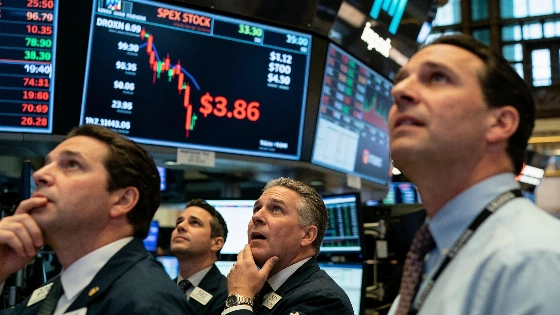
SpaceX shares fell 13.61% in one day after earnings, wiping out about $120 billion in market value. The drop raises a practical question for investors: how much exposure to one company is too much?
SpaceX began public trading in June 2026. In late September, market coverage put its shares at around $150 to $152. Those prices offer context, but they do not show what the stock traded for on the day of the reported 13.61% drop, as FinanceFeeds market analysis noted. The decline followed earnings, but the available information does not say which results or expectations drove the fall.
The impact reaches beyond one company's share price. When a portfolio leans heavily on a single stock, a sharp drop can wipe out gains elsewhere. Investors may then need to reconsider how much company-specific risk they hold. One stock can dominate.
After a September rebalance, SpaceX's reported Nasdaq-100 weighting rose to 2.82%, up from about 1.28% when it was first added to the index.
Size does not remove risk
Mega-cap describes a company's size in the stock market. It does not promise steady returns or protect investors from a sudden selloff. The reported $120 billion loss refers to a drop in market value. It does not prove that the same amount of cash left investors' accounts. Market capitalization shifts with the share price. An individual investor's gain or loss depends on how many shares they hold and what they paid.
The scale of the move still matters. A 13.61% drop in one day can sharply cut the value of a concentrated position, even when a portfolio holds other investments. The available reporting gives no starting share price, trading volume, or account of market expectations for that session. Without those details, the move cannot be measured against them or tied to a specific cause.
Market coverage said a planned lockup expiration could make roughly 328 million shares available for trading. The anticipated increase in tradable supply added to late-September concerns about supply and valuation.
Concentration reaches portfolios
Concentration risk arises when too much of a portfolio depends on one company, sector, or other narrow exposure. Investors can take on that risk by owning shares directly or through funds with a large position in the same company. The available report says investors rely heavily on SpaceX. It does not give ownership figures or show how widely the stock appears across portfolios.
The distinction matters. A steep fall in one stock does not mean a diversified investor's whole portfolio lost the same percentage. The effect depends on how much of the portfolio the position represents and how other holdings perform. Investors can compare a holding's share of their portfolio with their goals and tolerance for losses. No single allocation suits every household.
For more context on how investors assess options during market declines, an earlier ETF comparison looks at funds investors watched after sharp drops. It does not offer evidence about SpaceX's performance. It does show why investors separate a single-stock bet from exposure to a diversified fund.
Read the earnings signal carefully
A drop after earnings shows that the market repriced the stock around an earnings event. Without the results and expectations, it does not explain why. The latest widely cited operating figures before the late-September moves were second-quarter 2026 revenue of about $7.81 billion, up 91.9% year over year, adjusted EBITDA of about $3.5 billion, and a GAAP net loss of $541 million, according to a MarketBeat earnings report. Market coverage said the quarter beat consensus on EPS despite the GAAP loss. It linked near-term trading pressure more to supply and valuation concerns than to a single earnings miss.
The video carrying this account was published on Aug. 29, 2026. That date is not identified as the day the stock fell. The report gives a 13.61% one-day drop and an estimated $120 billion loss in value, but no exact session details or earnings breakdown. The limits matter. The drop warns investors about exposure, but it does not fully explain the business or market expectations.
Exposure is the decision
The useful question for investors is whether one holding has grown large enough to drive the whole portfolio. Large companies can fall sharply. A review should include both directly held shares and overlapping exposure through funds. Investors should also weigh the possible upside they give up when they cut concentration. A selloff alone does not dictate the right choice for any one investor.
Diversification spreads money across investments whose returns may differ, but it cannot prevent market losses. A fund may still hold a large share of its assets in a few companies. The word "fund" does not guarantee broad diversification. The SpaceX drop makes one point clear: company size cannot replace position-risk management. Investors should judge a holding by its place in the whole portfolio, not by the stock's reputation or market scale.