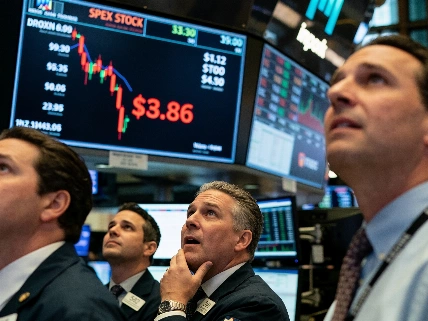

Bank of America and JPMorgan Chase have flagged risks including high valuations, inflation and debt. Before adding stocks, investors can check whether their cash, diversification and use of leverage fit the losses they can afford to take.
Bank of America Global Research says markets may be underestimating how high the Federal Reserve's terminal rate could go. It has warned the Fed could raise its benchmark rate above 5%.
Bank of America has also warned stocks may be due for a pullback. JPMorgan Chase CEO Jamie Dimon has pointed to several pressures that could converge: elevated valuations, geopolitical conflict, inflation and high debt. None of these warnings tells investors when a decline will come or means they should avoid stocks. They do make this a sensible time to check whether a portfolio fits the losses its owner can realistically endure.
BofA strategist Michael Hartnett identified a possible risk-off signal if global financial stocks fall below $125 while the MOVE Index rises above 125.
Risk is personal
Risk tolerance is more than a questionnaire result or a preference for growth. It includes how much volatility an investor can take without abandoning a long-term plan. Household finances also need to withstand a decline without forcing a sale.
I lived through the dot-com crash and the bear market during the Great Recession. Repeated declines can wear down confidence in ways that are hard to grasp when markets are rising. A portfolio that seems manageable on the way up can feel very different after a long slide.
Investors who have not experienced a deep downturn should not assume they know how they will react. The market snapshot supplied with the warnings lists Bank of America (BAC) at +1.20% and JPMorgan Chase (JPM) at +1.33%. Without a date or comparison with a broad market index, those figures say little about marketwide risk. Dimon's list of potential pressures is more consequential.
Hartnett also warned that a 35% two-day rise in the MOVE Index could come before broader deleveraging. He tied that risk to stress in the Treasury collateral system, as detailed in this CNBC account of Hartnett's warning.
Bank of America expects the Bank of England to raise rates twice over the next six months as higher energy prices risk keeping inflation sticky. The forecast implies a peak rate around 4.5% before cuts begin in 2028.
Build room to adjust
Assessing risk does not mean abandoning stocks. Some investors may want to keep more cash than usual, especially if a sudden expense or near-term spending need could force them to sell during a downturn. Cash can also leave room to invest later. The trade-off is that a larger cash holding may limit gains if stocks keep rising.
Diversification offers another practical check. If a portfolio is concentrated in high-flying artificial intelligence stocks, buying another company in the same area may add exposure to the same source of volatility. A dividend-paying consumer staples company sells products people buy in both strong and weak economic conditions. It may offer a different kind of business exposure, but its shares can still lose value and it does not guarantee a better return.
Investors weighing that choice can compare a long-term approach with trying to time every drop. An earlier discussion examined Warren Buffett's emphasis on staying invested and looking for opportunities when prices fall. There is no single playbook for every investor. Make a plan before fear takes over.
Leverage magnifies losses
Margin debt deserves a close look. It is money borrowed from a brokerage account to buy investments. It magnifies gains and losses. If a portfolio falls, the investor still owes the loan.
That can make a downturn more damaging than the drop in the underlying stocks alone. Margin debt is near record levels, according to the source material, a sign of substantial risk-taking on Wall Street. That does not predict a correction or say when one might come.
Investors who use margin should review how borrowing affects their ability to withstand losses. That is more grounded than assuming rising markets will continue.
Cash and diversification can change how a portfolio behaves, but neither removes market risk. Cash trades potential upside for liquidity and stability. Diversification spreads exposure but cannot prevent broad market declines. Borrowing adds an obligation that remains even when investments lose value.
Make those trade-offs deliberately. A portfolio that fits an investor's actual tolerance is more likely to remain investable when markets turn rough.