Space Exploration Technologies lost over $1 trillion in market value after its IPO as investors balked at soaring AI costs. With Anthropic's public debut looming, history suggests waiting out the initial hype may be the smarter move
Space Exploration Technologies' IPO delivered an unexpected setback for investors anticipating a stable debut. The company's market value declined by more than $1 trillion within weeks of going public, as Wall Street reacted to its substantial investments in artificial intelligence. The stock remains below its opening price, and this outcome is influencing how investors approach the next generation of AI-driven IPOs.
For those considering the upcoming Anthropic IPO, recent events highlight the risks of early trading, particularly when a company's growth strategy relies on significant spending in emerging technologies. The SpaceX case demonstrates that even highly anticipated listings can underperform when market expectations confront financial realities.
According to Reuters, Anthropic has selected Nasdaq as the venue for its potential IPO, with marketing possibly starting in mid-October and the deal expected to close before the U.S. midterm elections in November 2026.
AI Spending Drives Volatility
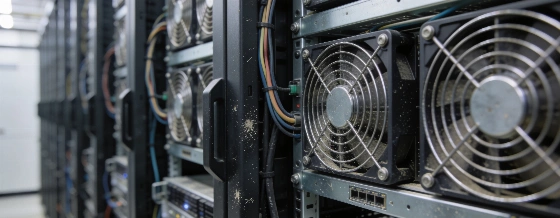
SpaceX's strategic focus on AI has resulted in sharply increased costs. In the first half of the year, the company's capital expenditures rose 308% compared to 2025, reaching $28.5 billion-more than double its $12.5 billion in sales for the same period. The majority of this spending-86%-was allocated to AI initiatives, including the Grok chatbot and Colossus data centers aimed at providing AI computing power to external clients.
This level of expenditure, especially when it significantly exceeds revenue, has made investors more cautious. The market's response was immediate: SpaceX's valuation, which peaked at $2.7 trillion after raising $86 billion, dropped by over $1 trillion in a single month. The stock's continued struggle to regain its opening price reflects persistent doubts about the long-term profitability of these AI investments.
Reuters reported that Anthropic is considering releasing a new AI model ahead of its IPO. In the same report, Ramp data showed that Anthropic's Claude Fable accounted for about 8% of tracked corporate AI spending, while Astra held around 13%.
Anthropic Faces Similar Scrutiny
Anthropic, another company focused on artificial intelligence, is preparing for its own IPO as early as next month. Like SpaceX, it has attracted significant attention and reports an annualized revenue run rate of $65 billion-almost seven times its 2025 sales. However, Anthropic has not disclosed its capital expenditures, and investors are alert to the possibility that its AI investments could surpass those of SpaceX.
According to a Reuters financial review, Anthropic is seeking up to $100 billion in proceeds from its IPO at a valuation near $2 trillion, which would exceed the $86.3 billion raised by SpaceX in the largest previous U.S. IPO. This ambitious target has intensified scrutiny, particularly as the company has reportedly informed investors it expects to achieve a second consecutive profitable quarter, positioning this as a positive indicator ahead of its public offering.
Recent trends indicate that markets are quick to penalize companies that emphasize rapid expansion over financial discipline. As reported by Reuters, AI stocks have already experienced valuation pressures as investors reassess the risks associated with high spending. If Anthropic's IPO follows the trajectory of SpaceX, early investors may encounter significant volatility and underwhelming returns.
IPO Returns Rarely Reward Early Buyers
Analysis from Jefferies, covering more than two decades of IPOs, shows that companies valued at $10 billion or more typically gain 26.5% in their first week of trading. However, the average return over the first 12 months falls to just 3.5%. This trend persists even among prominent technology and AI firms, where initial enthusiasm often gives way to a more measured evaluation of business fundamentals.
For individual investors, this pattern suggests that waiting until after the initial trading period may be a more cautious approach than pursuing early gains. The combination of elevated valuations, substantial spending, and shifting market sentiment creates a volatile environment in which sustained long-term returns are uncertain.
Investing in IPOs involves distinct risks compared to purchasing established stocks. Newly public companies often lack a consistent record of profitability, and their financial disclosures may not fully reflect the challenges of rapid growth. Lockup periods, limited trading history, and the potential for insider selling can all contribute to price fluctuations. For those considering AI-focused IPOs, understanding these factors-and the lessons from recent offerings-can help mitigate potential losses.