SpaceX shares surged after Argus Research upgraded the stock, citing rapid payback on AI investments. The move contrasts with recent market skepticism over heavy capital spending and raises questions for investors weighing growth against risk
Two days before Argus Research issued its latest view, SpaceX (SPCX) shares were under heavy selling pressure. The company had just released its first earnings report as a public company, and Wall Street zeroed in on one figure: the scale of SpaceX's spending on artificial intelligence. Investors responded by driving the stock lower, concerned that the company's aggressive capital outlays might not deliver the expected returns.
Argus Sees Opportunity Where Others See Risk
On August 7, Argus Research upgraded SpaceX from hold to buy and set a $160 price target-well above the $133.11 closing price that day. The firm's analysts argued that the market was misreading the company's AI investments, viewing them as a drag rather than a catalyst for future growth. According to Argus, the rapid expansion of SpaceX's computing infrastructure is already producing a fast payback, with some AI-related spending expected to recoup its cost in less than a year.
The market responded quickly: SpaceX shares jumped 15.8% in a single session, reversing some of the recent losses. Argus's bullish stance stands in sharp contrast to the prevailing caution, highlighting a split in how investors interpret the same financial data.
AI Spending: A Source of Concern and Optimism
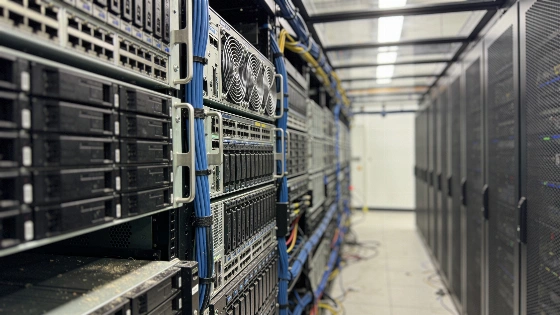
SpaceX reported $18.4 billion in capital expenditures for the second quarter, with $15.83 billion directed toward AI infrastructure-far exceeding the roughly $13 billion analysts had modeled. Management signaled that this elevated level of spending would likely continue. While the company's AI segment posted an operating loss of about $1.3 billion for the quarter, finance chief Bret Johnsen told investors that some of these investments are already generating payback in under 12 months, an unusually fast turnaround for large-scale infrastructure.
Demand for SpaceX's AI services appears robust. The company signed $14.1 billion in new cloud contracts during the quarter and added another $6.7 billion early in the third quarter. AI-related revenue surged 247% year over year to approximately $2.56 billion, with major customers including Google and Anthropic.
Growth Metrics and Market Context
SpaceX's second-quarter revenue reached $7.81 billion, up 92% from a year earlier and ahead of analyst expectations. The company's net loss narrowed to $541 million. Starlink, SpaceX's satellite internet business, remains a key driver, posting $1.66 billion in operating profit and serving 12 million subscribers across more than 160 markets. The company projects an annualized revenue rate approaching $100 billion by the end of 2026, and CEO Elon Musk has moved his $1 trillion annual revenue goal forward to 2030.
Despite these growth figures, SpaceX stock has struggled since its June IPO. After debuting at $135 per share and briefly topping $225, SPCX has fallen about 17% from its high, even as the S&P 500 has gained roughly 13% year to date. The gap between SpaceX's performance and the broader market is precisely what Argus believes could close if the company's growth trajectory holds.
What Needs to Go Right for the Bull Case
Argus's $160 price target is not a guarantee. For the bullish scenario to play out, several conditions must be met: AI revenue must continue to scale, the AI segment needs to turn profitable at the operating level, selling pressure from newly unlocked insider shares must subside, and capital spending must remain disciplined. Piper Sandler, for example, maintains a neutral rating and a $140 target, citing valuation concerns and the impact of the recent lockup expiration that more than doubled the tradable float.
SpaceX's approach echoes a broader trend in the market, where investors are increasingly demanding clear evidence of payback on AI investments rather than simply rewarding big spending. As seen in recent shifts among major tech stocks, Wall Street is rewarding companies that can demonstrate real AI-driven revenue growth and profitability.
Investor Takeaways and Risks
Argus's upgrade signals that at least one major research firm sees SpaceX's AI spending as a calculated bet on future growth, not a reckless gamble. But the stock remains volatile, and more insider shares are set to unlock through December, potentially fueling further price swings. For investors, the key questions are whether SpaceX can convert its heavy investments into sustained profit and whether the current price offers a reasonable entry point given the risk of additional near-term selling.
For the second quarter of 2026, SpaceX's $7.81 billion in revenue and $541 million net loss reflect both the company's rapid expansion and the costs of scaling new business lines. Starlink's $1.66 billion operating profit and 12 million subscribers underscore the importance of recurring revenue streams as the company pursues ambitious growth targets.
SpaceX's strategy of front-loading capital spending on AI infrastructure is a high-stakes bet that could reshape its long-term earnings profile. For investors, the challenge is to weigh the potential for rapid growth against the risks of overextension and market volatility. As with any emerging technology play, the payoff depends on execution, market adoption, and the company's ability to manage costs as it scales.