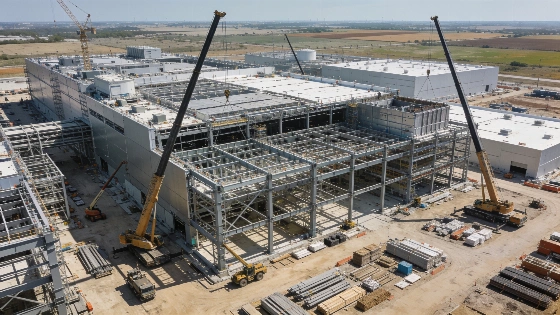
Elon Musk's companies are moving from bold promises to billion-dollar factories, but investors now confront the real risk: can Tesla and SpaceX actually deliver on their trillion-dollar chip and spaceport ambitions
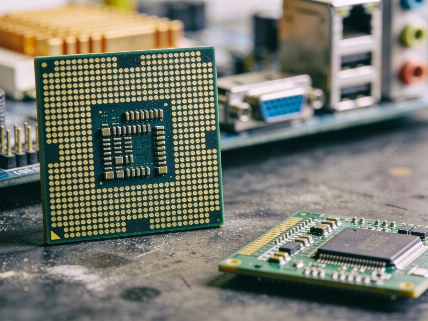
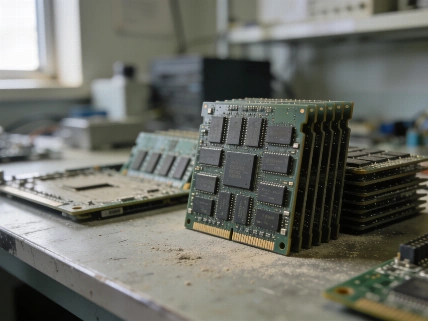
Wall Street is facing a new financial reality as Tesla and SpaceX shift from high-profile announcements to executing capital commitments now exceeding $100 billion, with projections for the Terafab semiconductor project reaching $1 trillion. The stakes are tangible: Tesla and SpaceX have launched a $16.8 billion first-phase investment in Terafab, a Texas-based chip facility, while SpaceX prepares to begin construction on a $100 billion spaceport in Louisiana. According to ARK Invest, Terafab's full buildout could surpass the inflation-adjusted cost of the U.S. Interstate Highway System, highlighting the unprecedented scale of Musk's industrial ambitions.
SpaceX's Starbase Louisiana site is set to cover approximately 125,000 acres in Vermilion Parish, near Pecan Island, and will include infrastructure for propellant production, power generation, deep-water shipping, and an airport.
Market reactions have diverged. SpaceX shares rose after the Starbase Louisiana announcement, while Tesla's stock has lagged the S&P 500, reflecting investor skepticism about Tesla's ability to deliver on its most ambitious projects. SpaceX's $100 billion Starbase, officially announced August 25, 2026, targets a 2027 construction start and a first Starship launch by 2029, with up to 10 launch pads planned across five complexes, according to ENR. Meanwhile, Tesla's scaling record is under scrutiny: the Cybertruck, initially priced at $39,900, now starts at $74,990, with U.S. sales estimates dropping from nearly 39,000 in 2024 to about 20,000 in 2025. Tesla's Semi truck, once targeting 50,000 units annually, is expected by analysts to deliver only a fraction of that in 2026 as production ramps up.
Scaling Ambitions, Real-World Constraints
Execution is now the central challenge. Tesla's robotaxi fleet, though operating in several major U.S. cities, remains well below Musk's public targets. The upcoming September 3 Cybercab event in Austin will test whether the new two-seat, steering wheel-free vehicle can transition from prototype to scalable product. The operational overlap between Tesla and SpaceX is increasing, with Tesla reporting $143.3 million in 2025 revenue from SpaceX, primarily from vehicle sales including Cybertruck deliveries.
The Louisiana spaceport project is expected to create 3,000 direct jobs with average annual salaries of $92,600, and will feature extensive infrastructure for transportation and logistics to support industrial-scale Starship launches.
Concrete Moves and Market Signals
Terafab's Texas construction is imminent, with the $16.8 billion first-phase investment confirmed by both companies. Reuters-cited reports indicate at least 3,000 jobs for Grimes County. SpaceX's Starbase Louisiana, projected to create 3,000 direct jobs at average annual salaries of $92,600, is scheduled for a 2027 groundbreaking and a first launch as early as 2029. The chips produced at Terafab will be essential for Tesla's AI-driven vehicles and SpaceX's space infrastructure, making the facility a strategic asset for both companies' growth plans.
For context, the S&P 500 closed at 5,180.74 on August 30, 2026, up 17% year-to-date, while Tesla shares have underperformed the index. Semiconductor stocks have experienced volatility as supply chain investments increase and competition for AI hardware intensifies.
Elon Musk clarified that SpaceX, not Musk personally, acquired APR Energy for $1 billion, securing over one gigawatt of mobile power generation-an asset critical as AI compute demands strain the U.S. electrical grid. This acquisition underscores that scaling AI and autonomy requires not only chips and robots, but also reliable access to energy infrastructure.
Investor Playbook: Watch the Execution, Not the Hype
The next inflection point is Tesla's Cybercab launch, where investors will assess whether the company can deploy new vehicles at scale. Beyond that, the pace of Terafab's construction and the Starbase Louisiana buildout will provide concrete evidence of whether Musk's capital commitments are resulting in operational infrastructure. As financial stakes rise into the hundreds of billions, the market is demanding verifiable progress, not just vision.
For those monitoring the intersection of AI hardware and stock valuations, the Tesla-SpaceX relationship reflects patterns seen in other tech giants' capital-intensive expansions. As previous analysis of Alphabet's AI hardware investments showed, aggressive spending can drive long-term growth but also introduces new risks and valuation complexities for shareholders.
Musk's companies are now defined by their willingness to deploy capital-and accept risk-at a scale that surpasses most corporate strategies. Investors who once speculated on the next big promise must now monitor whether those promises can withstand the realities of manufacturing, logistics, and market demand. The core risk has shifted from vision to execution: delays, cost overruns, or technical setbacks could quickly erode projected returns. In semiconductor manufacturing, where scale, supply chain control, and technological advantage determine long-term success, only companies that deliver on time and within budget will justify Wall Street's trillion-dollar valuations.