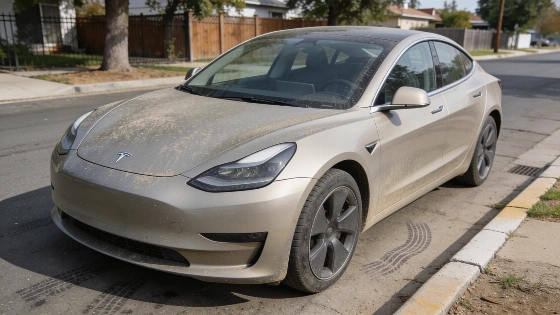
Tesla confirmed to federal regulators that its driver-assist system was engaged during a deadly Model 3 crash in Texas, raising new questions about transparency and the public's access to critical safety data
Tesla has acknowledged to federal regulators that its Autopilot or "Full Self-Driving" system was verified as active during a fatal crash in Clute, Texas, in May 2026-a detail that was not disclosed in police statements or local news coverage. The incident involved a 2025 Model 3 that crashed at a reported speed of 104 mph, resulting in the death of the driver. This gap between Tesla's internal data and the public narrative highlights ongoing concerns about the transparency of crash investigations involving advanced driver-assist technologies.
The confirmation came through Tesla's filings with the National Highway Traffic Safety Administration (NHTSA) under the Standing General Order, which requires automakers to report crashes where a Level 2 driver-assist system was engaged within 30 seconds of impact and resulted in injury, fatality, or a towed vehicle. According to the filing, Tesla's telematics confirmed the automation was "verified engaged" at the time of the crash. While the company provided data on the vehicle's speed and engagement status, it redacted key details such as the crash narrative, software version, and whether the road was within the system's approved operating area, citing confidential business information.
Public Narrative vs. Company Data
Local authorities and media reports painted a different picture. The driver, Steven Alvarez, was described as a 23-year-old IT technician, and police initially suggested a medical episode may have caused the crash. No public statements referenced Autopilot, "Full Self-Driving," or any Tesla driver-assist system. The only mention of speed came from a social media post describing a "speeding Tesla," with no official confirmation of the 104 mph figure. This speed detail exists solely in Tesla's telematics, which are not routinely shared with the public or investigators outside of regulatory filings.
The lack of transparency around the crash's circumstances leaves critical questions unanswered. While Tesla's data confirms the system was engaged, it does not clarify whether the automation contributed to the crash, whether the driver overrode the system, or if a medical emergency played a role. Tesla's own reporting practices-redacting nearly all explanatory fields-make it difficult for regulators, safety advocates, and the public to assess the true risks and limitations of its driver-assist technologies.
Regulatory and Safety Implications
This case is not isolated. According to NHTSA's Standing General Order dataset, nearly 4,000 crashes involving Tesla's driver-assist systems have been reported, but most filings are heavily redacted. The lack of accessible information has drawn criticism from safety experts and prompted ongoing federal investigations into Tesla's crash reporting and the safety of its automation features. The company's approach to data disclosure has also raised concerns among its own AI trainers, some of whom have expressed doubts about the reliability of Tesla's internal safety statistics.
For U.S. consumers, the stakes are significant. As more vehicles on American roads are equipped with advanced driver-assist systems, understanding how these technologies perform in real-world conditions is essential for informed decision-making. The absence of clear, independently verifiable data on system engagement, driver behavior, and crash causation undermines public trust and complicates efforts to evaluate the safety of automation features marketed as reducing driver workload or improving road safety.
Data, Transparency, and Consumer Impact
According to NHTSA, Tesla vehicles account for the majority of reported Level 2 driver-assist crashes in the United States. As of early 2026, Tesla had reported nearly 4,000 such incidents since the Standing General Order took effect, far outpacing other automakers. While this may reflect Tesla's larger fleet of vehicles with automation features, it also underscores the need for transparent, standardized reporting to assess the true safety impact of these systems. Without access to unredacted data, it remains difficult for regulators and the public to determine whether automation is reducing or increasing crash risk.
The financial implications for Tesla and its customers are not limited to safety concerns. Regulatory scrutiny can lead to costly investigations, potential recalls, and changes in how driver-assist features are marketed or deployed. For consumers, uncertainty about how these systems function-and how much information is shared after a crash-may influence purchasing decisions, insurance costs, and perceptions of risk. As automation becomes more common, the demand for clear, reliable safety data is likely to intensify.
Advanced driver-assist systems like Tesla's Autopilot and "Full Self-Driving" are classified as Level 2 automation, meaning they can control steering and speed but require the driver's full attention and readiness to take over at any moment. Unlike fully autonomous vehicles, these systems are not designed to operate independently. The distinction is critical: while automation can reduce driver workload in some scenarios, it can also introduce new risks if drivers become over-reliant or misunderstand the system's limitations. Regulatory agencies continue to debate how best to oversee these technologies, balancing innovation with the need for robust safety standards and transparent reporting.