
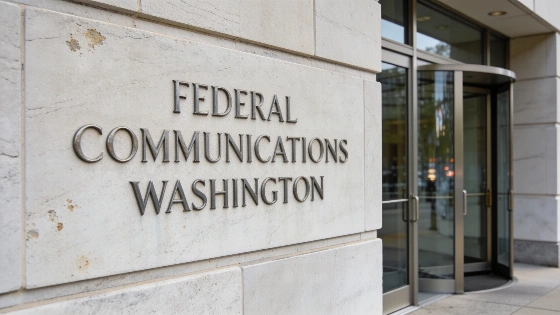
Donald Trump says he will report 'Meet the Press' host Kristen Welker to the FCC, raising questions about regulatory pressure on media coverage of political endorsements and the independence of federal oversight
Donald Trump has escalated his criticism of NBC's 'Meet the Press' and its moderator Kristen Welker, stating he intends to report Welker to the Federal Communications Commission (FCC) over her recent coverage of his political endorsements. The move comes after a contentious interview in which Welker challenged Trump's claims about election integrity, prompting the former president to abruptly leave the set. Trump later posted on Truth Social that Welker misrepresented his endorsement record, specifically disputing her characterization of his results as 'mixed' and citing recent wins by Darline Graham and Mike Mazzei as evidence of his success in Senate and House races.
The FCC, an independent federal agency, oversees broadcast and radio networks but does not typically intervene in editorial decisions or fact-checking disputes. Trump's call for FCC action highlights ongoing tensions between political figures and media outlets, especially as the 2026 midterm elections approach. According to USA TODAY, NBC has not yet commented on the situation. The episode underscores broader concerns about the politicization of regulatory agencies, particularly as the FCC has faced lawsuits and criticism over its perceived independence and enforcement priorities.
Recent legal action has also put the FCC in the spotlight. In August, Disney and ABC filed a lawsuit against the agency, alleging an unconstitutional retaliatory campaign. Critics argue that the FCC's leadership under Brendan Carr during Trump's second term has made the agency more susceptible to political influence, raising questions about the boundaries between government oversight and media freedom. The debate over the FCC's role is not new, but high-profile disputes like this one bring renewed attention to how regulatory power can intersect with political interests and media operations.
For context, Trump's confrontational approach to regulatory and media issues has surfaced in other areas as well. In a separate development, he recently addressed cyberattack concerns involving Minnesota water systems, placing blame on state officials rather than foreign actors, as detailed in this related report on his response to infrastructure threats. These incidents reflect a broader pattern of using regulatory levers and public statements to shape narratives around political accountability and media coverage.
FCC enforcement actions are typically limited to violations of broadcast standards, such as indecency or technical compliance, rather than disputes over political commentary or fact-checking. While the agency has the authority to issue fines or revoke licenses in extreme cases, it rarely intervenes in editorial content unless there is a clear breach of federal law. For viewers and voters, the controversy serves as a reminder of the complex relationship between political power, regulatory oversight, and the role of independent journalism in U.S. democracy.
According to the FCC's 2025 annual report, the agency received over 20,000 complaints related to broadcast content, but fewer than 1% resulted in formal investigations. Most complaints involved alleged indecency or technical violations, not political coverage. The FCC's budget for fiscal year 2025 was $388 million, with staffing levels remaining steady at around 1,400 employees. These figures highlight the agency's limited capacity to address the volume of public complaints, especially those involving editorial disputes.
The FCC's authority is rooted in the Communications Act of 1934, which established the agency to regulate interstate and international communications by radio, television, wire, satellite, and cable. While the FCC can enforce rules on ownership limits, licensing, and technical standards, its ability to police content is constrained by First Amendment protections. Political complaints often test the boundaries of these protections, especially when public officials seek regulatory intervention in response to unfavorable coverage. For media companies, understanding the scope and limits of FCC oversight is essential for managing legal risk and maintaining editorial independence.