Shares in Volkswagen soared after the automaker unveiled a sweeping plan to eliminate 50,000 jobs and halve its model lineup. While investors welcomed the aggressive cost cuts, the company faces mounting risks from global rivals and macroeconomic headwinds.
Volkswagen shares rose more than 8% in Frankfurt after the automaker's board approved a sweeping plan to eliminate 50,000 jobs, doubling its workforce reduction target to 100,000 by 2030. This move reflects investors' demand for immediate cost discipline as the company contends with shrinking margins, intensifying competition from Chinese electric vehicle manufacturers, and ongoing macroeconomic pressures.
Volkswagen's supervisory board formally approved the Future Plan 2030 on September 3, 2026, stating that a group-wide workforce adjustment of around 50,000 positions-including management-would be necessary.
Restructuring at Full Throttle
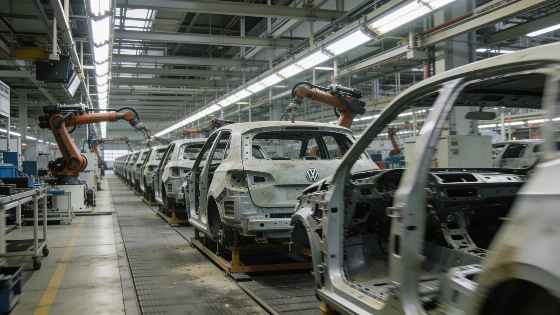
The "Future Plan 2030" aims to halve Volkswagen's model lineup and reduce vehicle complexity by 75%, concentrating resources on higher-margin vehicles and streamlining production. Management is reviewing the future of four underutilized German plants-Emden, Hanover, Zwickau, and Neckarsulm-where overcapacity has weighed on profitability. The company's unions, representing over 650,000 workers, have agreed to the framework, providing crucial labor stability during the transition.
According to an official company press release, Volkswagen is targeting a 9% operating margin by 2030, up from 3.8% in the first half of this year, and annual sales of about 9 million vehicles. CEO Oliver Blume is betting that a leaner structure and fewer models will restore the company's competitive edge and financial health.
Reuters reports that the new round of 50,000 job cuts is in addition to an ongoing reduction of about 50,000 positions, bringing the total targeted workforce reduction to approximately 100,000 by the end of the decade. This move comes amid tariff pressures, overcapacity, and intensifying competition from Chinese automakers, which Volkswagen cites as key reasons for a fundamental adjustment in its global workforce.
Competitive Pressures and Investor Calculus
Volkswagen's aggressive restructuring reflects a broader industry trend. Ford shares are up 13% year to date, General Motors has gained 3%, while Tesla and Rivian have each declined about 25%. Investors are rewarding automakers that demonstrate cost control and steady cash flow, a reputation Volkswagen is now seeking to regain. Citi analysts caution that cost reductions alone will not resolve the company's exposure to volatile raw material prices, ongoing losses in China, or persistent competition in Europe.
For U.S. investors, Volkswagen's overhaul highlights the existential choices facing legacy manufacturers. The plan to reduce the model range and workforce is intended to free up capital and accelerate product cycles, but it also exposes the company to potential labor unrest and operational disruption if negotiations over the future of its German plants stall before the June 2027 deadline.
Recent market volatility has heightened investor focus on cost structures and future earnings potential. As reported earlier, portfolio managers are shifting toward companies with clear cost controls and defensive strategies as global economic uncertainty persists.
What to Watch Next
For those holding or considering Volkswagen stock, the key metric is operating margin, not just total vehicle sales. Management's ability to improve the margin from 3.8% toward the 9% target will be the clearest indicator of whether the turnaround is succeeding. The outcome of negotiations over the four German plants will also be critical, as any union resistance could quickly reverse investor optimism.
Risk diversification remains important. The auto sector is undergoing a difficult transition, and even the most aggressive cost-cutting plans can be disrupted by external shocks or internal resistance. Investors should balance exposure to individual automakers with broader industrial or technology funds to help cushion against setbacks if the recovery falters.
Volkswagen's stock rally reflects a market that values cost discipline, but the company's future will depend on its ability to deliver on these commitments amid intense global competition and internal challenges. The real test will not be Thursday's share price jump, but whether Volkswagen can achieve sustained profitability and operational clarity in a rapidly evolving industry. Until then, optimism is easy-execution is decisive.
Volkswagen's restructuring comes as the European Central Bank maintains its key interest rate at 4.5% as of September 2026, while eurozone inflation remains above the 2% target. High energy and labor costs continue to pressure European manufacturers, with Germany's industrial production down 2.1% year over year in July. These macroeconomic headwinds add urgency to Volkswagen's cost-cutting efforts and shape the competitive environment for global automakers.
Operating margin is a critical measure of a company's efficiency and pricing power. For automakers, it represents the percentage of revenue remaining after production and operating costs, before interest and taxes. A higher margin indicates stronger profitability and resilience to market shocks, while a low margin leaves little room for error. Investors often monitor this figure more closely than raw sales numbers, especially during periods of restructuring or industry upheaval.