GE Vernova's rapid growth and surging market cap could make it a candidate for the Dow Jones Industrial Average, but only if Caterpillar splits its stock and index sector weightings are rebalanced
As the Dow Jones Industrial Average continues to be shaped by the performance of its heaviest components, the prospect of GE Vernova joining the index is drawing attention from investors and market watchers. The company, which emerged from the 2023 breakup of General Electric, has seen its market capitalization soar, fueled by strong demand for its industrial equipment-especially in the fast-growing data center sector. Yet, the path to Dow inclusion is not straightforward, and would likely require a series of moves by existing index members to maintain sector balance and price weighting.
The Dow is a price-weighted index, meaning that companies with higher share prices exert more influence on its movements. This structure can lead to imbalances when a handful of stocks climb sharply without splitting their shares. Currently, industrials make up the second-largest sector in the Dow, with Caterpillar and Goldman Sachs together accounting for over 22% of the index's weighting. Caterpillar alone has gained 330% over the past five years, and its 10.3% weighting is second only to Goldman Sachs. Such concentration means that any major changes-like adding another large industrial stock-could skew the index unless adjustments are made.
Stock Splits and Index Mechanics
For GE Vernova to be considered for the Dow, two key conditions would likely need to be met. First, Caterpillar would need to split its stock, reducing its share price and thus its influence on the index. Caterpillar has a history of stock splits, with the most recent occurring in 2005. Second, GE Vernova itself would need to split its shares, as its current price-over $1,000 per share-would make it one of the most heavily weighted Dow components if added at that level. The Dow typically prefers to add stocks priced near the index median, as seen when Alphabet executed a 20-for-1 split before its inclusion.
If both Caterpillar and GE Vernova were to split their shares, the index could maintain a more balanced sector weighting. A plausible scenario would see GE Vernova replacing Nike, which currently has the smallest Dow weighting and is trading near a 12-year low. This would allow the index to add a fast-growing industrial leader without overloading the sector or distorting the price-weighted structure.
GE Vernova's Growth and Valuation
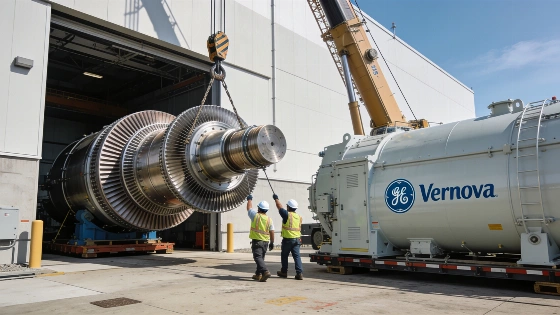
Since its spinoff, GE Vernova has delivered extraordinary returns, rising 700% and reaching a market cap of $282 billion-now the third-largest U.S. industrial company behind Caterpillar and GE Aerospace. The company's equipment is in high demand for AI-driven data centers and other industrial applications, supporting robust earnings growth. Despite its rapid appreciation, GE Vernova trades at a price-to-earnings ratio of 30.8, which is not excessive given its recent performance. Analyst estimates project earnings per share of $30.64 in 2026, but a decline to $24.48 in 2027, reflecting the cyclical nature of industrial demand.
Investors considering GE Vernova should be aware that such rapid gains can reverse if capital spending slows or if the economic cycle turns. Cyclical stocks often appear inexpensive during expansion phases, only to become more expensive as earnings compress in downturns. For risk-tolerant investors, GE Vernova offers exposure to industrial growth and the AI infrastructure build-out, but with significant volatility risk.
Dow Index Concentration and Sector Balance
The Dow's price-weighted methodology means that a few high-priced stocks can dominate index performance, sometimes masking underperformance in other components. For example, on July 14, International Business Machines suffered its worst trading day ever, but the Dow rose because Goldman Sachs-holding a much larger weighting-gained 9% that day. Currently, ten of the Dow's 30 components are down year to date, yet the index is up nearly 8%, largely due to the outperformance of its top three stocks: Goldman Sachs, Caterpillar, and UnitedHealth Group.
As of the latest data, GE Vernova's $282 billion market cap places it among the largest U.S. industrials, while Caterpillar's five-year gain of 330% and Goldman Sachs's 190% rise have both contributed to the index's concentration. The Dow's industrial sector now represents 19% of the index, making further additions to the sector a delicate balancing act. Any move to add GE Vernova would require careful coordination of stock splits and component changes to avoid overweighting and maintain the index's intended sector representation.
The Dow's unique structure distinguishes it from other major indexes like the S&P 500, which are weighted by market capitalization rather than share price. This means that stock splits, sector representation, and the selection of components have a direct impact on how the index reflects the broader market. For investors, understanding these mechanics is essential when interpreting index performance and considering the implications of potential changes to its composition.