A surge in AI infrastructure spending is colliding with local resistance, rising energy costs, and new political scrutiny-forcing investors to rethink which stocks can weather the coming storm
America's AI infrastructure boom is facing growing challenges as political opposition, rising utility costs, and regulatory crackdowns threaten more than $1 trillion in planned data center investments through 2027. The sustainability of Wall Street's AI trade now depends on whether technology leaders can navigate these mounting obstacles-or risk escalating project costs and delays, with direct implications for stock performance and sector leadership.
On August 3, 2026, Texas Governor Greg Abbott ordered a review of all data center projects awaiting grid connection, effectively pausing large-scale developments tied to ERCOT.
For investors, the risk is not a decline in AI demand. Rather, the concern is that the cost of translating that demand into operational capacity will rise sharply, as project delays, higher utility rates, and new regulatory barriers erode returns. Morgan Stanley estimates that U.S. hyperscalers are set to spend $800 billion in 2026 and nearly $1.1 trillion in 2027, yet the growth of energy supply is not keeping pace. In the PJM grid region, for example, data centers can connect in two to three years, while new power plants may require twice as long to become operational.
Political Pressure Points
The backlash is both bipartisan and highly localized. Residents are concerned about higher household utility bills as data centers increase demand and capacity charges. Pennsylvania officials note that data centers accounted for nearly half of recent capacity charges in the PJM market, raising concerns that ordinary consumers are subsidizing Big Tech's expansion. In Texas, ERCOT is reviewing 474 gigawatts of proposed new load-over five times the state's record peak demand-with data centers responsible for 90% of that total. The state anticipates forgoing $3.2 billion in sales-tax revenue over the next two years, a cost lawmakers describe as unsustainable.
Reuters reports that in Texas, skepticism is growing over so-called 'ghost demand'-requests for grid connections that may never materialize into actual construction, yet still strain network planning. Local discontent is fueled by concerns over rising electricity bills and water shortages, prompting authorities to tighten oversight and shift more costs onto developers.
Wall Street's AI Bet: Still Intact, But Conditional
Despite these mounting challenges, Morgan Stanley's head of U.S. public-policy research, Ariana Salvatore, maintains that the AI infrastructure spending cycle remains strong-though increasingly complex. The firm expects the capital expenditure surge to continue, but with more delays and greater geographic dispersion. Hyperscalers may postpone projects in politically sensitive regions and redirect investment to areas with more supportive communities and available resources.
This dynamic suggests that while overall budgets may remain robust, the timing of chip, networking, and equipment sales could shift, with some quarters experiencing weaker results and others recovering later. Companies with strong balance sheets, diversified customer bases, and contracted backlogs are better positioned to manage these disruptions. In contrast, leveraged developers and speculative utilities that depend on every project opening as scheduled face heightened risk if permitting slows or costs rise.
Recent S&P 500 performance highlights the stakes. Over the past three years through early 2026, the index gained 76%, but only 32% when AI-linked stocks are excluded, according to Yahoo Finance. This concentration means that any disruption to data center investment could affect the broader market, not just chipmakers. As reported earlier, the AI buildout is already dividing corporate borrowers into clear winners and losers, with credit access and project returns diverging sharply.
Winners, Losers, and the Path Forward
For investors, the takeaway is clear: the AI trade persists, but it is no longer a rising tide that lifts all boats. Stock selection is now critical. Companies that can efficiently monetize installed capacity, maintain pricing power, and absorb delays should remain in focus. Those with high leverage, speculative forecasts, or exposure to the most contentious regions face greater challenges.
Federal Reserve data shows that U.S. electricity prices for commercial users rose 7.2% year-over-year as of May 2026, while water rates in major metropolitan areas have increased by double digits since 2024. These rising input costs are already pressuring margins for data center operators and their suppliers, even before accounting for new permitting delays and infrastructure requirements.
Investors should avoid treating all AI beneficiaries as equal. The next phase of the boom will reward discipline, diversification, and adaptability as political conditions evolve. The central question is not whether AI demand will continue, but which companies can convert that demand into profitable, sustainable growth as the era of easy expansion gives way to a more contested and costly buildout.
Data centers are the physical backbone of the AI revolution, but their expansion is now constrained by local patience, infrastructure limits, and political goodwill. The market's winners will be those able to navigate these challenges without overpromising or overextending. Investors who overlook the new political and operational realities risk being left exposed as the AI trade shifts from speculative momentum to a test of execution and resilience.
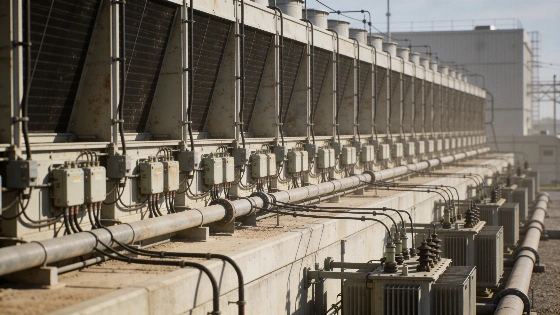
Data centers are specialized facilities that house the servers, networking equipment, and cooling systems essential for cloud computing and artificial intelligence. Their energy and water demands far exceed those of typical commercial buildings, making them focal points for local opposition when expansion outpaces infrastructure upgrades. As more states impose permitting restrictions and require technology companies to fund grid improvements, the cost and complexity of building new capacity will increase. For investors, understanding the regulatory and operational risks associated with data center development is now as important as tracking chip demand or AI adoption rates.