Micron stock faces new questions as cheaper, more efficient AI models emerge, but Bank of America maintains a bullish outlook and a $1,550 price target, betting that memory demand will keep rising even as AI deployment costs fall
Investors in Micron Technology have been on edge as the rapid evolution of artificial intelligence models threatens to upend the economics of the hardware powering the AI boom. The recent launch of Kimi K3, a massive open-weight AI model from China's Moonshot AI, has intensified concerns that more efficient, lower-cost AI could reduce demand for the high-end memory chips Micron produces. Yet Bank of America is doubling down, reiterating its Buy rating and $1,550 price target for Micron, arguing that the market is missing a key point about how AI models actually drive memory demand.
AI Model Efficiency and Memory Demand
Kimi K3, introduced in July 2026, is being described as the world's largest open-weight AI model, boasting 2.8 trillion parameters and a 1 million-token context window. Unlike many Western models, Kimi K3 is designed for users to download, customize, and run on their own infrastructure, rather than relying on closed APIs. This approach not only lowers deployment costs but also gives enterprises more control over their data and workflows.
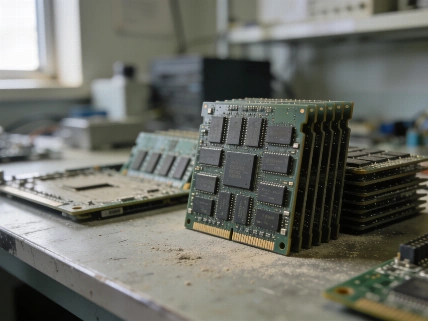
While Kimi K3's architecture is highly efficient-activating only about 1.8% of its parameters per token and reducing the computational load-Bank of America contends that this does not meaningfully shrink the total memory required to host the model. The bank estimates that each Kimi K3 instance still needs roughly 1.4 terabytes of high-bandwidth memory (HBM) and at least 64 accelerators, far exceeding the requirements of smaller models. As model sizes continue to grow, even with compression and efficiency gains, the overall memory footprint per deployment is rising.
Market Reaction and Broader Implications
The debut of Kimi K3 and similar models like DeepSeek has rattled U.S. tech stocks before. In January 2025, the release of DeepSeek's R1 model contributed to a sharp selloff in AI-linked stocks, with Nvidia losing 17% in a single session and the sector shedding over $1 trillion in market value, according to Yahoo Finance. The July 2026 launch of Kimi K3 triggered another wave of volatility, with the Nasdaq falling 1.4% and the S&P 500 down 1.01% as investors worried about the impact of cheaper, more accessible AI on the hardware supply chain.
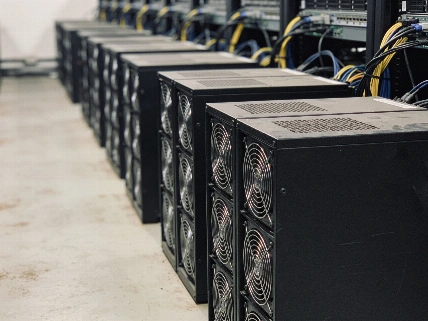
Yet Bank of America sees a different dynamic at play. The shift toward open-weight models like Kimi K3 could actually expand Micron's addressable market. When thousands of enterprises and developers self-host large AI models, each deployment requires its own dedicated memory resources. This is a sharp contrast to the traditional model, where a handful of hyperscale cloud providers run a limited number of model instances for millions of users. As a result, the proliferation of open-weight AI could multiply the total demand for memory chips, even as individual deployments become more efficient.
Valuation and Financial Outlook
Micron shares recently traded at $970.82, meaning Bank of America's $1,550 price target implies about 60% upside. The bank's valuation is based on a sum-of-the-parts approach, assigning $1,040 per share to Micron's traditional memory business and a premium multiple to its AI-focused HBM segment. Notably, Bank of America expects restrictions on share buybacks tied to the CHIPS Act to expire by December 2026, potentially paving the way for $50 billion to $60 billion in buybacks-about 4.5% to 5.3% of Micron's current market cap-if the company maintains a 40% payout policy.
Despite the run-up in Micron's stock price, the company trades at 13.2 times forward non-GAAP earnings, which is 46% below the sector median and 82% below its five-year average, according to Seeking Alpha. This valuation discount may reflect lingering skepticism about the sustainability of AI-driven hardware demand, especially as new models promise to do more with less. But Bank of America's thesis is that the memory requirements of ever-larger AI models-and the shift toward decentralized, self-hosted deployments-will keep demand robust.
AI Hardware, Geopolitics, and Market Risks
The competitive landscape for AI hardware is evolving rapidly, with Chinese firms like Moonshot AI and DeepSeek pushing the boundaries of model size and efficiency. Their open-weight approach is putting pressure on U.S. leaders such as OpenAI and Anthropic, and raising questions about the future of the global AI supply chain. Geopolitical tensions, export controls, and the risk of further market shocks remain significant wildcards for investors in the semiconductor sector.
For a broader look at how AI hardware spending is reshaping the market, including the impact on electricity demand and household costs, see this analysis of Nvidia's $4 trillion data center ambitions: Nvidia's AI infrastructure push and its ripple effects.
According to Micron's most recent quarterly report, the company generated $7.8 billion in revenue for the quarter ended May 2026, up 42% year-over-year. Gross margin expanded to 38%, reflecting strong demand for high-bandwidth memory used in AI applications. The company's capital expenditures for the fiscal year are projected at $10 billion, with a significant portion allocated to expanding HBM production capacity.
As AI models become more complex and memory-intensive, the economics of self-hosting versus cloud-based deployment will continue to evolve. Enterprises weighing the costs and benefits of running large models in-house must consider not only the upfront investment in hardware but also ongoing expenses for power, cooling, and maintenance. The balance between efficiency, control, and total cost of ownership will shape the next phase of AI infrastructure investment.