Berkshire Hathaway's record cash and Treasury holdings have reached $397.4 billion, intensifying calls for CEO Greg Abel to prove he can deploy capital effectively as the company lags the S&P 500 in 2026
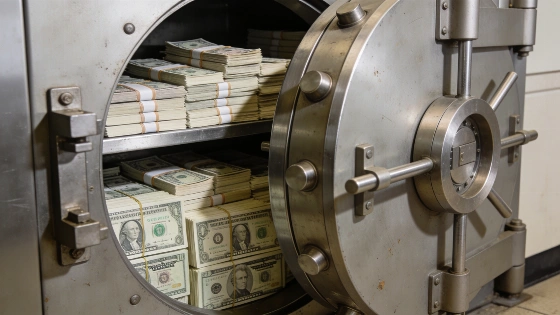
When Greg Abel stepped into the role of chief executive at Berkshire Hathaway on January 1, 2026, he inherited a financial position that stands out even in the conglomerate's storied history: a cash and short-term Treasury pile that reached $397.4 billion by the end of March. This unprecedented reserve, up from $373 billion at the close of 2025, has become a focal point for investors and analysts who are eager to see how Abel will put this capital to work.
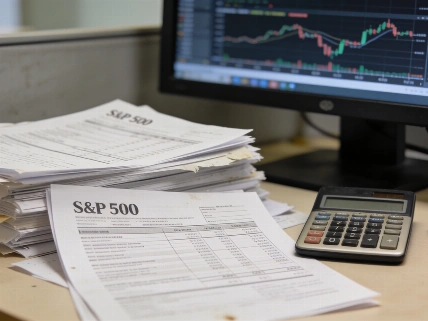
Despite the company's immense liquidity, Berkshire's stock performance has lagged broader markets. As of early August, shares were up about 3% for the year, while the S&P 500 had advanced roughly 13% over the same period. This underperformance has sharpened scrutiny of Abel's early moves and heightened expectations for more decisive capital deployment.
Early Moves and Capital Deployment
Abel's first major acquisition as CEO was the $6.8 billion purchase of homebuilder Taylor Morrison, announced in late May and completed in July. Berkshire paid a 24% premium at $72.50 per share, planning to integrate Taylor Morrison into its Clayton Properties Group. The deal signals a selective approach, with Abel targeting sectors where Berkshire already has operational expertise and sees long-term value.
In June, Berkshire also participated in a $10 billion private placement in Alphabet, expanding its stake in the tech giant to approximately $31 billion. While Warren Buffett initiated the transaction, Abel had final approval, underscoring the shift in decision-making authority. These moves, though significant, represent only a fraction of Berkshire's available cash, leaving investors watching for further action.
Some analysts see Abel's strategy as a departure from Buffett's famously patient, hands-off style. The Taylor Morrison acquisition, for example, is viewed as a bet on a future rebound in the housing market and a move to unify Berkshire's homebuilding operations. Others note that Abel's willingness to share detailed performance metrics for subsidiaries marks a new era of operational transparency at the company.
Operating Results and Shareholder Sentiment
Berkshire's operating businesses delivered strong results in Abel's first quarter at the helm. Operating earnings rose 18% year-over-year to $11.35 billion for the first quarter of 2026, according to the company's official earnings release. Insurance underwriting profits climbed to $1.72 billion, up from $1.34 billion a year earlier, helped by fewer catastrophe-related losses. The company's investment float-the pool of insurance premiums available for investment-reached $176.9 billion by March's end.
Key subsidiaries also posted gains: BNSF Railway contributed $1.38 billion in profit, up from $1.21 billion, and Berkshire Hathaway Energy added $1.11 billion, a modest increase. Total revenue rose 4.5% to $93.7 billion, with costs growing more slowly than earnings, allowing for margin expansion. Despite these operational strengths, Berkshire's stock continues to trail the S&P 500, and some shareholders remain cautious about the pace and scale of Abel's capital deployment.
At the annual shareholder meeting in May, Warren Buffett publicly endorsed Abel's leadership, noting that he is taking on all the responsibilities Buffett once held-and more. Yet, as highlighted in recent coverage of market benchmarks, outperforming the S&P 500 remains a persistent challenge for even the largest and most diversified companies.
Shifting Focus: Operational Excellence and Buybacks
Abel has signaled a shift in Berkshire's priorities, emphasizing operational improvement and productivity across its businesses. He has outlined plans to build technology capabilities internally, such as predictive maintenance systems at BNSF Railway, rather than relying solely on acquisitions. This approach is seen as a way to drive value in a company where sheer scale makes it harder to find transformative deals.
Transparency has also increased under Abel, with more detailed comparisons of subsidiary performance and a willingness to discuss areas for improvement. For example, BNSF Railway's profitability ranking among major U.S. railroads has improved, reflecting a focus on measurable results. In August, Berkshire's second-quarter report revealed $4.5 billion in share buybacks-19 times the pace of the previous quarter-suggesting Abel may be more willing to return capital to shareholders when attractive investments are scarce.
Long-Term Implications for Investors
For long-term Berkshire holders, the central question is whether Abel can deploy the company's vast reserves in a way that justifies holding so much cash in short-term government securities, especially when opportunity costs are high. With Berkshire's stock trading at about 1.5 times book value, the margin for error on future capital allocation decisions is narrower than in past decades. Investors are watching closely to see if Abel's measured approach will deliver the sustained returns that have defined Berkshire's legacy-or if the company's size and caution will limit its ability to keep pace with a rapidly evolving market.
As Berkshire Hathaway navigates this leadership transition, the company's next moves-whether in acquisitions, buybacks, or operational investments-will shape how both Wall Street and Main Street judge Abel's tenure. The scale of Berkshire's cash position means that every decision is magnified, and the market's patience is not unlimited.
Cash management is a critical issue for large corporations, especially when interest rates and market valuations fluctuate. Companies with significant cash reserves must weigh the trade-offs between safety, liquidity, and the risk of missing out on higher returns elsewhere. For investors, understanding how a company like Berkshire Hathaway approaches these decisions can offer insight into broader market dynamics and the challenges of capital allocation at scale.