Airbnb's quarterly results show a surge in Gen Z-driven bookings, while The Trade Desk, AMD, and Tesla face shifting growth prospects and capital demands-raising questions about the durability of recent tech trends
Recent earnings reports from major tech and consumer companies reveal diverging fortunes and shifting drivers of growth. While some firms are struggling to maintain momentum, others are seeing new demographics and technologies reshape their business outlook. Investors are weighing whether these trends represent lasting change or temporary spikes.
On August 7, 2026, the S&P 500 closed at 7,710, down 0.18%, with the Nasdaq nearly flat and the Dow off 0.85%. Bitcoin traded at $64,429, down 0.74% for the day, reflecting a cautious mood across markets as investors digested a wave of quarterly results.
Gen Z Fuels Airbnb's Growth
Airbnb posted its fastest growth in years, with shares jumping over 7% in pre-market trading after the company beat expectations on both revenue and earnings. The standout driver: an 11% increase in first-time bookers, the highest rate in four years, led by Gen Z travelers. App-based bookings surged 23% year over year, now accounting for 64% of total nights booked, up from 59% a year earlier. This broad-based growth was not limited to expansion markets like Latin America but also included many of Airbnb's largest core markets.
Airbnb raised its full-year outlook for both revenue and adjusted EBITDA, citing strong platform demand and the payoff from earlier investments. The key question for investors is whether this Gen Z surge represents a durable shift in travel behavior or a short-term response to promotions and marketing. If these new users continue to return in future quarters, Airbnb could see a sustained runway for growth. For those interested in long-term compounding, the mechanics of regular investing in growth-oriented funds are explored in depth in this analysis of how monthly investments in tech-focused ETFs can build significant wealth over time.
Mixed Results for Tech and Ad Platforms
The Trade Desk, once a high-flying digital advertising platform, reported just 3% revenue growth in the second quarter, with net income falling 40%. The company's outlook for the next quarter is even more muted, despite a generally expanding ad market. In contrast, Amazon and Meta's ad businesses both posted revenue gains above 25% last quarter, highlighting The Trade Desk's struggle to capture a larger share of industry growth. Leadership turnover and strategic uncertainty have led some analysts to question the company's long-term stability and the wisdom of concentrated positions in its stock.
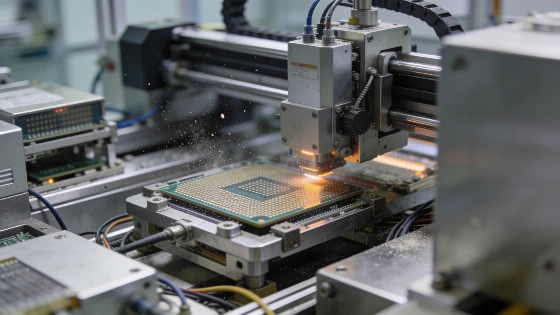
Meanwhile, AMD announced the acquisition of Taalas, a Toronto-based startup specializing in embedding AI models directly into silicon chips. This move follows Nvidia's earlier purchase of similar assets from Groq, signaling a shift in the AI chip market: while flexible GPUs remain essential for training models, high-volume, latency-sensitive inference is moving toward purpose-built chips for greater efficiency. AMD's rapid entry into new markets, including quantum computing, has helped its stock outperform the S&P 500 by a wide margin since early 2024, but the competitive landscape remains dynamic.
Software and Semiconductor Bets Intensify
Cloudflare, Twilio, and Atlassian all reported strong quarters, with each company benefiting from a broadening customer base and expanding product lines. Cloudflare's revenue climbed 36% year over year, driven by record additions in both large and small customers. Twilio posted a 22% revenue increase and beat earnings estimates for the fifth consecutive quarter, raising its full-year guidance on the strength of demand for messaging, voice, and AI-powered products. Atlassian's Rovo AI assistant now reaches more than 80% of the Fortune 500, with customers who adopt Rovo increasing their spending at more than twice the rate of non-adopters.
Tesla and SpaceX outlined plans for a $16.8 billion first phase of "Terafab," a semiconductor manufacturing complex in Texas designed to supply chips for Tesla robots and SpaceX systems. While headlines tout a potential $119 billion total investment over time, the gap between initial and ultimate spending highlights the capital intensity and risk of such projects. For investors, the key milestones will be actual chip production-currently targeted for 2027-2028-rather than long-term projections. SpaceX has separately committed $5 billion and 1,800 jobs to the project by the early 2030s, but future disclosures will clarify how these investments are allocated.
Risks, Durability, and Investor Takeaways
For investors tracking these developments, the durability of Gen Z's engagement with Airbnb remains a central question. If first-time bookers become repeat customers, the company's growth trajectory could shift meaningfully. In contrast, The Trade Desk's struggles underscore the risks of relying on a single platform or sector, reinforcing the importance of diversification and ongoing portfolio review. The semiconductor sector's capital demands, as seen with Tesla's Terafab, highlight the long timelines and high upfront costs involved in manufacturing, which can strain even well-capitalized firms.
Understanding the difference between short-term spikes and lasting shifts is crucial for both individual investors and portfolio managers. While new technologies and demographics can drive rapid change, not every surge translates into sustainable growth. Evaluating whether a trend is driven by fundamental shifts in consumer behavior or by temporary incentives can help investors avoid overreacting to headline numbers and focus on long-term value creation.