Bank of America maintains a bullish outlook on Cisco after strong earnings and record orders, but warns that falling margins and high valuation could limit further gains for investors seeking exposure to AI infrastructure
Cisco Systems delivered record revenue and stronger-than-expected earnings in its fiscal fourth quarter, but the stock's sharp drop after the report highlights how much optimism is already priced in for leading AI infrastructure companies. Despite management's forecast for another year of double-digit growth, Cisco shares closed at $112.90 on August 18, well below the $123.88 reference price used in Bank of America's latest research note.
Bank of America analyst Tal Liani reaffirmed a Buy rating and a $150 price target for Cisco, suggesting roughly 33% upside from the recent close. The bank's thesis centers on robust networking demand and accelerating AI-related revenue, which could drive further gains if current trends persist. Yet, the disconnect between strong results and the market's reaction signals that investors are scrutinizing more than just headline growth.
Networking Momentum and AI Orders
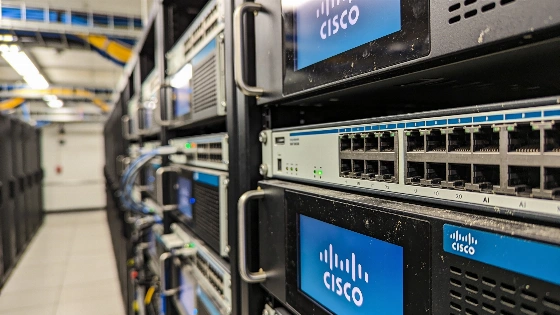
Cisco reported fourth-quarter revenue of $17.3 billion, up 18% year over year, with adjusted earnings of $1.22 per share. The company's networking segment was a standout, growing 28% to $9.8 billion as customers invested heavily in data center and AI infrastructure. Total product orders surged 35%, and networking orders climbed 40%. Even when excluding the largest cloud providers-known as hyperscalers-product orders still rose 25%, indicating that demand is broadening beyond the biggest tech players.
Management expects this momentum to continue, guiding for first-quarter revenue between $18 billion and $18.2 billion and adjusted earnings of $1.32 to $1.34 per share. For the full fiscal year, Cisco projects revenue could reach as high as $73.4 billion. Bank of America points to accelerating order growth outside the hyperscaler segment, which increased from 19% in the third quarter to 25% in the fourth. Orders from Cisco's four largest hyperscalers more than doubled, supporting the company's decision to raise its core growth outlook for fiscal 2027 to 10% from 5%.
AI Revenue Targets and Upside Potential
During the fourth quarter, Cisco booked $4 billion in AI infrastructure orders from hyperscalers, bringing full-year AI orders to $9.3 billion. The company generated about $4 billion in AI infrastructure revenue for fiscal 2026 and expects that figure to climb to $7.5 billion in fiscal 2027. Bank of America believes these targets may be conservative, anticipating that recent order strength could translate into even higher sales as the year progresses.
The bank raised its fiscal 2027 adjusted earnings estimate for Cisco to $5.08 per share, up from $4.77, and increased its 2028 estimate to $5.47. Cisco's own guidance for fiscal 2027 calls for revenue between $72.2 billion and $73.4 billion, with adjusted earnings in the $5.05 to $5.11 range. Improving performance in Cisco's security business, especially as the company moves past pricing changes related to its Splunk acquisition, could provide an additional lift.
For context, Bank of America has taken similarly bullish stances on other AI infrastructure stocks, as seen in its recent coverage of Nvidia's earnings outlook. For example, the bank's projections for Nvidia's revenue and margin trends were explored in detail in a recent analysis on how Bank of America is raising stakes for Nvidia investors.
Margin Pressures and Valuation Risks
While demand is robust, Cisco's profitability is under pressure. The company's adjusted gross margin fell to 66.3% in the fourth quarter, down from 68.4% a year earlier, as hardware sales outpaced higher-margin software and services. Bank of America expects gross margin to decline further to about 64.5% in fiscal 2027, roughly 1.5 percentage points below the consensus outlook. The shift toward hardware and cloud infrastructure could keep margins compressed even as revenue grows.
Valuation is another concern. Cisco now trades at nearly 25 times its projected 2027 enterprise value to free cash flow, well above its five-year average of about 16 times. This elevated multiple leaves less room for execution missteps or negative surprises. Still, Bank of America argues that the current demand cycle-driven by both hyperscaler and broader enterprise spending-could support further upside if Cisco continues to deliver on its growth targets.
For the fiscal year ended July 2026, Cisco's total revenue reached $66.7 billion, with net income of $15.2 billion, according to company filings. The company's market capitalization stood at approximately $460 billion as of August 18, 2026. Over the past 12 months, Cisco shares have gained 18%, compared to a 14% rise in the S&P 500 Information Technology sector.
Investors weighing Cisco's prospects should consider the trade-offs between rapid top-line growth and the risk of margin compression. While the company's AI and networking businesses are expanding quickly, the mix shift toward hardware and cloud infrastructure could limit profitability. For those seeking exposure to AI infrastructure, Cisco's scale and customer base offer advantages, but the stock's premium valuation and evolving margin profile warrant close attention as the competitive landscape shifts.
Gross margin is a key metric for technology companies, reflecting the percentage of revenue left after accounting for the direct costs of goods sold. For firms like Cisco, a higher gross margin typically signals a greater share of revenue from software and services, which tend to be more profitable than hardware. As demand for AI and cloud infrastructure accelerates, companies may face a trade-off between capturing new business and maintaining profitability. Investors should monitor how shifts in product mix, pricing strategies, and competitive dynamics affect both revenue growth and margins over time.