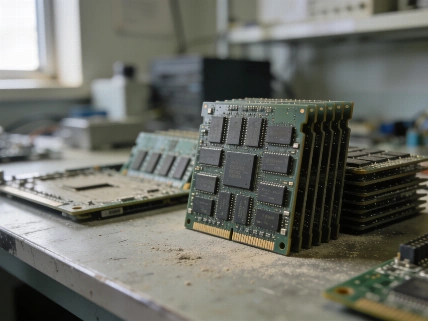
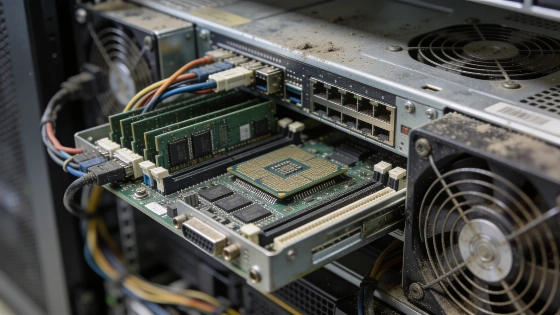
Cisco Systems posted record quarterly revenue and earnings, but its stock dropped as soaring memory chip costs eroded margins, highlighting how supply chain pressures can hit even industry leaders and ripple through major stock indexes
Cisco Systems delivered record fourth-quarter revenue and adjusted earnings, but the company's stock fell sharply as rising memory chip costs squeezed its profit margins. The impact was immediate: Cisco's decline subtracted about 68 points from the Dow Jones Industrial Average and erased roughly $41 billion in market value, underscoring how component shortages and cost pressures can affect even the largest technology firms.
While Cisco's revenue climbed 18% year over year to $17.3 billion, and adjusted earnings reached $1.22 per share, the company's gross margin narrowed. Executives pointed to a combination of surging memory prices and a less profitable hardware sales mix as key factors. Cisco also reported approximately $4 billion in quarterly AI-related orders from hyperscale customers, reflecting strong demand for advanced networking and data center solutions. Yet, these positives were overshadowed by the margin squeeze, which weighed on investor sentiment and the broader market.
Chipmakers Gain as Cisco Stumbles
The margin pressure at Cisco had a ripple effect across the semiconductor sector. Chipmakers such as SK Hynix, Micron Technology, and SanDisk saw their shares surge as investors bet that rising memory prices would benefit suppliers. SK Hynix jumped 7.8%, adding about $95 billion in market value and making the largest single contribution to the Nasdaq Composite that day. Micron Technology gained 5.1%, while SanDisk soared 13.5% after an upbeat investor presentation, partially reversing a steep decline from earlier in the year. The Korean government's multi-billion-dollar investment in domestic chip manufacturing also boosted sentiment for companies like Hynix and Samsung.
These moves highlight how supply chain dynamics can create winners and losers within the same sector. While higher component costs hurt buyers like Cisco, they can drive up profits for chipmakers, at least in the short term. For investors, this divergence underscores the importance of understanding where companies sit in the supply chain and how pricing power shifts during periods of scarcity.
Broader Market Reactions and Offsetting Moves
The broader market response to Cisco's results was mixed. While Cisco's drop weighed on the Dow, Goldman Sachs provided a partial offset, rising 1.1% and helping to stabilize the index. Meanwhile, Space Exploration Technologies fell 3.4%, giving back some of its previous gains and dragging on the Nasdaq. On the macroeconomic front, July's producer price index (PPI) was flat for the month, with core PPI-excluding food and energy-up 0.2%. These inflation readings suggested that, at least for now, broader cost pressures remain contained, even as specific sectors like semiconductors face acute shortages and price spikes.
For context, the S&P 500 and Nasdaq have both experienced heightened volatility during earnings season, as investors react to company-specific surprises and shifting macroeconomic signals. As recent coverage of market swings shows, even a handful of large-cap stocks can move major indexes when earnings or guidance diverge from expectations.
Margin Pressures and Investor Takeaways
Cisco's experience illustrates the real-world impact of ongoing chip shortages and rising component costs. Even with record sales and robust demand for AI infrastructure, the company's profitability was squeezed by factors largely outside its control. For investors, this episode is a reminder that headline revenue growth does not always translate into stronger bottom-line results-especially when supply chain disruptions and input cost inflation persist.
Gross margin is a key metric for technology companies, reflecting the difference between revenue and the direct costs of producing goods. When component prices rise faster than companies can pass those costs along to customers, margins shrink and earnings can disappoint. This dynamic is especially relevant for hardware-focused firms, which may have less flexibility to offset higher input costs compared to software or services businesses.
Understanding the mechanics of gross margin is essential for evaluating technology stocks. Margins can be influenced by product mix, supply chain efficiency, and the ability to negotiate with suppliers. In periods of tight supply, companies with greater pricing power or more diversified sourcing may fare better, while those exposed to volatile component markets can see profits erode quickly. For investors, tracking margin trends alongside revenue and earnings provides a fuller picture of a company's financial health and resilience.