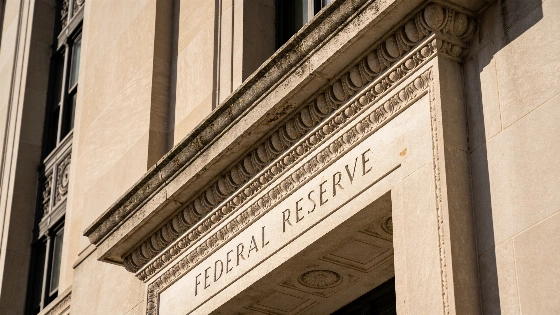
After Kevin Warsh's Jackson Hole remarks, the odds of a September Fed rate hike jumped to 60%, raising questions about how persistent inflation and higher borrowing costs could impact stocks, lending, and the broader U.S. economy
U.S. stock indexes have reached record highs in recent months, but the rally has unfolded against a backdrop of stubbornly high inflation and growing speculation about Federal Reserve policy. The latest catalyst: Fed Chair Kevin Warsh's speech at the Jackson Hole Economic Symposium, which sharply increased market expectations for a September interest rate hike. Investors are now weighing how a potential shift in monetary policy could affect everything from borrowing costs to the momentum behind the market's recent gains.
While the Dow Jones Industrial Average, S&P 500, and Nasdaq Composite have all posted new highs since early June, these advances have come even as inflation remains well above the Fed's long-term target. In May, the trailing 12-month U.S. inflation rate hit 4.2%, more than double the central bank's 2% goal. Factors contributing to this elevated inflation include ongoing pricing power among businesses, a robust economy, and policy decisions such as tariffs and international tensions. The persistence of above-target inflation has put pressure on the Federal Open Market Committee (FOMC) to consider tightening policy sooner rather than later.
Jackson Hole Speech Shifts Market Expectations
Warsh's remarks in Jackson Hole signaled a more urgent focus on price stability, with the Fed chair emphasizing that inflation running above 2% should be the central bank's primary concern. He also highlighted that short-term interest rates remain the Fed's main tool for achieving its dual mandate of maximum employment and stable prices. The speech was widely interpreted as a sign that the FOMC's patience with persistent inflation may be running out, prompting a swift reaction in financial markets.
According to CME Group's FedWatch Tool, the probability of a rate hike at the September FOMC meeting nearly doubled after Warsh's comments, rising from 35% to 60%. This shift reflects both the market's sensitivity to Fed communication and the growing belief that policymakers may act more aggressively to rein in inflation. The prospect of higher rates has immediate implications for consumers, businesses, and investors, as it could increase borrowing costs and slow economic activity.
Potential Impact on Stocks and Lending
The possibility of a September rate hike comes at a time when the stock market is heavily influenced by optimism around artificial intelligence and technology infrastructure. Higher interest rates could dampen this momentum by raising the cost of capital for companies and making riskier assets less attractive compared to safer alternatives. For households and businesses, an increase in the federal funds rate would likely translate into higher rates on mortgages, auto loans, credit cards, and business loans.
Historically, rising rates have tended to slow economic growth and put downward pressure on equity valuations, especially in sectors that are sensitive to borrowing costs. The current environment is complicated by the fact that inflation has remained above the Fed's target for more than five years, testing the central bank's credibility and its ability to balance price stability with continued economic expansion.
Inflation Data and Policy Trade-Offs
As of May, the U.S. inflation rate stood at 4.2% year-over-year, according to the Bureau of Labor Statistics. This marks the highest annual inflation reading in three years and underscores the challenge facing policymakers. The FOMC's dual mandate requires it to support both maximum employment and stable prices, but with inflation persistently above target, the balance has shifted toward curbing price increases even if it risks slowing job growth or market gains.
For investors and consumers, the Fed's next moves will shape the cost of borrowing, the pace of economic growth, and the outlook for asset prices. While a rate hike could help bring inflation closer to target, it also raises the risk of slowing the economy or triggering volatility in financial markets. The Fed's decisions in the coming months will be closely watched for signals about how aggressively it intends to pursue price stability and how it weighs the trade-offs between inflation and employment.
Understanding how the federal funds rate works is key to grasping the stakes of the current debate. The federal funds rate is the interest rate at which banks lend reserves to each other overnight, and it serves as a benchmark for a wide range of consumer and business loans. When the Fed raises this rate, borrowing becomes more expensive, which can slow spending and investment. At the same time, higher rates can help cool inflation by reducing demand. The challenge for policymakers is to calibrate rate increases carefully to avoid tipping the economy into recession while restoring price stability over time.