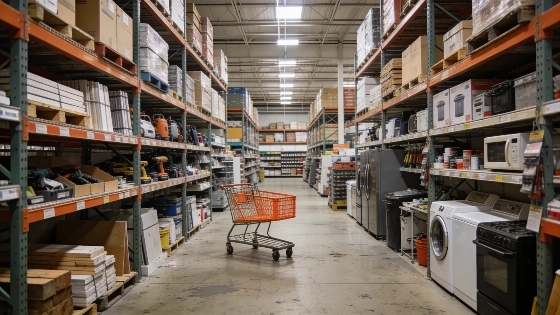
Home Depot's U.S. stores saw fewer shoppers even as sales edged up, with high mortgage rates and low housing turnover weighing on demand for big-ticket home improvement projects
Home Depot is facing a challenging retail environment as shifting consumer behavior and a sluggish housing market put pressure on its core business. While the company reported a modest 1.3% year-over-year increase in comparable U.S. sales for the second quarter of 2026, according to its latest earnings release, in-store foot traffic declined. Data from Placer.ai show that average visits per Home Depot location fell 0.6% compared to the same period last year, a steeper drop than rival Lowe's, which saw a 0.4% decrease.
Despite efforts to attract more shoppers-including the rollout of a real-time delivery tracker for large orders and expanded perks for Pro Xtra Rewards members-Home Depot continues to see consumers pull back on larger home improvement projects. The company has sharpened its focus on enhancing the customer experience, but persistent economic headwinds are making it difficult to reverse the trend.
Housing Market Headwinds
One of the main factors weighing on Home Depot's performance is the state of the U.S. housing market. According to the company's Chief Financial Officer, Richard McPhail, consumer uncertainty and housing affordability are discouraging homeowners from undertaking major renovations. Instead, more customers are opting for smaller repair and maintenance projects, a shift that has reduced demand for higher-priced items.
Industry analysts, including Neil Saunders of GlobalData Retail, note that the number of large-scale home improvement projects at Home Depot declined by 2.1% year over year. Financing concerns and historically low housing turnover are key contributors. Redfin data show that in 2025, only 2.8% of U.S. homes changed hands-the lowest rate in at least 30 years. With 30-year mortgage rates averaging between 6% and 7% over the past four years, many homeowners are staying put, further dampening demand for major upgrades.
Cost Pressures and Strategic Shifts
Home Depot expects comparable sales to remain flat or grow by up to 2% for fiscal 2026, but the company is also contending with rising costs for fuel, energy, and product inputs. Executives say they are focused on controlling what they can, including inventory management and operational efficiency, as they navigate ongoing volatility in the market.
To improve convenience and drive sales, Home Depot has expanded its Express Delivery service to more than 2,000 U.S. locations, offering delivery of essential products in three hours or less for a flat fee. The company has also updated its appliance delivery model, now stocking select appliances for next-day delivery in certain markets-a move that has led to sales gains where implemented.
Ann-Marie Campbell, senior executive vice president, highlighted ongoing investments in technology and store operations aimed at improving both the customer and associate experience. These initiatives include maintaining high on-shelf availability, introducing new products, and deploying technology to streamline service. According to the company, these efforts have resulted in higher associate engagement, improved customer satisfaction scores, and stronger sales in targeted categories.
Market Data and Broader Retail Trends
In July 2026, the average 30-year fixed-rate mortgage in the U.S. reached 6.54%, up from 6.49% in June, according to Freddie Mac. Existing-home sales fell 1.7% month over month in July, while the median price for existing homes rose 2% year over year to $434,100, based on data from the National Association of Realtors. These figures underscore the affordability challenges facing many would-be homebuyers and help explain the muted demand for large-scale home improvement projects.
Home Depot's experience reflects broader shifts in U.S. retail, as companies like Target and Lowe's also report changes in consumer spending patterns. With inflation, high interest rates, and economic uncertainty shaping household budgets, retailers are adapting by focusing on value, convenience, and customer loyalty programs. For Home Depot, the ability to deliver on these fronts may determine how well it weathers ongoing market pressures.
For homeowners and investors, the interplay between housing market dynamics, consumer confidence, and retail performance remains a key area to watch as the year progresses.
Home improvement spending is closely tied to housing turnover and mortgage rates. When fewer homes are bought and sold, demand for major renovations typically falls, since new owners are more likely to invest in upgrades. High mortgage rates can also discourage both home purchases and cash-out refinancing, limiting the funds available for large projects. Retailers like Home Depot must balance investments in technology and logistics with the realities of consumer caution and rising costs, making strategic flexibility essential in a volatile market.