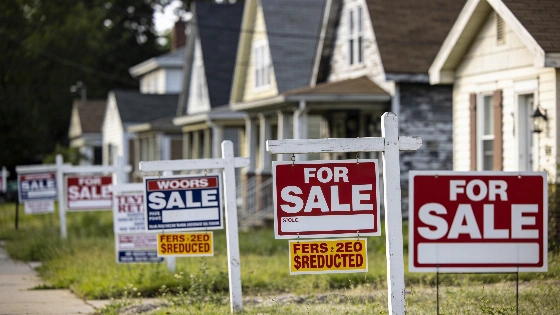
A sharp drop in active homebuyers has shifted the balance of power in many U.S. housing markets, giving buyers in select cities more room to negotiate on price, closing costs, and contingencies
For the first time in years, homebuyers in many U.S. cities are finding themselves in a stronger negotiating position as the number of sellers now far exceeds the number of active buyers. According to a report from Redfin, the national housing market has tipped toward buyers, with sellers outnumbering buyers by more than 50% as of July. This shift is a stark reversal from the pandemic-era frenzy, when buyers routinely bid above asking price and waived contingencies just to compete.
The change is driven by a steep decline in buyer demand. Redfin estimates that the number of active buyers fell to about 967,000 in July, the lowest on record and down 2.5% from June. Meanwhile, the number of sellers dropped to roughly 1.46 million, still leaving nearly half a million more homes for sale than there are buyers. The brokerage defines a buyer's market as one where sellers outnumber buyers by at least 10%-a threshold now surpassed in nearly every major metro area.
Where Buyers Hold the Advantage
Redfin's analysis of 49 major metropolitan areas found that 39 are now buyer's markets, with five cities standing out for the scale of their buyer advantage. Miami leads the list, with 154% more sellers than buyers, followed by Nashville (151%), Houston (130%), San Antonio (116%), and Austin (112%). In Houston, for example, there were 45,641 homes listed in July but fewer than 20,000 active buyers, meaning even if every buyer closed on a home, more than 25,000 listings would remain unsold.
These cities share a common thread: rapid homebuilding and investor activity during the pandemic, which has now resulted in a glut of inventory just as local demand has cooled. Miami and Nashville, in particular, have seen new construction and investor-owned properties hit the market at the same time that rising prices, higher insurance premiums, and increased homeowners association fees have priced out many local buyers. In Texas, ongoing construction in Houston, San Antonio, and Austin continues to add supply even as demand softens.
Market Forces Behind the Shift
Two main factors have contributed to the drop in buyer demand. First, mortgage rates have climbed to their highest level in a year, with the average 30-year fixed rate reaching 6.67% for the week ending August 13, according to Freddie Mac. Second, uncertainty over the Federal Reserve's next moves on interest rates has kept many would-be buyers on the sidelines. Mortgage rates tend to track the 10-year Treasury yield, which rises when investors expect higher inflation or further Fed rate hikes. Geopolitical tensions, such as the ongoing conflict in Iran, have also contributed to rate volatility.
Redfin's methodology for counting buyers is based on how long it typically takes a house hunter to go from first tour to closing, combined with listing data on active and pending sales. This approach aims to capture serious buyers rather than casual browsers. The result is a more accurate picture of real-time demand-and right now, that demand is at a historic low.
Negotiating Power and Price Trends
With fewer buyers in the market, those who remain have more leverage to negotiate on price, closing costs, and contract terms. Sellers are increasingly willing to offer concessions, such as rate buydowns or covering closing costs, to attract offers. In Nashville, for example, agents report that buyers are taking their time and winning more favorable terms, a sharp contrast to the multiple-offer situations common just a year or two ago.
Price growth has also slowed in these buyer's markets. Across the 39 metros where buyers hold the advantage, home prices rose just 2.3% year over year, compared to 4.2% in the six remaining seller's markets, according to Redfin. This moderation in price increases gives buyers additional negotiating room, though affordability remains a challenge for many households.
Timing and Affordability Challenges
Redfin's report suggests that the current window-between now and Labor Day-may be especially favorable for buyers, as motivated sellers look to close deals before a potential uptick in demand later in the fall. However, the benefits of a buyer's market are only available to those who can afford to participate. The income needed to purchase a typical U.S. home remains near a record $110,000, and at current mortgage rates, monthly payments are still out of reach for millions of households.
It's also important to note that not all markets have shifted in buyers' favor. Six major metros, including Nassau County, New York, and Newark, New Jersey, remain seller's markets, largely due to limited new construction and persistent supply constraints. In these areas, buyers continue to face stiff competition and limited negotiating power.
For those able to buy, the current market offers more options and bargaining power than at any point since Redfin began tracking these trends. But as with any market cycle, such imbalances rarely last long. Sellers are aware that conditions could shift again as seasonal demand returns or if mortgage rates stabilize.
While the housing market is experiencing a rare period of buyer leverage, other sectors are also seeing significant shifts. For example, the recent addition of Reddit to the S&P 500 has forced index funds to adjust their holdings, creating new risks and opportunities for investors, as discussed in this analysis of index fund adjustments.
According to the National Association of Realtors, the median existing-home price in the U.S. reached $410,200 in July 2026, up 1.9% from a year earlier. Total housing inventory at the end of July stood at 1.11 million units, representing a 3.3-month supply at the current sales pace. These figures highlight the ongoing tension between supply, demand, and affordability in the housing market.
Understanding the dynamics of a buyer's market is crucial for anyone considering a home purchase. In these conditions, buyers can often negotiate for price reductions, seller-paid closing costs, or more favorable contract terms. However, the ability to take advantage of these opportunities depends on having sufficient income, savings for a down payment, and a strong credit profile. Mortgage rates, local inventory, and broader economic trends all play a role in shaping what's possible for individual buyers. As market conditions evolve, staying informed about both national and local trends can help buyers make more confident decisions.