Japan's $550 billion deal with the US spells out winners in energy but keeps AI chip funding vague, forcing investors to guess which companies will benefit and when real money will flow
Japan's $550 billion investment pact with the US has triggered a rally in energy infrastructure stocks, while leaving semiconductor investors with little more than speculation and bureaucratic signals. GE Vernova and Hitachi are already deploying capital and breaking ground on new US projects, but the semiconductor portion of the agreement remains opaque-there are no named recipients, no disclosed dollar amounts, and no timeline for allocation.
In Japan's 2027 fiscal budget, the Ministry of Economy requested a record 7.8 trillion yen, with about 2 trillion yen earmarked for AI, semiconductors, and robotics, highlighting a major strategic shift toward advanced technologies.
On the semiconductor front, investors face a void. Trade Minister Ryosei Akazawa has emphasized the "very significant weight" of upcoming chip and AI funding, but has withheld details on projects or beneficiaries. The only concrete policy move is the decision not to increase last year's 15% tariff rate, which removes one risk for Japanese exporters but does not clarify the fate of chip funding.
Strategic Ambiguity and Delayed Disclosure
Japan has requested an additional 1.5 trillion yen in fiscal investments to support its domestic semiconductor industry, specifically for Rapidus. If approved, total government backing for Rapidus would reach 4 trillion yen, reflecting the scale of Japan's ambitions in advanced chip manufacturing.
This ambiguity leaves investors guessing. Energy projects received immediate funding and clear beneficiaries, while semiconductor allocations remain in the realm of policy statements and strategic posturing. The sequencing signals intent: Tokyo is locking in energy deals first, using the chip funding as a lever for future negotiations and political alignment.
Positioning for Unnamed Winners
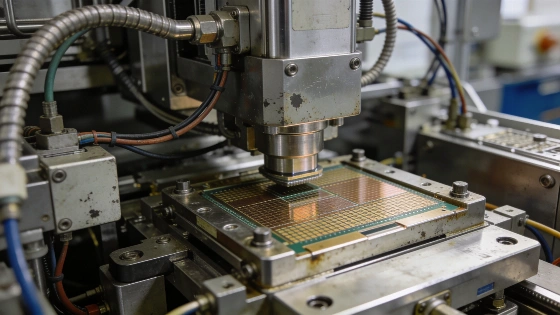
Certain companies are positioned to benefit regardless of which chipmaker ultimately secures funding. Tokyo Electron, for example, supplies critical etching, coating, and deposition tools to fabs worldwide. Its US-listed shares (TOELY, TOELF) offer American investors exposure to Japan's equipment supply chain without the need to pick a single chipmaker. As long as new fabs are built, Tokyo Electron's order book grows-irrespective of the end customer.
Meanwhile, demand for AI infrastructure continues to accelerate. As recent reporting on Dell's $95 billion AI server backlog demonstrates, the appetite for processing power is fueling both hardware and energy investments. Yet, with no clarity on Japan's chip funding, investors must monitor quarterly equipment order backlogs and trade summit communiqués for early signs of which suppliers are quietly capturing revenue ahead of official announcements.
Market Data and Investment Implications
Reuters data confirms that the initial tranches of the US-Japan pact earmarked up to $332 billion for nuclear and power projects, with $40 billion specifically allocated to small modular reactors in the US Southeast. GE Vernova's 167% share price gain over the past 52 weeks reflects the scale of energy infrastructure spending. In contrast, the semiconductor sector has no comparable line item or named beneficiary, and the $550 billion headline figure is largely composed of loans and guarantees rather than direct investment.
For US investors, the distinction is clear: energy infrastructure stocks have already rallied on the back of named projects and visible cash flows, while semiconductor bets remain speculative until Tokyo and Washington move from policy language to concrete allocations. The true inflection point will be the first hard announcement of a chip project or supplier, not the rhetorical commitments that have dominated so far.
Japan's $550 billion pact with the US exemplifies strategic ambiguity-securing energy deals with explicit partners while keeping AI chip funding undefined. This approach buys Tokyo time and leverage, rewarding early energy investors but leaving semiconductor speculators parsing official statements for actionable signals. Until the funding is assigned to specific projects, the most reliable beneficiaries are equipment suppliers like Tokyo Electron, whose business model profits from every new fab regardless of which company ultimately claims the spotlight. Given the capital intensity and cyclical nature of semiconductor manufacturing, investors should focus on the broader supply chain rather than betting on direct chip exposure while policy-driven funding remains unresolved.