A JPMorgan strategist sees troubling signs in the AI stock rally, as chipmakers soar but tech giants stumble. Investors in index funds may face higher risk if market concentration persists
Wall Street's enthusiasm for artificial intelligence has driven billions into AI-linked stocks in 2026, but JPMorgan is warning that the rally is showing cracks that echo the late 1990s tech bubble. According to the bank's technical strategist Jason Hunter, the current split between surging chipmakers and struggling tech giants is reminiscent of the months before the dot-com crash in 2000.
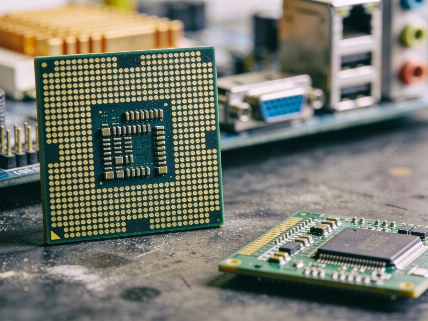
Hunter's analysis points to a growing divergence: semiconductor stocks, which supply the hardware powering AI, have soared this year. The Philadelphia Semiconductor Index is up 87% year-to-date, marking its strongest quarter on record, based on JPMorgan data. In contrast, major technology companies investing heavily in AI infrastructure-often called hyperscalers-have seen their shares lag or decline. Meta is down about 5% for the year, while Microsoft has dropped between 18% and 20%, suffering its worst monthly performance since 2000. Not all hyperscalers are down, but the pattern is enough to raise concerns at JPMorgan.
This split matters for everyday investors, especially those holding broad index funds like the S&P 500 or Nasdaq. These funds automatically allocate more money to the largest companies, meaning the so-called Magnificent Seven-Nvidia, Microsoft, Apple, Alphabet, Amazon, Meta, and Tesla-now account for roughly a third of the S&P 500's market value. When these few stocks stumble, the entire index can be dragged lower, even if most other companies are stable or rising.
Market Concentration and AI Spending
The concentration risk is not limited to public markets. Venture capital flows have also become highly focused. According to Courtney Olujobi of Moon Pursuit Capital, nearly 87.5% of all venture dollars in the first half of 2026 went to AI companies, with 43% of that total funneled into just two firms: OpenAI and Anthropic. This level of concentration leaves both public and private investors exposed if the largest players falter.
The underlying reason for the split is timing. Chipmakers get paid upfront when tech giants place massive orders for AI hardware. But the companies buying those chips-Meta, Microsoft, Amazon, and Alphabet-must still prove they can turn that investment into profitable software and cloud services. Combined, these four firms are on track to spend about $725 billion on capital expenditures in 2026, based on their own earnings disclosures. Investors are now demanding evidence that this spending will translate into earnings growth, not just hype.
In a healthy market, both the sellers and buyers of AI technology would see their stock prices rise together. The current divergence, Hunter argues, is similar to what happened in 1999, when equipment suppliers soared while companies making heavy capital investments began to slide. Less than a year later, the dot-com bubble burst, wiping out trillions in market value.
Risks for Index Fund Investors
For investors in index funds, the risk is amplified by how these funds are structured. Because they are weighted by market capitalization, a handful of giant stocks can dominate performance. In June 2026, the Magnificent Seven lost about $2 trillion in market value over a few weeks, pulling the broader S&P 500 down even as many other stocks traded higher. This dynamic is similar to what's happening in the housing market, where shifts in buyer and seller power can have outsized effects on prices, as discussed in this analysis of leverage shifts in key U.S. cities.
Hunter's warning is not a prediction of an imminent crash, but a signal for investors to review their exposure. Timing market peaks is notoriously difficult, and rallies can last longer than expected. Still, the current setup gives long-term investors a reason to check how much of their portfolio is tied up in a few dominant tech names.
Practical Steps for Investors
Before making any changes, investors should ensure they have a solid emergency fund-typically three to six months of living expenses. For those with heavy tech exposure, consider these steps: review how much of your portfolio is concentrated in a handful of stocks, rebalance positions to align with your target allocations, and look for opportunities in sectors that have lagged the AI rally but still offer solid earnings growth. Watching the performance of hyperscalers over the summer could also provide clues about whether the risk of a sharp autumn pullback is rising or fading.
History shows that infrastructure booms can leave early investors exposed, even when the underlying technology succeeds. Many railroad builders went bankrupt in the 19th century, while the companies that used the railroads thrived for decades. The lesson for today's AI market: leadership and profitability may not be as widely distributed as the hype suggests.
Hunter's analysis does not suggest that AI is a passing fad or that the leading companies will disappear. Instead, it highlights the risk that the market is rewarding hardware sellers while demanding proof from the big spenders. For investors, the key is to know what you own, avoid overconcentration in a few stocks, and monitor whether the largest AI investors can deliver on their promises. If they succeed, market fears may ease. If not, the same concentration that fueled the rally could accelerate losses on the way down.
According to S&P Dow Jones Indices, as of June 2026, the Magnificent Seven accounted for approximately 33% of the S&P 500's total market capitalization, a level of concentration not seen since the late 1990s. The Philadelphia Semiconductor Index's 87% year-to-date gain outpaced every other major sector index, while the S&P 500's overall return was much lower, reflecting the outsized impact of a few stocks on the broader market.
Market concentration is a double-edged sword for investors. While it can drive strong returns when a handful of companies outperform, it also increases vulnerability if those same companies stumble. Index funds, which are designed to provide broad market exposure, can become less diversified than investors realize when a few stocks dominate. Understanding how index weighting works-and how it can amplify both gains and losses-is essential for anyone relying on these funds for long-term growth or retirement savings.