
Citadel CEO Ken Griffin warns that artificial intelligence is overhyped, even as tech investment lifts the economy, raising questions about how quickly AI can deliver real business gains and what history suggests about new technology cycles
Artificial intelligence has been a dominant force behind the recent surge in U.S. stock markets, with investors pouring billions into companies promising to reshape the economy. Yet not every Wall Street heavyweight is convinced that AI's rapid ascent will translate into immediate, transformative results. Ken Griffin, CEO of Citadel, one of the world's most successful hedge funds, has voiced skepticism about the current AI enthusiasm, arguing that much of the excitement is driven by hype rather than near-term substance.
Griffin's perspective stands out at a time when many high-profile investors and executives are touting AI as the next major driver of economic growth. While he acknowledges that technology spending is having a positive effect on the broader economy, Griffin cautions that the expectations for AI may be running ahead of what the technology can realistically deliver in the short term. His comments come as Wall Street continues to reward companies associated with AI, pushing major indexes like the S&P 500 and Nasdaq Composite to record highs.
AI Investment and Market Momentum
Over the past four years, the promise of AI has fueled a wave of investment across the technology sector. Consulting firm PwC has estimated that AI could add as much as $15.7 trillion to global economic output by 2030, a figure that has helped justify the massive capital inflows into AI-related stocks. This optimism has contributed to a rally in U.S. equities, with technology giants and chipmakers seeing outsized gains as investors bet on the future of automation, data analysis, and machine learning.
Despite these gains, Griffin's caution reflects a broader historical pattern. According to reporting by Financial Sumo, previous technology booms-from the internet in the 1990s to more recent digital innovations-have often been marked by early exuberance, followed by periods of disappointment as the pace of adoption and optimization failed to meet initial expectations. In fact, as explored in an analysis of how AI-driven gains are shaping the stock market, some investors are already questioning whether current valuations can be sustained if earnings growth slows or fails to materialize as quickly as hoped.
Adoption Versus Optimization
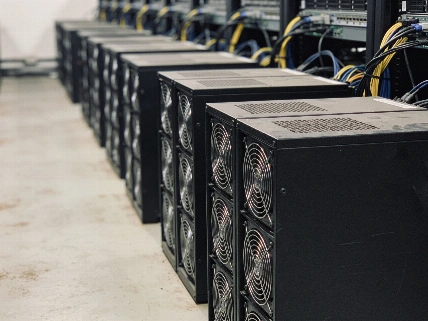
One of the key distinctions in the current AI cycle is the difference between adoption and optimization. While demand for AI infrastructure-such as data centers and specialized hardware-remains strong, many businesses are still struggling to integrate AI tools in ways that meaningfully improve productivity or profitability. This echoes the experience of the dot-com era, when companies invested heavily in internet technologies but took years to figure out how to translate those investments into sustainable business models.
Griffin's skepticism centers on the idea that generative AI and large language models, while impressive, are still far from being fully refined or optimized for most commercial applications. The risk for investors is that the timeline for realizing significant returns from AI could be longer than current market sentiment suggests. This lag between technological promise and practical impact has historically led to volatility, as markets adjust to the slower-than-expected pace of change.
Economic Impact and Historical Lessons
Even as Griffin tempers expectations for AI, he does not dismiss the broader benefits of increased technology spending. Investments in digital infrastructure, cloud computing, and automation are contributing to economic growth, supporting job creation in certain sectors, and driving demand for specialized skills. However, the challenge for both investors and businesses is to distinguish between hype and genuine progress, especially as competition intensifies and regulatory scrutiny grows.
Recent data from the Bureau of Economic Analysis shows that U.S. business investment in information processing equipment and software reached $1.3 trillion in 2025, up nearly 10% from the previous year. This surge reflects both the optimism surrounding AI and the broader trend toward digital transformation. Yet, as with previous technology cycles, the ultimate winners may be those companies that can adapt and optimize new tools over time, rather than those that simply ride the initial wave of enthusiasm.
Understanding the difference between adoption and optimization is crucial for investors evaluating new technologies. While early movers can benefit from market momentum, sustainable returns often depend on how effectively companies integrate innovations into their core operations. For AI, this means that the most significant economic gains may emerge gradually, as businesses refine their use of the technology and regulators address emerging risks. Investors should remain mindful of historical patterns, recognizing that hype cycles can create both opportunities and pitfalls as markets adjust to new realities.