
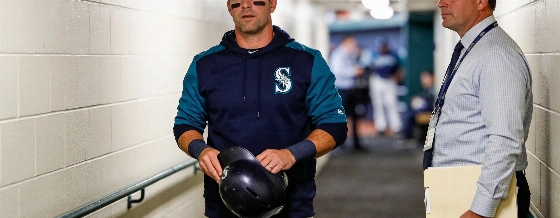
Seattle is sending Alex Hoppe, Brock Moore and Harrison Kreiling to Baltimore for Taylor Ward, a move that adds balance and power as the Mariners try to stay in the playoff race
The Mariners are acquiring outfielder Taylor Ward from the Orioles, according to ESPN's Jeff Passan, in a trade that sends Alex Hoppe, Brock Moore and Harrison Kreiling to Baltimore. The deal is roster-neutral for both clubs: Ward and Hoppe already occupy 40-man spots, while Moore and Kreiling do not.
For Seattle, the move addresses a clear lineup need. Ward gives the Mariners another right-handed hitter at a time when the roster has leaned heavily left, with Cole Young, Dominic Canzone, Josh Naylor, Colt Emerson, Luke Raley, Brendan Donovan and J.P. Crawford all batting from the left side. Seattle has been short on balance and has also lacked consistent production from the middle of the order, making Ward a more practical fit than a splashy one.
Ward, 32, has spent much of his career as a power bat capable of anchoring the middle of a lineup. From 2022 through 2025 with the Angels, he reached at least 23 home runs in three of four seasons and finished with 36 last year. Injuries interrupted his 2023 season, limiting him to 97 games and 14 home runs. The Orioles acquired him before this season, sending former pitching prospect Grayson Rodriguez the other way.
His 2026 numbers have come in a different shape. Ward has only seven home runs, but his 17.2% walk rate is a sharp increase from last season's 11.3% mark, while his strikeout rate has fallen to 20.4% from 26.4%. His 117 wRC+ matches last season's figure, which means his overall offensive value has held steady even though the route to that production has changed. In practical terms, he has been getting on base more often and chasing less, even if the raw power has not shown up as frequently.
The timing fits Baltimore's broader deadline posture. The Orioles are 54-58 and sit 2.5 games behind a playoff spot, but the American League race is crowded enough that they would need to jump four teams to reach the postseason. President of baseball operations Mike Elias said this week that the club would buy and sell, though the balance of their moves has leaned toward selling. Ward is an impending free agent, so moving him now gives Baltimore a chance to turn a short-term asset into younger talent rather than risk losing him for nothing later.
That approach appears to be taking shape. Baltimore has already traded Dean Kremer to the Twins and is reportedly working on a deal that would send Adley Rutschman to the Red Sox. None of that guarantees a full teardown, but it does suggest the Orioles are valuing flexibility and future roster control at least as much as a late push in a compressed standings race.
The Mariners face a similar record, at 55-58, but their incentives are different. Seattle trails the Rangers by half a game and sits three games behind the Astros in the AL West, so a division push is still possible even if it looks imperfect on paper. That makes adding a bat more urgent than simply adding depth, especially with the market for controllable offense often expensive and the club still weighing whether to move more pitching.
Seattle has already been active. The team traded Luis Castillo to the White Sox in a deal that brought back reliever Seranthony Domínguez, cost savings and a pair of minor leaguers. Emerson Hancock and George Kirby have also surfaced in rumors, which leaves open the possibility of more turnover before the deadline. For now, Ward is the type of addition that can change the shape of a lineup without requiring Seattle to sacrifice a major league regular.
One useful way to read this trade is through the lens of roster construction. A right-handed hitter with on-base skills can matter as much as raw home run totals, especially against opponents that can stack left-handed pitching or exploit platoon weaknesses. Ward does not solve every Seattle problem, and his power output has been down, but the combination of walk rate, contact quality and lineup fit gives the Mariners a better chance to avoid being too easy to pitch to over the final stretch.
According to ESPN, the move was finalized with both clubs still active ahead of the deadline, which is typical for teams trying to preserve optionality. That optionality matters because deadline trades are rarely just about the current standings. They also reflect how a club values expiring contracts, 40-man roster space and the odds that a marginal upgrade can be worth more than waiting for internal improvement.