Micron stock has soared nearly 240% this year, but a top analyst now argues the AI boom could make its business less cyclical-and is betting on a 32% upside from current levels as memory demand shifts
Micron shares have staged a dramatic rally in 2026, recently trading near $966 and rebounding toward the $1,000 mark, according to Yahoo Finance. The stock has more than tripled year-to-date, far outpacing the S&P 500's 14% gain. Yet, despite this surge, Micron remains over 20% below its late-June peak, and faces new competition from fast-growing rivals like China's YMTC, which has overtaken Micron in global NAND memory shipments, based on CNBC reporting.
Investors are now grappling with whether Micron's current momentum is just another phase in the memory sector's familiar boom-and-bust cycle, or if the rise of artificial intelligence is fundamentally changing the game. The memory market remains tight, with much of Micron's 2027 production capacity already spoken for as AI-related demand outpaces supply, according to Yahoo Finance. This supply-demand imbalance has led some analysts to question whether the old cyclical playbook still applies.
AI Demand Reshapes Memory Economics
New Street's Pierre Ferragu, a highly rated analyst, has upgraded Micron to Buy and set a bold $1,250 price target, implying a 32% upside from recent levels. Ferragu argues that AI is transforming both the scale and nature of memory demand. High Bandwidth Memory (HBM), a key component in AI accelerators used by companies like Nvidia, Google, Amazon, and Meta, is structurally different from traditional DRAM. HBM is more complex to manufacture, consumes more wafer capacity, and requires advanced packaging, making it less prone to the oversupply that has historically triggered sharp downturns in memory pricing.
According to Tom's Hardware, HBM production uses nearly three times the wafer capacity per gigabyte compared to standard DDR5 DRAM. This means that ramping up HBM supply is not as simple as expanding commodity DRAM lines, and the industry's ability to flood the market with excess memory is more limited. As a result, the current shortage could persist longer than in past cycles, supporting higher prices and margins for longer periods.
Cash Flow and Valuation Outlook
Ferragu's thesis also highlights how Micron could remain highly profitable even if market conditions soften. New Street projects that by 2030, Micron could hold over $600 billion in cash and generate more than $150 billion in annual free cash flow. With a current market capitalization near $1.1 trillion, this would translate to a free cash flow yield of about 14%, even before accounting for the company's cash reserves. For context, Micron reported a $30.2 billion cash balance as of its latest quarter.
Wall Street consensus, compiled by Seeking Alpha, anticipates that Micron's earnings per share could peak at $154.89 in 2027 before declining to around $100 in 2028. Yet, Ferragu contends that even during a potential four-year downturn, Micron is likely to remain cash generative, suggesting that the amplitude of the memory cycle is shrinking. This view stands in contrast to the traditional expectation that memory stocks lose their earnings power quickly after a peak.
Valuation and Investor Positioning
Despite its run-up, Micron trades at roughly 13 times forward non-GAAP earnings, about 47% below the sector median, according to Seeking Alpha. On a GAAP basis, the discount is even steeper. The company's fundamentals remain strong, with an 84.9% adjusted gross margin and $18.3 billion in quarterly free cash flow, while guiding for fiscal Q4 sales of $50 billion and adjusted EPS near $31. For investors, the recent pullback has made the stock more attractive on a valuation basis, though risks remain if the AI-driven demand surge proves less durable than expected.
Some market watchers are cautious, noting that rapid growth in AI infrastructure stocks has also drawn skepticism from prominent investors. For example, Michael Burry's increased bets against AI-linked names have raised questions about whether the market is overvaluing the sector's future, as discussed in this analysis of AI short positions.
Looking ahead, investors will be watching Micron's gross margins, HBM pricing, capacity expansion, and earnings revisions. If the company can sustain elevated earnings, its current price-to-earnings ratio could look increasingly attractive. Still, the memory market's history of volatility means that even with structural changes, caution is warranted.
For the third quarter of fiscal 2026, Micron reported record results, including a significant increase in both revenue and profitability. The company's quarterly gross margin reached 84.9%, and free cash flow totaled $18.3 billion. These figures underscore the impact of strong AI-related demand and tight supply conditions on Micron's financial performance.
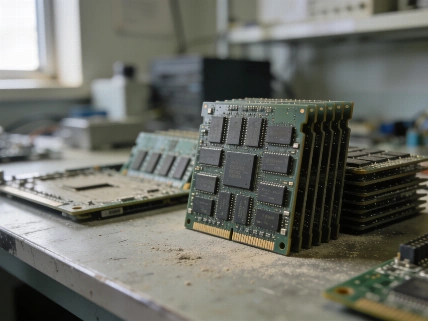
High Bandwidth Memory (HBM) is a specialized type of memory designed for high-performance computing and AI workloads. Unlike standard DRAM, HBM stacks multiple memory chips vertically, enabling faster data transfer and greater bandwidth. This architecture is essential for powering advanced AI accelerators and data center applications, but it also makes HBM more expensive and complex to produce. As AI adoption accelerates, the balance between supply constraints and rising demand for HBM could continue to influence the profitability and valuation of memory manufacturers like Micron.