Samsung is phasing out its Exynos chips in favor of Qualcomm's Snapdragon across phones, watches, and smart glasses, signaling a major consolidation in the mobile hardware market and raising new questions for investors and consumers
Qualcomm and Samsung have deepened their partnership, with Qualcomm's Snapdragon processors now set to power nearly every new device in Samsung's Galaxy lineup. This marks a significant departure from Samsung's long-standing practice of splitting its flagship phones between its own Exynos chips and Qualcomm's Snapdragon, a strategy that varied by region and often led to performance differences for consumers, according to Android Authority.
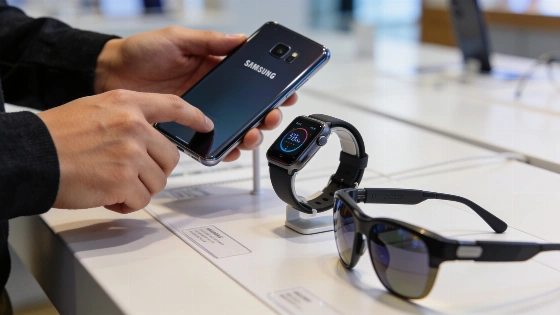
The new agreement extends beyond smartphones, bringing Snapdragon chips to Samsung's upcoming watches and smart glasses for the first time. The Galaxy Z Fold8 and Z Fold8 Ultra will feature the Snapdragon 8 Elite Gen 5, while the Galaxy Watch9 and Watch Ultra2 will run on the Snapdragon Wear Elite platform. Samsung's new smart glasses will use the Snapdragon AR1 Gen 1, based on a press release from Qualcomm. For Samsung, this move is designed to create a more consistent user experience across its ecosystem, mirroring Apple's approach of tightly integrating hardware and software.
Samsung's chip history stretches back to the original Galaxy S in 2010, which used a Samsung-designed Hummingbird processor. The Exynos brand debuted with the Galaxy S2 in 2011, but over the years, Exynos chips often lagged behind Snapdragon in battery life and speed. By the time the Galaxy S23 launched, Samsung had already shifted to a single global Snapdragon chip for its top-tier phones, signaling the beginning of this broader consolidation.
Qualcomm is now the dominant supplier of processors for non-Apple flagship smartphones worldwide, with Samsung as its largest customer by volume. The expanded deal underscores Qualcomm's strategy to remain indispensable to major device makers as more companies, like Apple, invest in developing their own custom silicon. For Samsung, standardizing on Snapdragon chips across phones, watches, and glasses is a bet that a unified hardware platform will keep users within its ecosystem, much as Apple has done with iPhone, Watch, and AirPods.
Market Reaction and Strategic Moves
On the day the expanded chip deal was announced, Samsung was also reported to be in advanced talks to invest about €1 billion (roughly $1.1 billion) in French AI startup Mistral, a move that would value the company near €20 billion, according to the Financial Times. This potential investment would nearly double Mistral's valuation from less than a year ago and signals Samsung's intent to deepen its relationships with leading AI developers. The company already relies on Google's Gemini for Galaxy AI features, but a stake in Mistral would make Samsung both a customer and an investor in the AI foundation model space.
Investors responded modestly to the news. Qualcomm shares rose about 1.3% to $175.70, while Samsung's Seoul-listed shares gained 0.6% to 260,500 won. The muted reaction suggests that markets viewed the chip deal as an expected renewal rather than a surprise, and the Mistral investment talks as unconfirmed. Still, both moves point to Samsung's broader strategy of consolidating its hardware and AI partnerships to compete more effectively against rivals like Apple and SK Hynix.
Samsung's push to unify its hardware stack comes as the semiconductor industry is seeing fewer, not more, chip platforms. Companies with the resources to design their own chips are increasingly doing so, while others are consolidating around a handful of dominant suppliers. This trend is also visible in the cloud computing sector, where AMD recently secured a major win with Microsoft's Azure, as detailed in a related report.
Financial and Industry Impact
For U.S. investors, the Qualcomm-Samsung deal highlights the growing importance of ecosystem lock-in and the risks for chipmakers that fail to secure major design wins. Qualcomm's ability to expand its footprint in wearables and AR devices could help offset slowing smartphone growth, while Samsung's investment in AI startups like Mistral may open new revenue streams in high-bandwidth memory and AI hardware. According to Qualcomm's most recent quarterly filing, the company generated $9.9 billion in revenue for the quarter ended March 2026, with mobile chip sales accounting for the majority of that figure. Samsung, meanwhile, remains the world's largest memory chip maker by volume, but faces increasing competition from SK Hynix in the high-bandwidth memory segment critical for AI applications.
Samsung's next earnings report, scheduled for July 30, will be closely watched for signs of how these strategic bets are affecting its financial performance. The company's decision to standardize on Snapdragon chips also raises questions about the future of its in-house Exynos division, which now faces an uphill battle to remain relevant as more devices ship with Qualcomm silicon.
For consumers, the shift to a single chip platform could mean more consistent performance and battery life across Samsung devices, but it also reduces the diversity of hardware options in the Android ecosystem. As the competition between hardware and AI ecosystems intensifies, the real battle may be less about individual chip specs and more about which companies can deliver the most seamless, integrated experience across devices.
Qualcomm's expanded partnership with Samsung is part of a broader industry trend toward consolidation and ecosystem control. As more companies seek to own the entire hardware and software stack, the stakes for chipmakers, device manufacturers, and AI developers will only grow.
In the context of the global semiconductor market, these moves reflect a shift away from regional hardware variations and toward unified platforms that can support advanced AI features, longer battery life, and tighter integration across devices. For investors and consumers alike, the next phase of competition will likely be defined by which ecosystems can deliver the most value-not just in raw performance, but in the overall user experience.