Quantum Computing Inc. posted a 9,000% revenue jump in Q2, sparking a rally across quantum stocks. But the numbers reveal a sector where eye-catching growth rates mask small absolute gains and ongoing losses
Quantum Computing Inc. (QUBT) stunned the market with a second-quarter revenue surge to $5.6 million, a leap of more than 9,000% from the $61,000 reported a year earlier, according to its latest SEC filing. While the headline figure grabbed attention, the underlying business remains modest in scale, with revenue still at a level comparable to a single university research grant.
QUBT shares traded near $9 on August 21, joining a rally that lifted seven quantum computing stocks in a single session. D-Wave Quantum, Rigetti Computing, IonQ, Infleqtion, IQM Quantum Computers, and IBM all saw gains that morning, reflecting how sector sentiment can drive correlated moves even when company fundamentals diverge. According to reporting by TheStreet, the rally was fueled by a mix of earnings releases, analyst upgrades, and technical milestones, rather than a single catalyst.
Revenue Growth Masks Small Scale
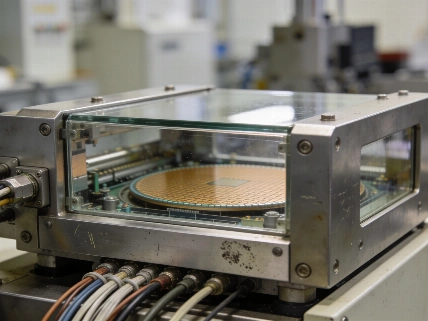
The dramatic revenue increase at Quantum Computing Inc. was driven by photonics product sales to government, educational, and commercial clients. Sequentially, revenue rose 51% from the first quarter's $3.7 million. Yet most of the improvement in the company's bottom line came from a reduced paper loss on warrant derivatives, not from core operations turning profitable. Net loss narrowed to $11.8 million from $36.5 million a year earlier, but the company continues to lose money on operations.
QUBT ended the quarter with a $42.5 million order backlog and $1.3 billion in cash, providing a substantial runway despite ongoing losses. The quarter also included the acquisition of NHanced Semiconductors, which expanded the company's U.S. manufacturing footprint and added a second chip fabrication facility. This deal contributed to a 114% year-over-year increase in operating expenses, which reached $21.8 million, partly due to acquisition-related costs.
Quantum Stocks Move as a Group
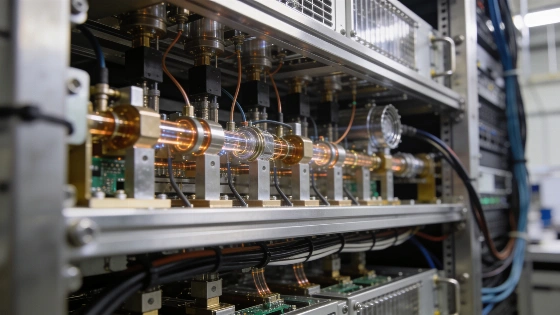
Other quantum stocks rallied for different reasons. D-Wave Quantum gained as much as 7% after BMO Capital Markets issued an Outperform rating and a $35 price target, implying roughly 85% upside. Rigetti Computing climbed 9.6% despite not being mentioned in the analyst note. IonQ rose 7.5% after signing a non-binding agreement to become a listed cloud provider on a Canadian government quantum platform, though the deal carries no guaranteed revenue. Infleqtion added 9% and later revised its second-quarter revenue upward to $13.5 million, a 157% increase from the prior year, according to an amended SEC filing. IBM advanced 2% after announcing progress in linking cryogenic modules, a step toward its goal of a fault-tolerant quantum computer by 2029.
These moves highlight how quantum stocks increasingly trade as a basket, with sector momentum often outweighing company-specific news. When one company posts a bullish headline, peers tend to move in tandem, regardless of whether the underlying news applies to them directly. This pattern is not unique to quantum computing; similar dynamics have played out in early-stage solar, biotech, and electric vehicle stocks, where eye-catching growth rates often outpace the underlying dollar figures.
Percentages vs. Profits
While triple- and quadruple-digit percentage gains make for striking headlines, they often reflect how small these businesses still are. For example, Infleqtion's revised revenue figure of $13.5 million, though up 157% year over year, remains modest in absolute terms. Investors who focus solely on percentage growth risk overlooking the fact that a small base can make even minor gains appear dramatic. As Micron's recent experience with AI-driven demand shifts shows, headline growth rates can be misleading without context on the underlying business scale.
For Quantum Computing Inc., the more meaningful numbers to watch may be backlog conversion and repeat orders rather than quarterly percentage gains. The company's $42.5 million order backlog could provide future revenue, but the pace and reliability of converting those orders into sales will be critical. Similarly, IQM Quantum Computers has told investors to expect most of its 2026 revenue in the fourth quarter, tied to system deliveries already in its EUR 102 million order backlog. D-Wave has guided to two to three full system sales per year starting in 2027, which will likely produce smaller percentage gains but offer a clearer picture of sustainable business growth.
According to company filings, Quantum Computing Inc.'s Q2 revenue of $5.6 million was its highest on record, but the company's net loss and rising operating expenses underscore the challenges of scaling a business in a nascent industry. The sector's total market capitalization remains small compared to established technology segments, and most quantum companies are still years away from consistent profitability.
For investors, the key takeaway is that headline growth rates in emerging sectors like quantum computing can be misleading without context. The real test will be whether companies can convert backlogs into recurring revenue and eventually reach profitability as the technology matures.
In early-stage industries, percentage growth often outpaces the underlying dollar amounts, especially when companies are starting from a low base. This can create the illusion of rapid progress, but the transition from research-driven revenue to sustainable commercial sales is rarely straightforward. Investors should pay close attention to order backlogs, repeat business, and the pace of operational improvements, rather than relying solely on headline percentages to gauge the health of a company or sector.