S&P 500 companies are set for a third straight quarter of earnings growth above 25 percent. Chipmakers and energy firms are leading the charge, while the index price lags behind profit forecasts.
This quarter, profit forecasts are carrying the S&P 500. The index sits just below its record, but the real action is in earnings. Chipmakers and energy companies are driving a jump in projected profits that has outpaced the index's own price rise.
Investors using funds like the Vanguard S&P 500 ETF now pay less for each dollar of expected profit than they did a few months ago. Prices haven't dropped. Instead, earnings forecasts have climbed, changing the math for anyone looking to buy into the index.
FactSet reported that the forward P/E ratio for the S&P 500 fell to 19.1 in September 2026, below its five-year average of 19.8 and close to the ten-year average of 19.0.
Chipmakers and energy firms drive profit growth
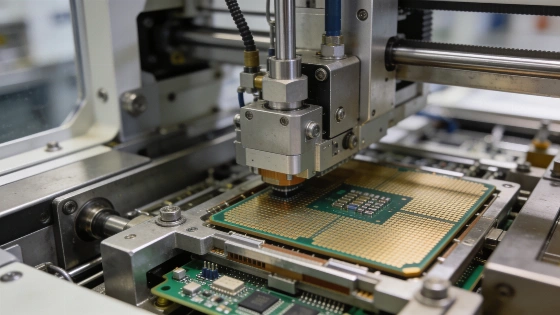
FactSet says S&P 500 companies are on track for third-quarter earnings growth of 28.9 percent from a year ago. If that holds, it will be the third quarter in a row with earnings up more than 25 percent. Tech is the main engine. Chipmakers and their equipment suppliers are set for a huge 126 percent jump in profits this quarter. Energy companies are close behind, with about 110 percent growth, helped by oil prices that averaged roughly 30 percent higher than last year. Communication services, led by Meta Platforms, are expected to see earnings rise 51 percent. Meta's per-share profit is forecast to climb from $1.05 to $6.74 compared to the same period last year.
All 11 sectors are expected to post earnings growth, but the big numbers depend on just a few industries. Take out chipmakers, and the rest of tech's growth drops to about 24 percent. This heavy concentration means a miss in these sectors could hit the index hard.
Valuations shift as profits outpace prices
From June 30 to FactSet's latest report, expected S&P 500 earnings for the next year rose 8.8 percent. The index price went up just 1.8 percent. That gap pushed the forward price-to-earnings (P/E) ratio down from 20.4 to 19.1. It's now below the five-year average of 19.8, though still a bit above the 10-year average of 19.0. Even after a 1.5 percent rally on Monday, the forward P/E is still under the five-year mark.
For investors, the index looks cheaper compared to future profits-but only if those profits show up. Looking at actual earnings from the past year, the S&P 500 trades at 25.5 times earnings. That's still above both its five- and ten-year averages. The discount depends on analyst forecasts holding up, and those can swing either way.
Reuters reported that as of September 21, 2026, the S&P 500 was trading at just under 19 times annual earnings, marking its lowest valuation since 2023 according to LSEG data. The report also noted that recent market gains have been driven by optimism around artificial intelligence and falling Treasury yields, rather than a broad-based rally.
Sales are also strong. S&P 500 revenue is expected to rise 11.9 percent year over year in the third quarter. That shows profit gains are coming from real business growth, not just cost cuts or buybacks.
Analysts raise forecasts instead of cutting
This earnings season, analysts have raised their estimates as results approach. That's not the usual pattern. On June 30, they expected 26.7 percent earnings growth for the quarter. By late September, the forecast was up to 28.9 percent. From June 30 to August 31, the consensus for third-quarter earnings per share rose 1.2 percent. The five-year average for that stretch is a 1.7 percent drop.
Upward revisions like this are rare. It means companies are beating expectations, at least for now. Still, forecasts for the fourth quarter call for slower growth at 26.5 percent, and 2027 projections drop to about 15 percent, with a nearly flat second quarter. If spending on artificial intelligence slows, chipmaker profits could cool off faster than current estimates suggest.
Recent market coverage, such as reported earlier, has focused on rising Treasury yields and sector rotation. But this earnings cycle is being shaped by something else: concentrated profit growth in a few industries and a rare wave of analyst optimism.
What index investors need to know
For S&P 500 index fund buyers, the current setup brings both upside and risk. The index price hasn't kept up with the jump in expected profits, so valuations look more reasonable by some measures. But with so much growth coming from chips, energy, and a handful of tech giants, any stumble in these areas could quickly change the picture. The forward P/E's discount only holds if forecasts prove right.
FactSet's latest report puts the S&P 500 at 7,764.70, just below its record high of 7,798.99 from mid-August. The Vanguard S&P 500 ETF trades around $713 per share. Buyers at the end of June paid 20.4 times expected earnings. Now, it's closer to 19 times. This shift shows the market is leaning on earnings growth, not price jumps, to justify valuations.
Understanding the forward price-to-earnings ratio matters for anyone looking at index funds or individual stocks. The forward P/E compares today's price to analysts' consensus for earnings over the next year. It can show if an asset is expensive or cheap, but it's only as good as the forecasts behind it. If actual profits fall short, the value can disappear fast. Long-term investors should look beyond headline ratios. Pay attention to where growth is coming from, whether sector trends can last, and the risks that come with betting on future projections.