Samsung's latest foldable smartphones saw over 271,000 preorders in India in just 72 hours, but aggressive incentives and financing raise questions about whether early demand will translate into lasting profits for the company
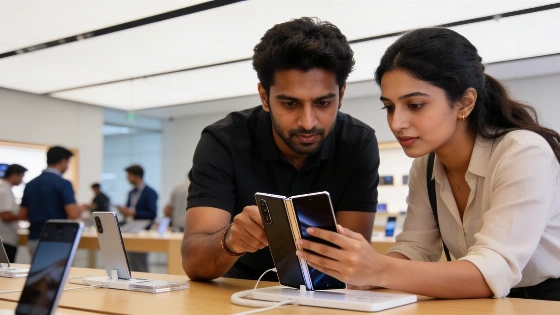
Samsung Electronics is betting big on its premium foldable smartphones, and early numbers from India suggest the company may have tapped into a much larger market than previously expected. Within 72 hours of launching the Galaxy Z Fold8 Ultra, Galaxy Z Fold8, and Galaxy Z Flip8, Samsung reported more than 271,000 preorders in India-a figure that took 15 days to reach with last year's models, according to company data. The rapid surge signals growing interest in high-end devices, but the underlying sales dynamics reveal a more complicated picture for investors and consumers alike.
What stands out in this launch cycle is not just the speed of preorders, but where the demand is coming from. Samsung says 45% of orders originated from India's tier 2 cities and smaller markets, a shift from the traditional concentration of premium smartphone buyers in major urban centers. This expansion into less affluent regions could reshape the company's sales strategy and potentially broaden the addressable market for its most expensive devices. Yet, the company has not disclosed how preorders are split among the three models, leaving open questions about which devices are driving the surge.
Incentives and Financing
While the headline preorder figure is impressive, it's important to look at the terms under which these orders were placed. Samsung offered a range of incentives, including cashback, upgrade bonuses, and no-cost financing for up to 30 months with no down payment. These promotions may have made it easier for consumers to commit to a preorder, but they also raise questions about whether buyers will follow through with full-price purchases once incentives expire. The company has not released data on cancellation rates, completed sales, or the proportion of customers using extended financing.
The pricing of Samsung's new foldables reflects their premium positioning. The Galaxy Z Flip8 starts at around $1,300, the Fold8 at about $1,900, and the Fold8 Ultra at roughly $2,100 before storage upgrades. This range gives Samsung and its retail partners multiple opportunities to upsell customers, but it also introduces complexity. Some buyers may opt for the less expensive Fold8 instead of the Ultra, potentially diluting the average selling price and profit margins.
Profitability Under Pressure
Samsung's management has emphasized that boosting profitability in its mobile division depends on increasing sales of flagship models and shifting toward a richer premium mix. In the first quarter, the company's Mobile eXperience and Networks units reported 38.1 trillion won in revenue and 2.8 trillion won in operating profit, with a higher mix of premium products contributing to the gains. Still, the division's profit margins remain in the single digits, underscoring the challenge of turning early excitement into sustainable earnings.
Preorders, while a positive signal, do not equate to recognized revenue. Without transparency on completed transactions, model breakdowns, or the impact of financing, the 271,000 figure should be viewed as an indicator of interest rather than a guarantee of financial success. Aggressive promotions may have pulled forward demand that would have materialized later in the year, potentially distorting the true level of organic market growth.
Market Implications and Investor Focus
For U.S. investors, Samsung's performance in India offers a window into the evolving global smartphone market. The rapid uptake of foldables in non-urban regions suggests that premium devices are no longer limited to the wealthiest consumers or the largest cities. Yet, the sustainability of this demand will depend on whether buyers complete their purchases, how sales are distributed among the Flip8, Fold8, and Fold8 Ultra, and whether the expiration of launch incentives leads to a drop-off in orders.
Samsung's approach mirrors broader trends in the tech sector, where companies are increasingly relying on premium products and upselling strategies to drive growth. As seen in recent developments in the semiconductor industry-such as major chip supply deals involving Samsung and SK Hynix-the ability to capture higher-margin business is becoming a key differentiator in a competitive landscape.
According to The Economic Times, Samsung's foldable phones now account for more than 20% of its flagship sales in India, a notable shift from previous years. However, the company's long-term success will hinge on its ability to convert early interest into profitable, completed sales-especially as competitors ramp up their own premium offerings and as consumer financing options evolve.
For context, the global smartphone market has seen a gradual recovery after a period of contraction. According to IDC, worldwide smartphone shipments grew 7.8% year-over-year in the first quarter of 2024, with premium devices capturing a larger share of the market. This trend is driven by consumer demand for advanced features, longer device lifespans, and flexible payment options, but it also puts pressure on manufacturers to maintain profitability amid rising costs and intense competition.
Foldable smartphones represent a high-stakes bet for Samsung. The company's ability to sustain momentum beyond the initial preorder window will depend on how well it manages pricing, incentives, and product differentiation. Investors and consumers alike should watch for updates on completed sales, financing utilization, and the mix between entry-level and ultra-premium models as key indicators of the strategy's success.
Foldable phones are a relatively new segment in the smartphone market, blending the portability of traditional phones with the expanded screen real estate of tablets. For manufacturers, these devices offer a way to command higher prices and differentiate from standard models, but they also come with higher production costs and technical challenges. For consumers, the decision to upgrade often hinges on perceived value, available incentives, and the flexibility of financing options. As the market matures, the balance between innovation, affordability, and profitability will shape the future of premium smartphones.