
SK Hynix shares fell sharply just days after its historic $26.5 billion U.S. debut, raising questions about post-IPO volatility, analyst jitters, and what Jim Cramer's cryptic social media posts might mean for American investors watching the AI chip supply chain
SK Hynix, the South Korean memory chip giant, made headlines with its record-setting $26.5 billion U.S. IPO, only to see its shares drop as much as 15% in early trading on July 13 before closing down 9.32% at $152.35. The sudden selloff, which followed a surge of 13% on its first trading day, left many investors questioning whether the volatility was a sign of deeper trouble or simply a case of post-IPO profit-taking amplified by market nerves.
Market Moves and Cramer's Social Media Signals
On the morning of the selloff, Jim Cramer posted two cryptic messages on X (formerly Twitter) about SK Hynix. His first comment, describing the company as "very kind to American investors with its pricing and its trading," was quickly followed by a second post suggesting he was "walking SK Hynix back up, the American version." For investors familiar with Cramer's online habits, these remarks were interpreted as a subtle endorsement and a sign that he was buying the dip. The timing of his posts, amid a sharp decline, drew attention to the underlying dynamics driving the stock's movement.
The broader context matters. SK Hynix is not just another chipmaker-it is the world's leading supplier of High Bandwidth Memory (HBM), a critical component in Nvidia's AI processors. According to Leverage Shares, SK Hynix controls about 60% of the global HBM market, and UBS projects its share could reach 70% for next-generation AI platforms by 2026. The company's customers include major players like Nvidia and Apple, and demand for its advanced memory chips has been described as "enormous" by its own leadership.
Historic IPO and Sector Jitters
SK Hynix's U.S. debut was the largest ever by a foreign company, surpassing Alibaba's 2014 record, according to The Motley Fool and the BBC. The company's American depositary receipts were priced at $149, and the stock quickly climbed to $168.01 on its first day. But the rally was short-lived. On July 13, a South Korean brokerage report raised doubts about SK Hynix's ability to meet quarterly profit estimates, triggering a wave of selling that spread to other memory stocks, including Micron, Seagate, and SanDisk.
For many market watchers, the drop looked like classic post-IPO volatility rather than a fundamental shift in the company's outlook. The rapid run-up in price over three days may have encouraged short-term traders to lock in gains, especially with negative headlines providing a convenient exit point. Cramer's public pushback against the selloff highlighted the tension between short-term sentiment and long-term fundamentals.
Financial Performance and Demand Drivers
SK Hynix's recent financial results underscore why the company has attracted so much attention. In the first quarter of 2026, the company reported revenue of KRW 52.58 trillion (about $35.5 billion), up 198% year over year and 60% from the previous quarter. Operating profit reached KRW 37.61 trillion ($24.9 billion), representing a 72% operating margin, while EBITDA margin hit 79%. Net income soared 398% to $27.3 billion. These gains were fueled by a sharp rise in memory prices, with DRAM contract prices up 83% and NAND flash prices up 160% quarter over quarter, based on data from MLQ.ai.
The surge in profitability is directly tied to a global shortage of advanced memory chips, a trend also cited by competitors like Micron and SanDisk. SK Hynix's chairman has stated that even plans to double production capacity over five years may not be enough to meet customer demand, especially as AI infrastructure buildout accelerates worldwide.
Investment Plans and Long-Term Outlook
Looking ahead, SK Hynix is committing to a massive expansion. Backed by South Korea's $576 billion technology initiative, the company has announced an investment plan exceeding KRW 1,100 trillion (over $800 billion) to build new semiconductor manufacturing hubs focused on HBM production. This scale of investment is rare even in the global chip industry and signals the company's intent to remain at the forefront of AI memory supply.
For U.S. investors, the recent volatility may present both risk and opportunity. While a single brokerage report can trigger sharp moves in newly listed stocks, the underlying demand for SK Hynix's products remains robust. As with other major tech IPOs, such as those involving Tesla and SpaceX, which have faced their own bouts of volatility and speculation, the real test will be whether the company can sustain its growth and deliver on its ambitious expansion plans. For more on how high-profile tech listings can shape market sentiment, see this analysis of merger speculation and regulatory hurdles involving two of the sector's biggest names: how Tesla and SpaceX merger hopes have fueled investor debate.
SK Hynix's Nasdaq debut has put a world-class semiconductor business within reach of American retail investors for the first time. While short-term swings are likely, the company's dominant position in a critical supply chain and its aggressive investment strategy make it a stock to watch as the AI hardware race intensifies.
In the first quarter of 2026, SK Hynix reported revenue of $35.5 billion, operating profit of $24.9 billion, and net income of $27.3 billion, with DRAM and NAND flash prices rising sharply due to global supply constraints. The company's American depositary receipts closed at $152.35 on July 13, down 9.32% from the previous session, after peaking at $168.01 on debut.
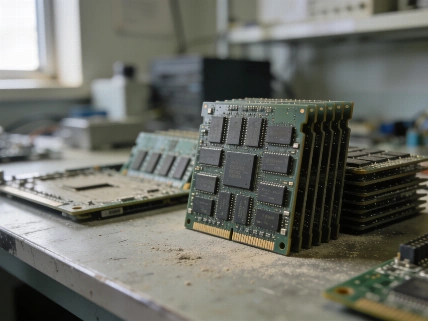
High Bandwidth Memory (HBM) is a specialized type of DRAM designed for extremely fast data transfer, making it essential for advanced AI processors and data centers. Unlike commodity memory, HBM requires complex manufacturing and tight quality control, which limits the number of suppliers able to meet the standards demanded by companies like Nvidia and Apple. SK Hynix's dominance in this niche gives it pricing power and strategic leverage, but also exposes it to swings in technology cycles and capital spending by its largest customers. For investors, understanding the difference between commodity and specialty memory markets is key to evaluating the risks and rewards of companies like SK Hynix.