TSMC's June revenue broke a four-year seasonal pattern, rising 6.2% from May as AI chip demand keeps advanced production lines at full capacity. Investors are watching how this shift could affect margins, pricing, and future growth
For the first time in four years, Taiwan Semiconductor Manufacturing (TSMC) reported a June revenue increase instead of the usual seasonal slowdown, a move that is drawing close attention from investors and analysts ahead of its second-quarter earnings. The world's largest contract chipmaker posted consolidated revenue of NT$442.68 billion (about $13.8 billion) for June 2026, up 6.2% from May and nearly 68% higher than the same month last year, according to the company's monthly filing. This reversal of the typical June dip is being interpreted as a sign that surging demand for advanced chips-especially those used in artificial intelligence (AI) hardware-is now powerful enough to override established industry cycles.
TSMC's first-half 2026 revenue reached NT$2.4 trillion (roughly $74.99 billion), a 35.6% jump from the same period in 2025. The company's shares rose about 1% on the day of the announcement, according to CNBC. Notably, the combined revenue for April, May, and June already exceeds the high end of TSMC's own second-quarter guidance of $40.2 billion, suggesting that the company's advanced manufacturing capacity is running at or near full utilization.
AI Chips Drive New Growth
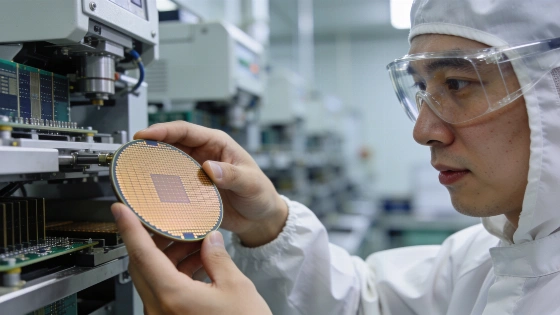
The main driver behind this break from seasonality is not a sudden spike in overall semiconductor demand, but rather a supply constraint in TSMC's most advanced process node, known as N3. This technology is essential for manufacturing the latest AI graphics processing units (GPUs) and central processing units (CPUs) used by leading tech companies. According to CNBC, TSMC is effectively sold out of N3 capacity for the year, with major customers including Nvidia, Apple, and Advanced Micro Devices (AMD). AI chip revenue is now on pace to exceed $40 billion in 2026, accounting for nearly a quarter of TSMC's total sales-a dramatic shift from just a few years ago, when AI was a minor segment in the company's portfolio.
This concentration of revenue in AI accelerators means TSMC's near-term results are increasingly tied to the fortunes of the AI sector, rather than the smartphone market that once set the company's rhythm. When demand for advanced nodes outpaces supply, TSMC has historically been able to maintain or even raise prices, supporting profit margins even as growth in other segments slows. For investors, this dynamic highlights both the opportunity and the risk: while AI demand is fueling strong results, it also makes TSMC more vulnerable to shifts in a single technology cycle.
Packaging Capacity and Expansion Plans
With wafer fabrication lines running at capacity, the next bottleneck for TSMC is advanced chip packaging-the process of assembling finished chips for shipment. The company is expanding its packaging footprint with two new plants at the Chiayi Science Park in southern Taiwan, according to Reuters. The first plant is already in mass production, and the second is expected to come online soon. Once all four planned facilities at the site are operational, the park is projected to generate more than NT$300 billion (about $9.35 billion) in annual production value and support over 9,000 jobs.
TSMC's capital expenditure guidance for 2026 is now at the high end of its $52 billion to $56 billion range, more than 25% above 2025 levels, based on reporting by GuruFocus. Most of this spending is earmarked for advanced packaging and next-generation process nodes, reflecting the company's expectation that strong AI-related demand will persist beyond the current earnings cycle. For U.S. investors, these investments signal TSMC's intent to maintain its technological lead and pricing power, but also raise questions about the sustainability of such high capital outlays if demand were to shift.
Market Share and Investor Focus
TSMC controlled 73% of the global pure-play foundry market in the first quarter of 2026, according to Counterpoint Research. This level of market concentration means that much of the world's AI chip supply chain now depends on TSMC's ability to execute and expand capacity. As the company prepares for its upcoming earnings call, investors are likely to focus less on whether TSMC beat its own guidance-which June's numbers already suggest-and more on management's outlook for capacity, pricing, and the durability of AI-driven demand into the second half of the year.
TSMC's monthly revenue disclosures are typically routine, but this year's break from a four-year seasonal pattern has turned them into a key market signal. The company's performance is now a bellwether not just for the semiconductor industry, but for the broader adoption of AI technologies across the global economy.
According to TSMC's June 2026 filing, consolidated revenue for the month reached NT$442.68 billion (about $13.8 billion), up 6.2% from May and 67.9% higher than June 2025. First-half 2026 revenue totaled NT$2.4 trillion (approximately $74.99 billion), a 35.6% increase year over year. The company's second-quarter revenue already surpassed its own guidance of $40.2 billion, highlighting the impact of sustained AI chip demand on its financial results.
TSMC's dominance in advanced chip manufacturing is a direct result of its ability to invest heavily in both process technology and packaging capacity. In the semiconductor industry, process nodes refer to the size of the transistors used in chips-the smaller the node, the more advanced and efficient the chip. TSMC's N3 node is currently the most advanced in mass production, and its scarcity has allowed the company to command premium pricing. For investors, understanding the interplay between process technology, capacity constraints, and end-market demand is essential to evaluating both the risks and opportunities in semiconductor stocks. As AI applications continue to expand, the balance between supply, demand, and capital investment will remain a central issue for TSMC and its shareholders.