SpaceX shares have dropped more than 38% from their June peak, testing investor confidence as Wall Street analysts remain sharply divided on the company's long-term value and growth prospects
SpaceX (SPCX) shares have tumbled to their lowest point since the company's record-setting IPO, closing near $139 on Monday. The stock now trades below its $150 opening price from June 12 and is only a few dollars above the $135 IPO price, marking a sharp reversal from its $225 high reached on June 16. This rapid decline has left investors questioning whether the market is simply recalibrating after an overheated debut or signaling deeper concerns about SpaceX's business model.
According to Reuters, the latest drop came even as SpaceX cleared a federal investigation into a Starship mishap, paving the way for its next test flight. Yet, the market's reaction suggests that traders are rotating out of high-growth stocks like SPCX in favor of safer bets, a trend that has affected other technology and space companies as well. Benzinga noted that the selloff appeared to be driven more by profit-taking after a rapid run-up than by any fundamental change in the company's outlook.
Wall Street's Stark Divide
What sets SpaceX apart from other recent IPOs is the extreme divergence in analyst opinion. Raymond James has set a bullish $800 price target on SPCX, implying a potential 440% upside and valuing the company at roughly $10.5 trillion. Their analysis treats SpaceX not just as a rocket company, but as a foundational infrastructure provider for the next era of technology, banking on its reusable launch systems, Starlink satellite internet, and the newly acquired xAI artificial intelligence division.
Raymond James projects that SpaceX's annual sales could soar from $38.5 billion in 2026 to $837 billion by 2031, with earnings before interest, taxes, depreciation, and amortization (EBITDA) rising from $17.7 billion to $696 billion over the same period. However, these forecasts depend on several ambitious milestones: Starship must achieve frequent, low-cost launches; Starlink must continue expanding its subscriber base beyond 10 million; and xAI must turn its Grok model and Colossus data centers into reliable revenue streams.
Bubble Warnings and Skepticism
Not all analysts are convinced. The Motley Fool and other skeptics argue that the $800 target is a classic sign of a late-stage bubble, especially given that SpaceX currently trades at nearly 50 times this year's forecasted sales-a level rarely sustained by even the most disruptive technology companies. There are also concerns about potential conflicts of interest, as both Morgan Stanley and Goldman Sachs, which underwrote the $85.7 billion IPO, have issued positive ratings on the stock.
For investors who bought at the peak, the reversal has been punishing. The stock's round trip from $225.64 on June 16 to Monday's low near $137 has erased billions in market value. The upcoming expiration of the insider lockup period and the company's first earnings report, both expected around August 6, could further reshape the supply and demand dynamics for SPCX shares.
Competitive Pressure and Global Context
SpaceX's competitive edge in reusable rocket technology is also facing new challenges. Days before the latest selloff, Chinese state media broadcast footage of a Long March 10B booster being recovered at sea-a first for any country outside the U.S. While SpaceX still leads in launch frequency and payload capacity, a credible Chinese rival could eventually pressure Starlink's expansion in emerging markets across Africa, the Middle East, and Southeast Asia.
Despite these headwinds, SpaceX remains a complex business with exposure to multiple high-growth sectors. Its 2025 financials showed a net loss of nearly $5 billion, and Morgan Stanley does not expect the company to generate positive free cash flow until at least 2035. The stock's volatility reflects this uncertainty, as investors weigh the promise of future dominance against the reality of steep losses and execution risk.
What to Watch Next
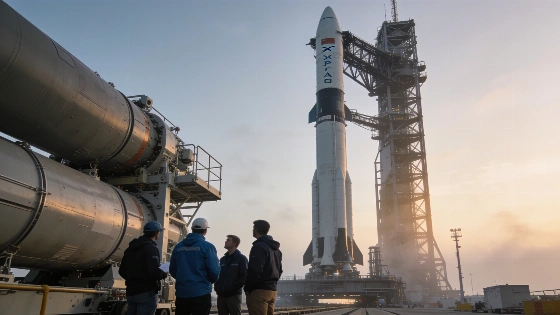
The next major catalyst for SPCX is the scheduled Starship Flight 13 test on July 16, which Raymond James views as a critical milestone for its bullish thesis. Shortly after, the company's first public earnings report and the expiration of the insider lockup period could trigger further volatility. For now, many investors are choosing to wait for more concrete financial results before making new bets on the stock's direction.
For those seeking parallels, the recent pullback in SpaceX shares echoes the experience of other high-growth companies that soared after their IPOs only to face sharp corrections as market sentiment shifted. As seen with Bloom Energy's recent volatility, even companies with strong technology and growth narratives can see their valuations tested when investor appetite cools.
According to company filings, SpaceX's IPO raised $85.7 billion, making it the largest in history. The company's Starlink division now serves over 10 million subscribers globally, while its xAI unit has begun generating revenue from AI subscriptions and computing contracts. Yet, with the stock trading at a steep multiple of sales and profitability still years away, the gap between Wall Street's most optimistic forecasts and current market reality remains wide.
SpaceX's trajectory highlights the risks and rewards of investing in companies at the intersection of space, technology, and artificial intelligence. For most investors, the prudent move may be to wait for the August earnings report and insider lockup expiration before making major decisions, rather than chasing either the $800 dream or the $139 reality.
SpaceX's business model is built on three pillars: reusable rocket launches, global satellite internet through Starlink, and artificial intelligence infrastructure via xAI. Each segment carries its own risks, capital requirements, and competitive pressures. The company's ability to deliver on all three fronts will determine whether it can justify its lofty valuation or become another cautionary tale of market exuberance.