
Businesses are urging the EU and UK to ease staff travel and speed up customs checks. Investment plans remain clouded by political uncertainty as both sides review their trade pact.
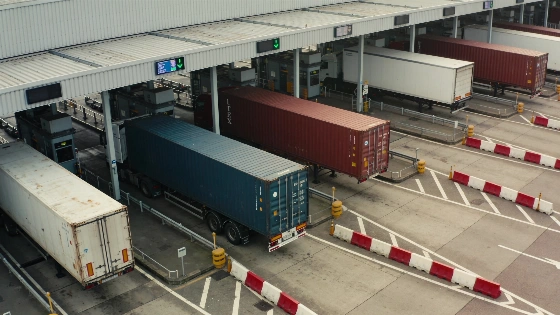
A shipment crossing the Channel can trigger customs declarations and inspections. Food products also face sanitary and phytosanitary requirements, while rules of origin add another hurdle.
Businesses want shorter border delays and less paperwork. They are also calling for more predictable travel rules for employees and business visitors, plus fewer obstacles to selling goods and services.
The pressure comes as reported trade between the two sides remains below its pre-Brexit level. Many surveyed companies say they will not invest in the UK this year. For U.S. companies with operations or suppliers in Europe, changes could affect how European partners move staff and goods across the Channel. The survey does not measure the direct effects on U.S. businesses.
KPMG and the British Chamber of Commerce in Germany, or BCCG, surveyed companies about their priorities. Some 53% want greater mobility for business travelers and employees. Another 49% put more efficient customs and border procedures at the top of their list. Restrictions on workers can complicate travel and staffing; border procedures add administrative work to shipments.
Mutual recognition of product standards drew support from 32% of respondents. Better market access for services was cited by 31%. Recognition could reduce duplicate requirements, while improved access could make it easier for service providers to operate across the market. These are reported business priorities, not evidence that either government has agreed to the changes.
The reported value of goods trade between the UK and Germany fell 7% from 2015 to 2025, reaching €118.4 billion a year despite some substantial price increases during that period. That is a nominal monetary value. It is not adjusted for inflation and does not count the physical goods exchanged.
The EU-UK Trade and Cooperation Agreement has been in force since 2021 and provides for a joint review every five years. The Withdrawal Agreement remains part of the legal framework. The Windsor Framework sits alongside it, as do separate arrangements concerning Gibraltar. The review does not reopen the whole treaty or return the UK to the single market.
At the EU-UK summit on May 19, 2025, the two sides agreed to a strategic partnership and an updated cooperation agenda. The European External Action Service calls the existing agreements the cornerstone of the relationship. It says both sides are to implement them fully and on time.
Investment caution persists: 61% of surveyed companies said they did not plan to invest in the United Kingdom during the current year. Political uncertainty was identified as a major obstacle by 35%. These figures describe stated intentions and concerns. They are not completed investment decisions or a forecast of future capital spending.
For a company weighing a new project, uncertainty makes it harder to judge the rules and costs that will apply over time. Easier border procedures or staff mobility could ease specific daily frictions, but the survey does not quantify potential savings. Nor does it show whether reforms would change investment plans.
British Prime Minister Andy Burnham has recently said the UK is worse off because of Brexit than it was before leaving the EU. The next summit between the British government and the EU is scheduled for Nov. 20, 2026, in Brussels.
The agenda includes possible arrangements for food and drink trade. The sides may link their emissions-trading systems and discuss energy cooperation. Youth mobility and immigration cooperation are also on the agenda. The proposed youth scheme would offer temporary opportunities to work, study and live across the Channel. It would not restore freedom of movement.
The UK government says it will seek closer ties with the EU while keeping its commitments not to rejoin the single market or customs union. It also rules out restoring free movement. A trade agreement sets the terms for market access, but its practical effect depends on how companies meet customs requirements and mobility rules. Customs clearance covers the processes for documenting and moving goods across a border. Staff mobility concerns people travelling or working across it. A change to one does not automatically resolve the other. The European External Action Service sets out the existing agreement framework and the Nov. 20 summit in its statement on EU-UK relations.
The Office for National Statistics publishes UK trade data by country and product group. Its August 2026 bulletin covers trade with 236 countries and territories, across 122 commodity categories. Goods and services are reported separately. The datasets provide a detailed series for tracking trade with EU and non-EU partners; the ONS trade bulletin sets out the latest country and commodity breakdowns.