Walmart and Sam’s Club have rolled out major summer price cuts on groceries and essentials. Here’s how their new prices compare to Target, Kroger, and other top U.S. supermarket chains—and what it means for your wallet
Walmart and Sam’s Club have launched sweeping price reductions across thousands of products this summer, aiming to attract cost-conscious shoppers as inflation continues to pressure household budgets. The cuts, announced July 6, include groceries, household staples, toys, and clothing, with Sam’s Club also lowering prices on more than 250 items tied to summer travel and grilling. Both retailers say the new prices are available in stores, online, and through their apps.
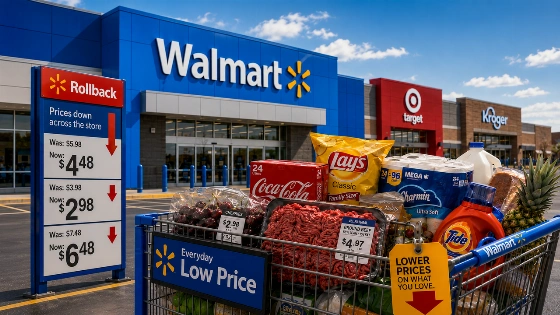
Examples of Walmart’s current rollbacks include a 1 lb. 73% ground beef roll for $5.94 (down from $6.74), a 2.25 lb. bag of fresh red cherries for $5.63 (previously $11.18), and a 24-pack of Coca-Cola for $9.97 (down from $14.97). Other notable deals include Great Value ice cream at $2.50, Frito-Lay Family Fun Variety Packs at $8.97, and 24-packs of Pepsi, Diet Pepsi, Dr Pepper, and Diet Mountain Dew for $9.97.
Price Comparison: Walmart, Target, and Kroger
For shoppers weighing where to buy summer groceries, the price differences are significant. According to live pricing pulled July 9, 2026, by TheStreet, Walmart’s discounted ground beef is $5.94, compared to $7.59 at Target and $5.99 at Kroger. A 24-pack of Coca-Cola is $9.97 at Walmart, $15.99 at Target, and $14.99 at Kroger (with Kroger’s price potentially lower for members using digital coupons). Lay’s Classic Chips (8 oz) are $2.50 at Walmart, $3.49 at Target, and $3.99 at Kroger. Frito-Lay Variety Packs (18-count) are $8.97 at Walmart, $9.99 at Target, and $9.99–$10.99 at Kroger.
Business Insider’s independent review found that Walmart’s summer promotions delivered the lowest overall grocery bill among major chains, though Kroger can be competitive for shoppers who maximize digital coupons and member deals. Amazon, by contrast, lagged behind on value for these items.
How Walmart Compares to Other Chains
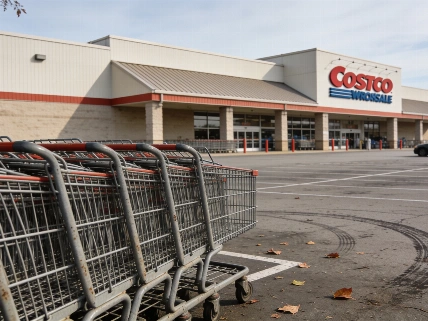
While Walmart’s new rollbacks are aggressive, a recent Consumer Reports study of 35 supermarket chains—conducted before the latest price cuts—found that Costco, BJ’s Wholesale Club, Lidl, Aldi, WinCo, and H-E-B typically offer lower average prices than Walmart. The study, which compared baskets of common groceries across six U.S. cities, used Walmart as a baseline. Costco and BJ’s were about 21% cheaper than Walmart on average, while Lidl and Aldi were 8–9% less expensive. Target’s prices averaged nearly 6% higher than Walmart, and Kroger’s were almost 15% higher, though regional promotions and membership discounts can narrow the gap.
Other chains, including Market Basket, Wegmans, Safeway, and Trader Joe’s, were found to be more expensive than Walmart by varying margins. Whole Foods, at the top end, averaged nearly 40% higher than Walmart’s prices for similar baskets.
Market and Political Reactions
The price cuts have drawn attention from both Wall Street and Washington. President Donald Trump publicly credited his administration for encouraging Walmart’s move, calling it a patriotic gesture tied to the country’s 250th birthday. Analysts note that Walmart’s financial flexibility—bolstered by more than $2 billion in tariff refunds—has enabled the retailer to fund these discounts without immediately impacting its bottom line. Mizuho analyst David Bellinger reaffirmed an “outperform” rating on Walmart stock, citing the company’s prior guidance on price investments.
Industry analysts expect the move to intensify competition among major grocery retailers, with some predicting a new round of price wars as chains like Kroger, Albertsons, Costco, and Dollar Tree also invest in lower prices. Wolfe Research estimates that Walmart’s price rollbacks increased by about 20% in the first quarter of 2026 and are likely to accelerate further. Yet, the broader context is that U.S. grocery prices have climbed roughly 33% over the past several years, leaving many consumers frustrated despite the latest discounts.
Consumer Sentiment and Skepticism
Online reaction to Walmart’s announcement has been mixed. While some shoppers welcome the relief, many remain skeptical, questioning whether the cuts are meaningful or simply a marketing tactic. Discussions on platforms like Reddit reveal that some consumers believe Walmart is only rolling back prices because of reduced public assistance benefits and shopper fatigue, while others argue that the discounts simply return prices to pre-inflation levels. Data from Placer.ai, however, suggests that Walmart’s overall foot traffic has continued to grow, contradicting claims of widespread shopper abandonment.
For many households, the practical impact of these rollbacks will depend on how long the discounts last and whether rival chains respond with deeper promotions. Walmart representatives have indicated that typical rollbacks last about 90 days, but the competitive landscape could force further changes if price wars escalate.
Grocery Inflation and Household Budgets
According to the Bureau of Labor Statistics, U.S. grocery prices rose 1.2% year-over-year as of May 2026, a slowdown from the double-digit increases seen in 2022 and 2023 but still above the pre-pandemic average. Food-at-home prices have increased more than 20% since 2020, straining budgets for many families. While recent price cuts offer some relief, the cumulative effect of years of inflation means that even discounted prices may feel high compared to just a few years ago.
For shoppers, the best deals often require comparing prices across multiple chains, using digital coupons, and considering bulk purchases at warehouse clubs. While Walmart’s latest move may shift the competitive landscape, the broader trend of rising food costs remains a central challenge for U.S. households.
Supermarket pricing is shaped by a complex mix of supply chain costs, labor expenses, regional competition, and consumer demand. Chains like Walmart and Kroger use a combination of everyday low pricing and targeted promotions to attract shoppers, while warehouse clubs such as Costco and BJ’s rely on membership models and bulk discounts. For consumers, understanding these strategies—and tracking price changes over time—can help maximize savings, but it often requires extra effort and flexibility in shopping habits.