SpaceX's record-breaking IPO has investors weighing its $28.5 trillion market potential against high uncertainty. Warren Buffett's approach offers a cautionary lens for those considering buying in at the public debut
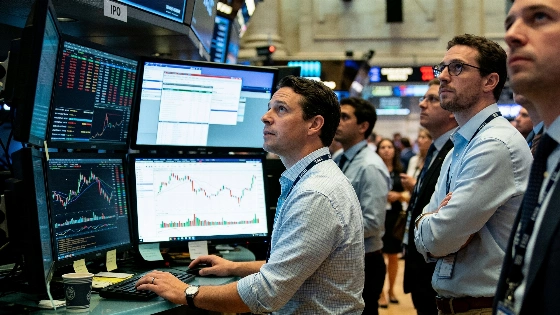
SpaceX's recent initial public offering has drawn intense interest from investors eager to participate in the next phase of commercial space and satellite technology. The company's public debut, which raised over $85 billion, instantly made headlines and briefly propelled CEO Elon Musk to the top of the world's wealth rankings. Yet, as the market digests SpaceX's ambitions and valuation, some of the most seasoned investors urge caution-especially when it comes to IPOs with sky-high expectations and complex business models.
Warren Buffett, known for his disciplined, long-term approach to investing, has consistently avoided IPOs, arguing that the incentives and hype surrounding new listings often work against buyers. His philosophy is particularly relevant as investors consider whether SpaceX's potential justifies its current price and the risks involved.
IPO Hype Versus Long-Term Value
SpaceX's IPO was the largest in history, with underwriters exercising their option to purchase additional shares and pushing the total capital raised above $85 billion. This scale reflects both the company's ambitious vision and the market's appetite for exposure to space technology. However, IPOs are typically structured to benefit sellers and underwriters, not new investors. Companies and their bankers have every incentive to maximize excitement and price, often leading to a first-day surge that may not be sustained over time.
Historical data supports a cautious approach. According to research from the University of Florida, the average U.S. IPO since 1980 has underperformed the broader market over the three years following its debut, even when investors are able to buy at the offer price. This underperformance persists despite underwriters' efforts to set attractive initial prices. For investors considering SpaceX, the lesson is clear: a strong IPO debut does not guarantee long-term outperformance, and the risks of buying into the hype are real.
Complexity and Uncertainty in SpaceX's Business
SpaceX's business model is built on a series of ambitious, interdependent projects. The company aims to scale its fully reusable Starship heavy-lift vehicle, expand its Starlink satellite internet service globally, develop orbital data centers, and compete in artificial intelligence. Each of these initiatives faces significant technical, regulatory, and competitive hurdles. The company's registration statement cited a total addressable market of $28.5 trillion, but realizing even a fraction of that potential will require flawless execution across multiple fronts.
For investors, this complexity introduces a high degree of uncertainty. Unlike businesses with stable, easily understood revenue streams, SpaceX's future depends on technological breakthroughs, regulatory approvals, and the ability to outpace both established aerospace firms and emerging competitors. Warren Buffett has often emphasized the importance of investing in companies with predictable, durable advantages. In contrast, SpaceX's prospects are tied to variables that are difficult to forecast and value, making it a challenging fit for investors seeking clarity and long-term reliability.
Speculation Versus Disciplined Investing
Buffett's investment record is built on buying companies with strong, enduring competitive advantages at reasonable valuations. He has repeatedly warned against speculating on businesses whose future earnings are highly uncertain or dependent on multiple unpredictable factors. While SpaceX's vision is compelling, the company operates in industries-space launch, satellite broadband, and AI-that are capital-intensive, rapidly evolving, and subject to technological disruption.
For context, the S&P 500 returned an average annualized 10.5% from 1980 through 2023, according to S&P Dow Jones Indices. In contrast, the average IPO during that period delivered slightly lower returns over the three years following its debut, highlighting the risk of chasing new listings. Investors who prioritize certainty and proven business models may find more attractive opportunities elsewhere, especially given the high valuation and execution risks associated with SpaceX.
Investing in IPOs like SpaceX's is fundamentally different from buying established companies with a track record of profitability and competitive strength. The potential rewards are significant, but so are the risks. Investors should weigh their own risk tolerance, time horizon, and understanding of the business before committing capital to such ventures. For those who prefer a higher degree of confidence in future returns, focusing on companies with simpler, more predictable business models may be the wiser path.