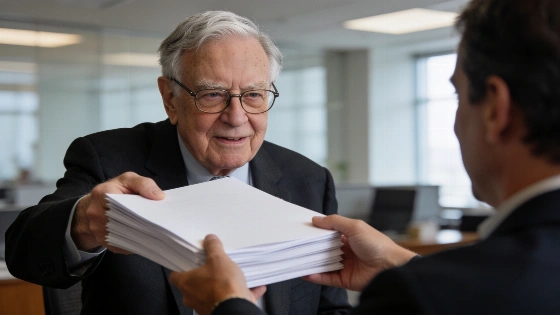
Warren Buffett has begun distributing his Berkshire Hathaway shares to family foundations, with a nearly $6 billion donation this week and a plan to give away his entire $140 billion stake by the end of 2034
Warren Buffett, the longtime CEO and investing icon behind Berkshire Hathaway, has announced a major step in his long-term philanthropic plan. On July 14, 2026, Buffett revealed he has donated nearly $6 billion in Berkshire Hathaway shares to his family's charitable foundations, and intends to give away his entire remaining stake-currently valued at about $140 billion-by the end of 2034. This move marks one of the largest planned charitable distributions in U.S. history and signals a new phase in Buffett's decades-long commitment to philanthropy.
Buffett's latest donation involved converting 8,000 Berkshire Hathaway Class A shares into 12 million Class B shares. Of these, 9 million shares were given to the Susan Thompson Buffett Foundation, with 1 million shares each going to the Sherwood Foundation, the Howard G. Buffett Foundation, and the NoVo Foundation. Based on the July 13 closing price, the total value of this donation was approximately $5.96 billion. After this transfer, Buffett still holds 1,162 Class B shares and 188,290 Class A shares, worth about $140.25 billion at current market prices.
Philanthropy on an Unprecedented Scale
Buffett's plan to donate his entire Berkshire Hathaway stake by December 31, 2034, stands out for both its scale and its structure. Rather than creating a single new foundation, Buffett has chosen to distribute his wealth among several family-run organizations, each with its own philanthropic focus. The Susan Thompson Buffett Foundation, for example, is known for its work in education and reproductive health, while the Sherwood, Howard G. Buffett, and NoVo Foundations support a range of social, environmental, and humanitarian causes.
This approach reflects Buffett's belief in targeted, long-term giving and his desire to empower his family to direct resources where they see the greatest need. The donations are structured to occur over time, allowing the foundations to plan for sustained impact rather than a single windfall. For U.S. philanthropy, the scale of Buffett's giving is likely to influence how other ultra-wealthy individuals approach legacy planning and charitable commitments.
Impact on Berkshire Hathaway and Shareholders
Despite the size of Buffett's planned donations, the company's stock price is not expected to experience significant disruption. The conversion of Class A shares to Class B shares and their subsequent donation is designed to minimize market impact. Class B shares are more widely held and traded, providing greater liquidity and reducing the risk of price swings from large block transfers.
Buffett's succession plan is also in focus. With Greg Abel now serving as CEO, Berkshire Hathaway's leadership transition is well underway. Shareholders are being encouraged to focus on the company's long-term fundamentals and management rather than short-term changes in share ownership. Berkshire Hathaway remains one of the largest and most diversified conglomerates in the U.S., with holdings spanning insurance, railroads, utilities, manufacturing, and consumer brands.
As of July 2026, Berkshire Hathaway's market capitalization stands at over $900 billion, making it one of the most valuable public companies in the world. The company reported $364.5 billion in revenue for the full year 2025, with net earnings of $89.8 billion, according to its latest annual report. The company's Class A shares continue to trade at a premium, reflecting investor confidence in its diversified business model and disciplined capital allocation.
Legacy Planning and Charitable Giving Trends
Buffett's approach to giving away his fortune highlights several key trends in legacy planning among America's wealthiest families. Rather than waiting until death to transfer assets, Buffett is distributing his wealth during his lifetime, allowing him to oversee the process and ensure his philanthropic goals are met. This strategy also provides tax advantages, as charitable donations of appreciated stock can reduce capital gains and estate tax liabilities.
For other high-net-worth individuals, Buffett's actions may serve as a model for structuring large-scale giving in a way that balances personal values, family involvement, and long-term impact. The use of family foundations allows for flexibility in grantmaking and the ability to respond to changing needs over time. At the same time, the scale of Buffett's giving raises questions about the influence of private philanthropy on public policy and social priorities, a topic that continues to generate debate among policymakers and nonprofit leaders.
Charitable giving in the U.S. reached $499.3 billion in 2023, according to Giving USA, with foundations accounting for about 19% of total donations. While most giving comes from individuals, large gifts from billionaires like Buffett can shape the direction of entire sectors, from education to health care to social justice. For readers considering their own legacy plans, Buffett's example underscores the importance of aligning giving strategies with personal values, tax considerations, and the desire for lasting impact.