
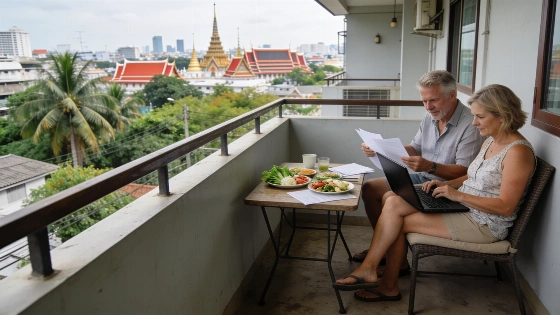
Retiring in Thailand can reduce monthly living costs to under $900, offer access to affordable private healthcare, and allow U.S. retirees to receive Social Security payments directly, but requires careful planning around visas, taxes, and property rules
For Americans seeking to stretch their retirement dollars, Thailand has emerged as a destination where fixed incomes can go further without sacrificing quality of life. The country's appeal lies in its combination of low living costs, modern amenities, and access to high-quality private healthcare. Retirees can choose between the energy of Bangkok, the cultural richness of northern cities like Chiang Mai, or the relaxed pace of southern islands-all while maintaining a standard of living that would be far more expensive in the United States.
Thailand's cost advantage is significant. According to Numbeo, the average monthly cost of living for a single person in Thailand is about $855, compared to $2,516 in the U.S. This figure covers housing, food, transportation, and basic healthcare, though actual expenses will vary by location and lifestyle. The Social Security Administration allows eligible U.S. retirees to receive their benefits while living abroad, including in Thailand, either through a U.S. bank or a local Thai account. This means monthly Social Security payments can cover a larger share of expenses than in most U.S. cities.
Visa and Residency Requirements
Thailand offers a retirement visa for foreigners aged 50 and older who do not plan to work in the country. To qualify, applicants must show proof of at least 800,000 Thai baht (about $25,600) in a Thai bank account for two months prior to applying, or demonstrate a monthly income of at least 65,000 baht (about $2,080), or a combination of savings and income totaling 800,000 baht annually. Additional requirements include a valid passport with at least 12 months remaining and proof of health insurance that meets Thai government standards. The retirement visa is renewable annually, and long-term residents may eventually apply for permanent residency, though this process is more complex and selective.
Foreigners are not permitted to own land in Thailand, but long-term leases-often up to 30 years-are common for those wishing to secure housing. Exchange rate fluctuations can affect monthly budgeting, as income in U.S. dollars may vary in value against the Thai baht. U.S. Social Security benefits remain taxable by the U.S. government, but other retirement income may be subject to Thai taxation if remitted locally. Driving in Thailand requires an International Driving Permit or a Thai license, and traffic standards differ from those in the U.S., which can present adjustment challenges for new arrivals.
Healthcare and Insurance Considerations
One of the main concerns for retirees moving abroad is access to reliable healthcare. Thailand's private hospitals are known for modern facilities, Western-trained doctors, and English-speaking staff, particularly in major cities. Costs for medical care and insurance are generally much lower than in the U.S., but Medicare does not provide coverage outside the United States. Retirees are required to purchase health insurance that meets Thai government requirements as part of the visa process. Many opt for international health insurance plans, which can offer broader coverage and flexibility for travel outside Thailand.
Routine medical visits, dental care, and elective procedures are often available at a fraction of U.S. prices. For example, a standard doctor's visit in a private hospital may cost $20-$50, while more complex procedures are also substantially less expensive. However, retirees should review policy exclusions, coverage limits, and the process for claims reimbursement before selecting a plan. Emergency evacuation coverage is also worth considering, especially for those living in rural areas or planning frequent travel.
Daily Life, Expat Communities, and Practical Trade-Offs
Thailand offers a wide range of lifestyle options, from the urban bustle of Bangkok to the slower pace of mountain towns and beach communities. Popular destinations for retirees include Chiang Mai, known for its cultural sites and expat-friendly atmosphere, and Phuket, which offers resort living and access to pristine beaches. Many cities have established expat communities, making it easier for newcomers to find social support and practical advice. English is widely spoken in tourist areas and among healthcare providers, though learning basic Thai phrases can help with daily interactions.
While the lower cost of living is a major draw, retirees must navigate practical challenges. Exchange rate volatility can impact the real value of U.S. dollar income. Property rules limit direct ownership, so most retirees rent or enter into long-term leases. U.S. Social Security payments can be deposited directly into a Thai bank account, but retirees should confirm eligibility and set up secure banking arrangements before relocating. It's also important to understand local tax rules, as some forms of retirement income may be taxed in Thailand if brought into the country.
According to the Social Security Administration, as of December 2025, more than 700,000 Americans were receiving Social Security benefits while living outside the United States. Thailand consistently ranks among the top destinations for U.S. retirees abroad, reflecting both its affordability and the availability of modern amenities. The average monthly Social Security benefit for retired workers was $1,907 in January 2026, which can cover a substantial portion of living expenses in Thailand, especially outside major tourist centers.
Retiring abroad involves a series of trade-offs that go beyond cost. While Thailand offers a lower price tag for housing, food, and healthcare, retirees must adapt to a different legal system, property restrictions, and cultural norms. Visa requirements and health insurance rules can change, so ongoing compliance is necessary. Exchange rate risk means that dollar-denominated income may fluctuate in value, affecting monthly budgets. For those considering the move, it's essential to research local regulations, visit potential destinations in person, and consult with financial and legal professionals familiar with cross-border retirement planning.