
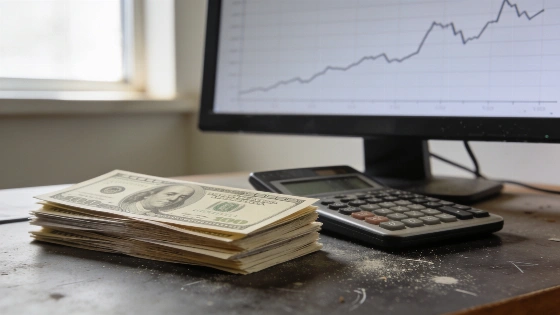
Investors who keep buying during market downturns can end up with more shares and lower average costs than those who wait for a rebound. This disciplined approach may improve long-term returns but requires resisting the urge to sell in a panic
When markets decline, many investors instinctively consider selling. However, the mathematics of long-term investing indicate that those who continue buying during downturns often achieve better outcomes. This advantage is not only psychological-it is reflected in the greater number of shares accumulated and a lower average purchase price over time.
A bear market is typically defined as a drop of 20% or more from recent highs, with the median historical decline reaching 33%.
How Buying the Dip Works
Consider an investor who allocates $700 each month to a broad-market fund such as the Vanguard S&P 500 ETF. When the fund trades at $700 per share, each purchase secures one share. If the market falls 10% and the price drops to $630, the same $700 buys approximately 1.11 shares. When the market recovers, the investor owns more shares than if purchases had only occurred at the higher price.
This effect compounds over time. Investors who consistently buy during downturns reduce their average cost per share, which can enhance total returns when markets rebound. For instance, a market review showed that investing $1,400 in two stages resulted in the purchase of 2.11 shares at an average cost of $663.16 per share, illustrating how lower prices enable investors to accumulate more shares with the same investment. The essential factor is to continue investing through the downturn, rather than pausing or attempting to time the market bottom. Waiting for a rebound before resuming purchases means missing the opportunity to acquire additional shares at lower prices.
In his 2023 annual letter, Warren Buffett observed that today's markets have become more 'casino-like' compared to his early investing years, amplifying short-term emotions and tempting investors to time the market. This context is vital for understanding why many struggle to stick with disciplined buying during downturns.
Emotional Risks and Common Pitfalls
Despite the mathematical advantages, many investors find it difficult to maintain this strategy in practice. Market declines often trigger fear, leading to the urge to sell or halt investing. The risk is that by staying on the sidelines during a downturn, investors may end up with fewer shares and a higher average purchase price over time.
For example, an investor who buys only when prices are high and waits out the downturn may see flat returns after a recovery. In contrast, an investor who continues buying during the dip could realize a gain, even if both invested the same total amount. The difference lies in maintaining discipline and adhering to a plan during periods of volatility.
Historical Performance and Market Recovery
Historically, U.S. stock markets have recovered from every major decline, with the S&P 500 reaching new highs after each bear market. According to S&P Dow Jones Indices, the S&P 500 has delivered an average annual total return of about 10% since its inception in 1957, despite numerous corrections and crashes. While past performance does not guarantee future results, the long-term trend has favored those who remained invested and continued buying through downturns.
This approach is most effective for investors with a long time horizon who are still accumulating assets. Those nearing retirement or planning to withdraw funds soon may not have sufficient time to recover from a significant market drop. For these investors, a more conservative allocation or an alternative withdrawal strategy may be more appropriate.
Understanding Dollar Cost Averaging
Investing a fixed amount at regular intervals, regardless of market conditions, is known as dollar cost averaging. This strategy helps mitigate the impact of volatility by spreading purchases across both high and low prices. While it does not eliminate risk or guarantee profits, it can help investors avoid the pitfalls of market timing and emotional decision-making.
Dollar cost averaging is most effective when combined with a clear investment plan and a commitment to continue investing during downturns. It is not a shortcut to wealth, but it can help investors build a larger position over time and potentially improve long-term returns. The primary challenge is psychological: resisting the urge to sell during market declines and maintaining the plan even when market sentiment is negative. For investors able to do so, market downturns may present more opportunity than risk.