
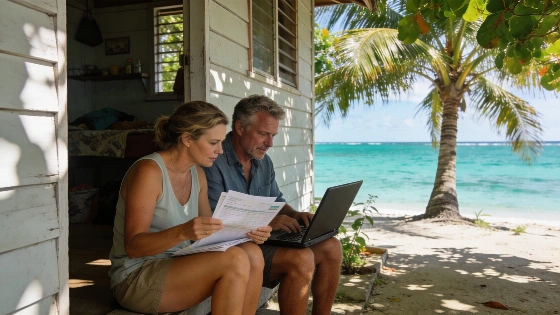
Rising U.S. living costs have retirees looking abroad. These eight South Pacific islands offer affordable monthly budgets, unique cultures, and practical visa options for Americans seeking a lower-cost retirement with ocean views
For many Americans, the idea of retiring on a tropical island seems out of reach as U.S. housing, healthcare, and daily expenses continue to climb. Yet, a closer look at the South Pacific reveals several islands where a comfortable retirement may be more affordable than expected. According to reporting by Expat.com and other expat resources, destinations like Fiji, Vanuatu, Samoa, and the Cook Islands offer a blend of natural beauty, established infrastructure, and monthly living costs that can undercut many U.S. cities.
Cost Comparisons
On Viti Levu, Fiji's largest island, a single retiree can expect to spend around $1,400 per month, including rent and health insurance. The capital, Suva, provides urban amenities, while Nadi offers a tourism-driven lifestyle. Efate in Vanuatu, known for its tax-friendly policies and multicultural environment, sees monthly costs starting at $1,500 in Port Vila, with lower rents outside the capital. Samoa's Upolu island, where communal living traditions remain strong, offers a monthly budget near $1,018 in Apia, the main city.
Rarotonga in the Cook Islands stands out for its strict building codes and preserved landscapes, with a typical monthly budget of $1,485 covering rent, utilities, groceries, and health insurance. Tongatapu, Tonga's largest island, allows expats to live comfortably for about $1,032 per month, though imported goods can drive up costs for those seeking U.S.-style amenities. Palawan in the Philippines, often cited for its UNESCO sites and biodiversity, is among the most affordable, with monthly expenses as low as $604, including rent.
Infrastructure and Lifestyle
Lombok, Indonesia, offers a quieter alternative to Bali, with one-bedroom apartments renting for $150 to $300 per month and villas ranging from $300 to $1,000. Dining out is inexpensive, and monthly grocery bills typically fall between $100 and $150. Lifou in New Caledonia, a French territory, is slightly pricier, with monthly costs ranging from $1,900 to $3,000, though expenses are generally lower than on the main island. Each destination presents a different balance of infrastructure, healthcare access, and cultural integration, which can affect both cost and quality of life for retirees.
Visa requirements and residency rules vary widely. Some islands, like Vanuatu and the Cook Islands, offer relatively straightforward long-term visa options for retirees, while others may require more complex application processes or proof of income. Healthcare quality and access also differ, with larger islands and territories often providing better facilities and more English-speaking providers.
Financial Considerations
For Americans considering a move, it's important to factor in currency fluctuations, potential tax obligations, and the cost of international health insurance. While some destinations, such as Vanuatu, have no personal income, wealth, or capital gains taxes, U.S. citizens remain subject to federal tax on worldwide income. Retirees should also consider the availability of direct flights, the cost of returning to the U.S. for family or medical reasons, and the stability of local governments and economies.
According to the Social Security Administration, more than 450,000 U.S. retirees received Social Security benefits while living abroad as of December 2023. However, not all countries have agreements with the U.S. that allow for direct deposit of benefits, and some may require additional paperwork or periodic proof-of-life documentation. Prospective expats should review the latest State Department and IRS guidance before making a move.
Market Data
According to the Bureau of Labor Statistics, the average monthly expenditure for Americans aged 65 and older was $4,345 in 2023, with housing and healthcare representing the largest shares. By comparison, the monthly budgets cited for these South Pacific islands are significantly lower, even after accounting for international health insurance and travel costs. This gap highlights the potential for substantial savings, though actual expenses will depend on lifestyle choices, exchange rates, and local inflation.
Retiring abroad can offer a lower cost of living, but it also introduces new risks and complexities. Exchange rate volatility can affect the real value of U.S. dollar income, and access to quality healthcare may be limited in remote areas. Some islands have residency requirements that change with little notice, and property ownership rules may restrict foreign buyers. Americans should also consider the impact of distance from family, cultural adaptation, and the need for contingency plans in case of political or environmental disruptions.
For those willing to navigate these challenges, the South Pacific offers a range of affordable retirement options with distinct cultures, climates, and financial trade-offs. Careful planning, thorough research, and consultation with qualified professionals can help ensure that a move abroad aligns with both financial goals and personal priorities.
When evaluating retirement destinations, it's essential to understand the difference between nominal and real costs. While monthly budgets may appear low in dollar terms, factors like inflation, currency risk, and access to healthcare can significantly affect long-term affordability. U.S. retirees should also be aware of the Foreign Account Tax Compliance Act (FATCA), which requires reporting of foreign financial accounts, and the potential need for international estate planning. Comparing the total cost of living-including housing, insurance, taxes, and travel-against U.S. benchmarks can help clarify whether an overseas move is financially sustainable over time.